2026-11-03
Content
Most warehouses need roughly one forklift for every 5,000 to 10,000 square feet of operating space. That range is a useful first benchmark, not a procurement rule. A 100,000-square-foot distribution center often runs 10 to 20 forklifts, while an 80,000-square-foot storage building with slow pallet turns may operate comfortably with six to eight machines. The difference is workload: pallet moves per hour, travel distance, rack height, trailer traffic, shift structure, and the equipment mix used on the floor.
Square footage tells you how much space the fleet must cover. It does not tell you how many trips each truck must complete, how long each trip takes, or how much spare capacity you need for peaks. Two warehouses can have the same footprint and very different forklift counts. An 80,000-square-foot facility handling 12 inbound trailers and 10 outbound trailers per day may need fewer trucks than an 80,000-square-foot cross-dock handling 60 trailers per day, because the cross-dock creates more short-cycle moves, more dock congestion, and less tolerance for a truck being down.
Use the table below as an early planning tolerance. It is based on common warehouse profiles and should be adjusted with actual throughput data before any purchase decision.
| Warehouse profile | Typical planning ratio | Main count drivers | Common equipment mix |
|---|---|---|---|
| Small parts storage, 20,000 to 50,000 sq ft | 1 forklift per 8,000 to 10,000 sq ft | Low pallet turns, one shift, short aisles, limited dock doors | Electric stacker, pallet truck, occasional reach truck |
| Regional distribution center, 100,000 to 250,000 sq ft | 1 forklift per 5,000 to 8,000 sq ft | Pallet turns, dock doors, two-shift operation, rack height | Reach truck, counterbalance truck, electric pallet truck |
| High-velocity order fulfillment, 250,000 sq ft and above | 1 forklift per 3,000 to 5,000 sq ft | Orders per hour, pick paths, replenishment cycles, peak season | Order picker, reach truck, pallet truck, tow tractor |
| Cold storage and chilled distribution | 1 forklift per 4,000 to 7,000 sq ft | Door cycles, battery performance, safety limits, condensation | Cold-store lithium truck, reach truck, pallet truck |
| Manufacturing and line-side supply | 1 forklift per 6,000 to 10,000 sq ft | Line-side delivery, load weight, attachments, outdoor yard work | Diesel or LPG counterbalance, electric stacker, pallet truck |
| Retail backroom and store replenishment | 1 forklift per 7,000 to 12,000 sq ft | Delivery windows, floor space, manual handling, storage height | Pallet truck, stacker, compact reach truck |
The ratio should move when the work changes. A warehouse that receives full pallets and ships full pallets can use fewer trucks than a warehouse that breaks pallets into cases, builds mixed orders, and replenishes pick faces throughout the day. The first operation is storage-heavy; the second is flow-heavy. Flow-heavy buildings need more equipment because each truck spends more time in short, repetitive cycles and less time on long, efficient hauls.
Before you divide square footage by a rule of thumb, test the number against the five variables below. They expose whether the warehouse needs a lean fleet, a dense fleet, or a mixed fleet with different truck types. The right equipment type also matters as much as the count; this guide to warehouse forklift types explains how reach trucks, counterbalance trucks, stackers, and pallet trucks fit different layouts.
Count the pallets that must move during the busiest two hours of the shift, not the average day. A warehouse that moves 120 pallets in an eight-hour shift averages 15 per hour, but if 60 of those moves happen in a two-hour dispatch window, the real demand is 30 per hour. Fleet sizing must follow the peak rate because docks, pick faces, and outbound trailers are scheduled in waves.
A compact 30,000-square-foot warehouse with a single dock may produce 150-foot trips. A 200,000-square-foot building with racking at the far end may produce 600-foot trips. Longer trips reduce trips per truck per hour, so the same pallet volume requires more trucks. Aisle width, cross-aisle placement, and battery charging location also affect travel time.
A 1.5-ton pallet moved at low height is a different task from a 2.5-ton load lifted to 8 meters. Attachments such as side shifters and fork positioners add weight and reduce effective capacity. If the truck must handle heavy loads at height, you may need a larger counterbalance truck rather than more small trucks, because two undersized machines cannot safely replace one correctly rated machine.
One truck can cover two shifts if it has enough battery capacity or a fast battery exchange. One truck cannot cover two shifts if it must charge for eight hours and cool for eight hours after a lead-acid discharge. Shift pattern changes the fleet count as much as volume does. A two-shift operation often needs 10 to 15 percent more seats than the same volume on one shift.
Dock work is stop-start work. Trucks wait, enter trailers, adjust pallets, exit, and queue. Ten dock doors with 40 trailers per day create more equipment demand than ten dock doors with 15 trailers per day. If trailers are loaded from the side or require double handling, add time per trailer and reduce the number of trailers each truck can service.
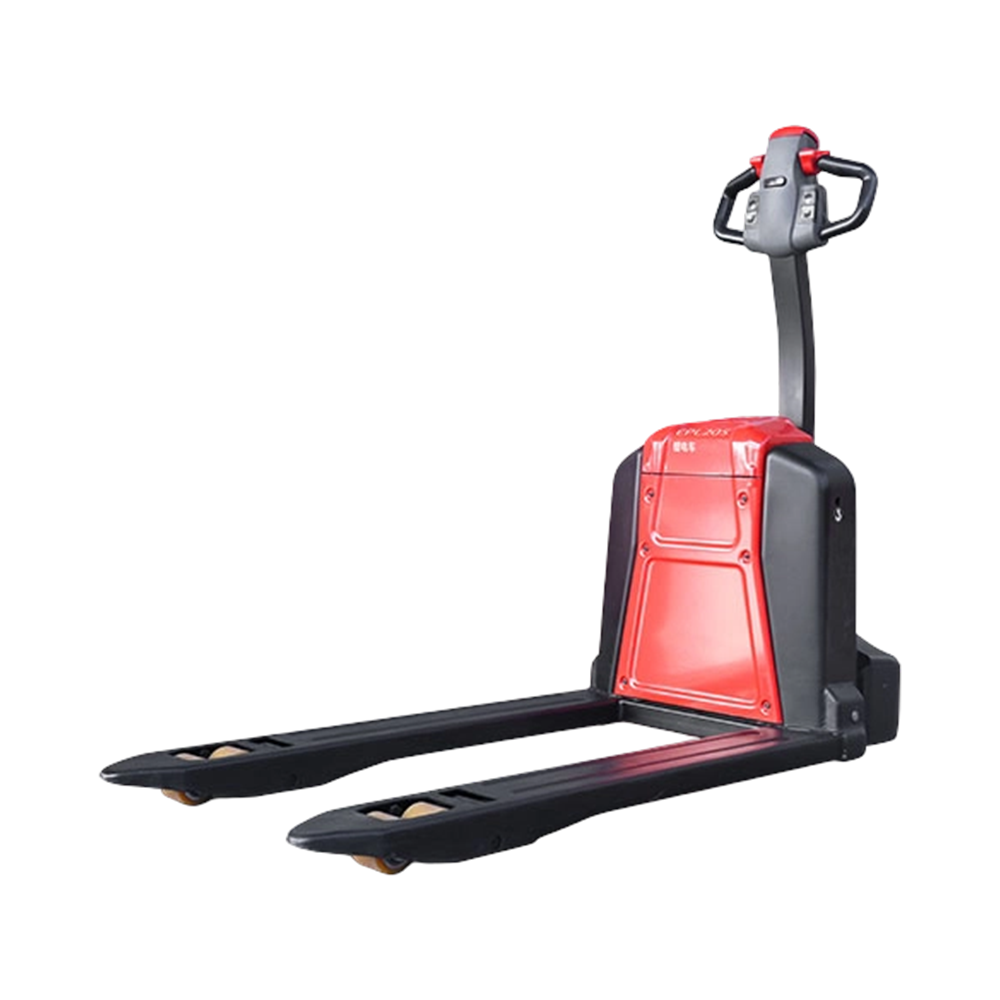 2-Ton Li-ion Electric Pallet TruckA walking-style, 2,000 kg pallet truck with quick-plug charger and interchangeable lithium batteries for dock and short-haul warehouse moves.View Product →
For horizontal transport inside the warehouse, electric pallet trucks often absorb short-haul work that would otherwise tie up a reach truck. A 2-ton lithium pallet truck can move pallets from receiving to staging, from staging to pick faces, and from packing to dispatch without the operator waiting for a counterbalance truck to return from the racking aisle. That separation improves fleet productivity without increasing total headcount.
The most reliable way to answer “how many forklifts per warehouse” is to calculate required trips per hour, then divide by the productive capacity of one truck. The formula below is simple enough for a planning meeting and specific enough to challenge a vague square-footage estimate.
Required trucks = peak pallet moves per hour ÷ (productive trips per truck per hour × utilization factor) + spare capacity
Use a utilization factor between 0.75 and 0.85 for most warehouse operations. That factor accounts for breaks, shift changes, congestion, battery changes, inspections, and minor delays. If the warehouse runs at 90 to 95 percent utilization, the fleet has no recovery room; one blocked aisle or one flat battery can stop outbound loading. A lower utilization factor creates a larger fleet, but it also creates a more resilient operation.
Assume a 100,000-square-foot regional distribution center moves 900 pallets per day across two eight-hour shifts. The average is 56 pallets per hour, but the peak two-hour dispatch window requires 100 pallets per hour. A reach truck in this layout completes 18 productive pallet moves per hour when travel, put-away, and retrieval are included. With a 0.80 utilization factor, each reach truck delivers about 14.4 productive moves per hour.
At peak, the operation needs 100 ÷ 14.4 = 6.9 reach trucks, or seven trucks. At average volume, it needs 56 ÷ 14.4 = 3.9 trucks, or four trucks. The fleet should be sized for the peak if dispatch windows are fixed. If the operation can smooth volume across the shift, five or six trucks may be enough. This is why dispatch scheduling and fleet count should be reviewed together.
| Equipment type | Typical productive moves per hour | Best use in fleet sizing | Planning caution |
|---|---|---|---|
| Electric pallet truck | 20 to 30 short-haul moves | Receiving, staging, cross-dock, dispatch | Long runs reduce cycle rate and battery life |
| Electric stacker | 12 to 20 moves with low lifting | Low-height racking, pick faces, retail backrooms | Not a substitute for high-bay reach work |
| Reach truck | 14 to 22 moves in medium aisles | Put-away and retrieval at height | Aisle width and rack height change the rate |
| Counterbalance truck | 10 to 18 moves with dock work | Trailer loading, heavy loads, outdoor yard | Attachments reduce effective capacity |
| Order picker | 30 to 60 pick lines per hour | Case picking and mixed-order fulfillment | Pick-line rate is not the same as pallet move rate |
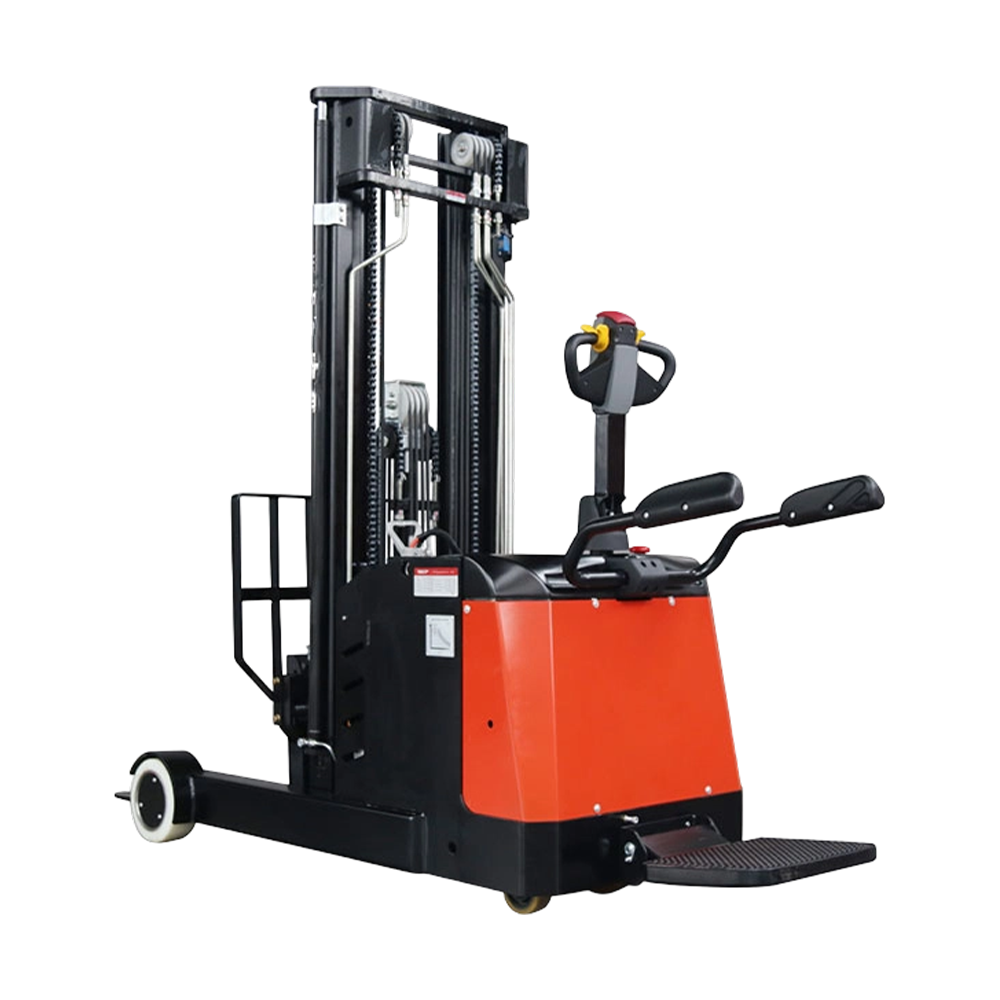
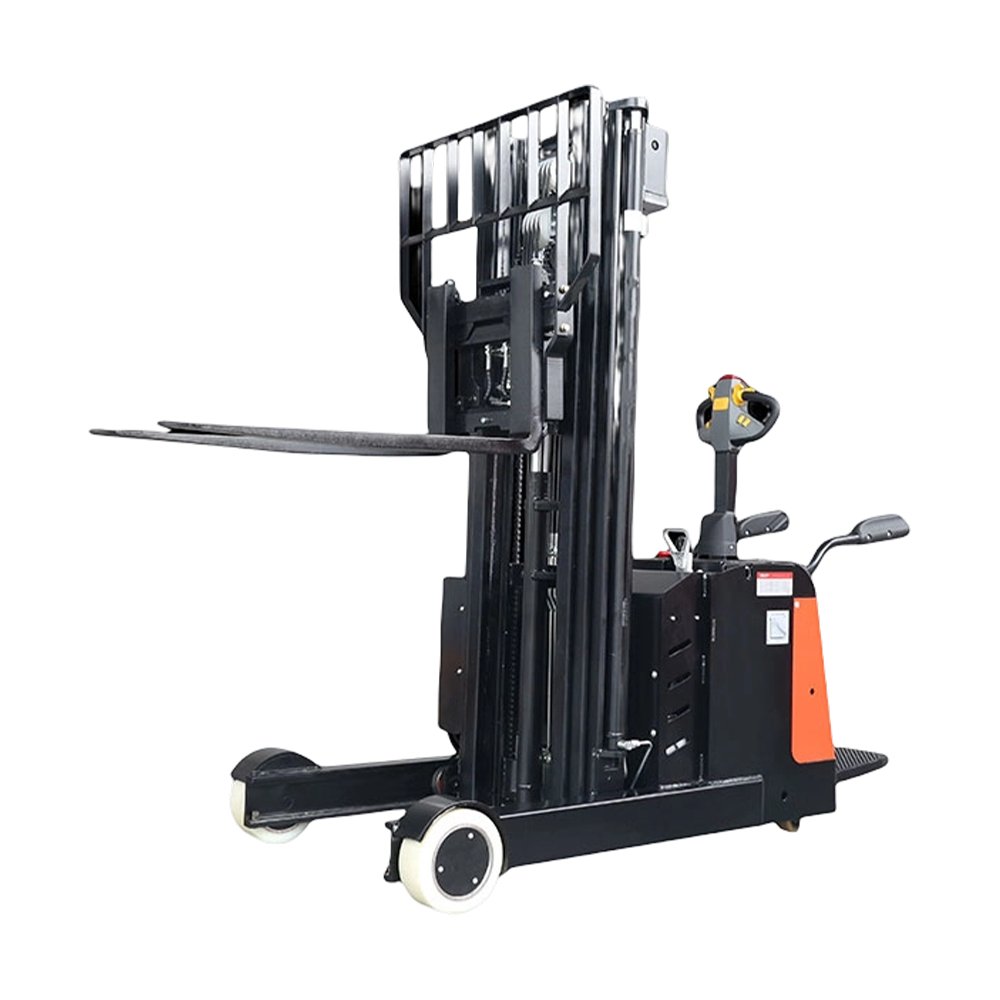 Stand-Up Electric Reach Truck for Narrow AislesA 1.2–1.5 ton stand-up reach truck with 3,000 mm lift and compact turning radius for high-bay racking and narrow-aisle put-away.View Product →
Reach trucks usually carry the highest racking workload because they combine lift height with a compact footprint. In a 100,000-square-foot building with narrow aisles and pallet racking above 5 meters, two reach trucks may handle more useful put-away and retrieval work than three counterbalance trucks, because the counterbalance units cannot work the same aisle geometry. Count the trucks by task, not by total floor area alone.
A single warehouse rarely needs one uniform truck type. The fleet is usually a mix of equipment assigned to different zones. Receiving may need a pallet truck and a counterbalance truck for trailer work. Storage may need reach trucks. Pick faces may need stackers or order pickers. Dispatch may need another pallet truck. The total count is the sum of the zone requirements plus shared spare capacity, not a single vehicle class repeated across the building.
High racking, low order frequency, and full-pallet movement dominate. The fleet is often reach-truck heavy with one or two counterbalance trucks for dock work. Square-footage ratios can be generous because each truck completes longer, more efficient put-away and retrieval cycles.
Fast receiving, cross-docking, and outbound loading create short cycles and high dock congestion. Pallet trucks and counterbalance trucks carry more of the workload. The fleet may be larger than the square-footage rule suggests because trucks spend time waiting at doors and staging lanes.
Backrooms are compact, delivery windows are tight, and storage height is limited. A manual or electric pallet truck plus a compact stacker often covers the work. The count should be based on deliveries per day, not total store size, because the backroom cannot absorb a large fleet.
Cold rooms reduce battery performance and increase safety constraints. The fleet may need more battery capacity or opportunity charging rather than more trucks. Door cycles and condensation control affect cycle time, so the same pallet volume can require a higher count than an ambient warehouse.
Line-side delivery is scheduled and repetitive, but loads may be heavy or awkward. Counterbalance trucks with the right attachments often do the main work, supported by stackers or pallet trucks for internal movement. The count follows production takt time and line-side replenishment frequency.
Outdoor surfaces, weather, and heavy loads favor diesel or LPG counterbalance trucks with suitable tires. Fleet count is driven by trailer or container turns and travel distance across the yard, not by indoor square footage.
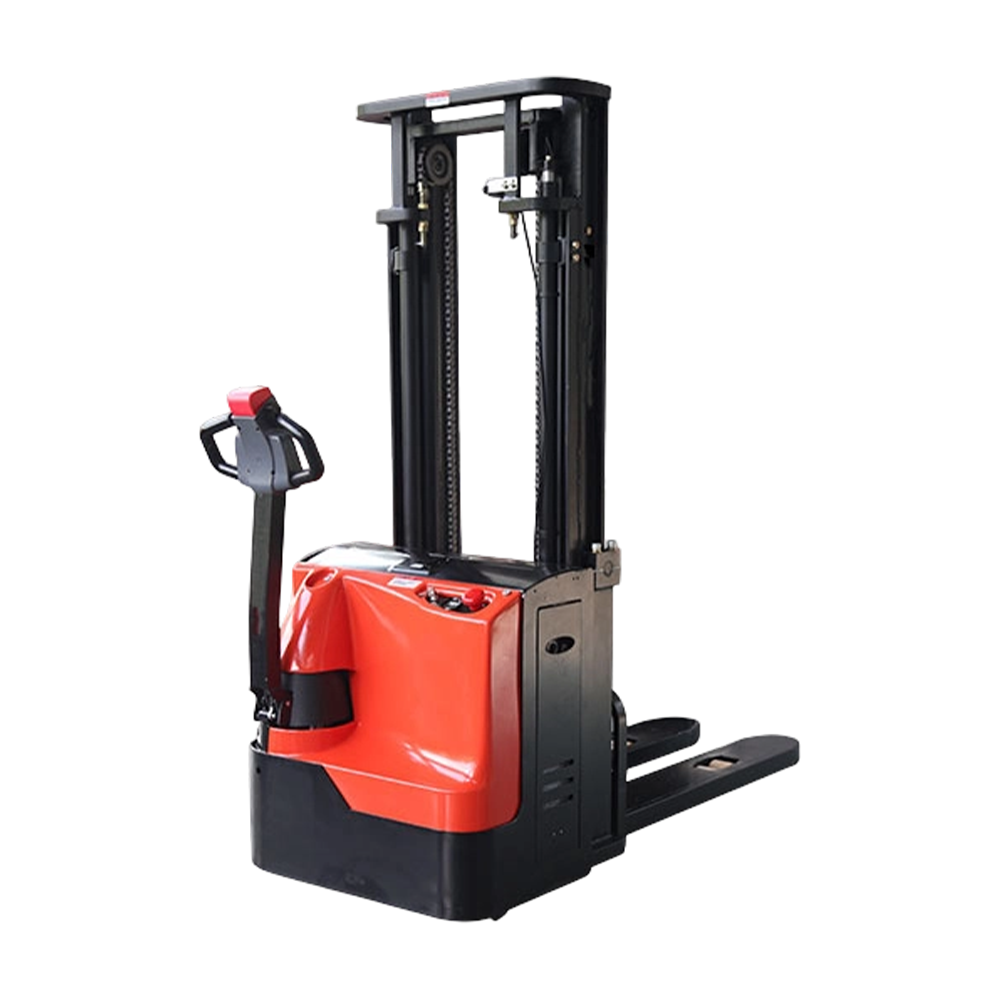
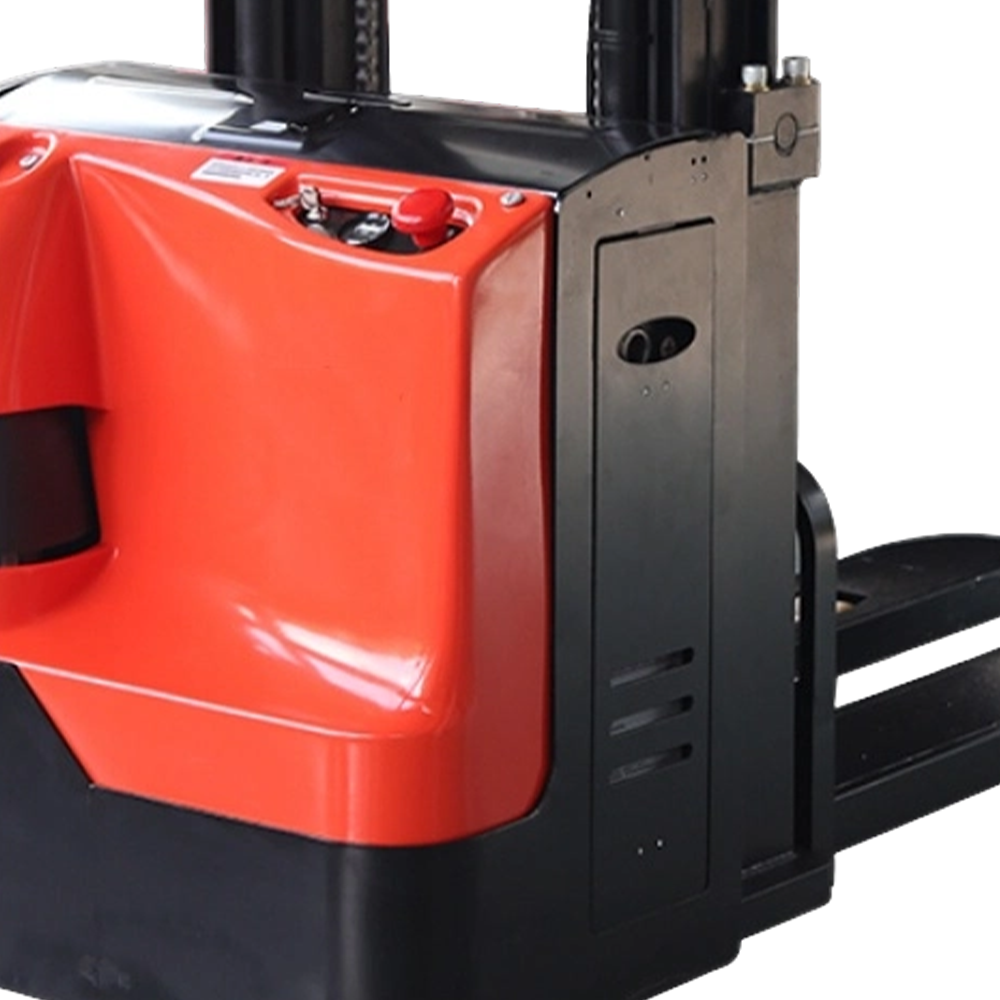 2-Ton Pedestrian Lithium-Ion Electric StackerA 2,000 kg pedestrian stacker for low-height racking and pick-face replenishment, with AC drive and side-pull battery access.View Product →
A 2-ton lithium electric stacker is a practical example of task-based fleet design. It can handle low-height racking, pick-face replenishment, and retail backroom work where a full counterbalance truck is too large and a manual pallet truck is too slow. Adding one or two stackers can remove low-value trips from reach trucks and keep the larger machines focused on high-bay work. The result is often a smaller total fleet with better zone coverage.
Warehouse layouts that combine racking, pick faces, and dispatch lanes need a staged equipment plan. The warehousing and logistics solution view is useful here because it separates receiving, storage, picking, and dispatch instead of treating the whole building as one fleet pool.
Fleet count is not only about how many trucks are needed at peak. It is also about how many trucks are available at the start of each shift. A truck that is charging, waiting for a battery change, or under inspection is not productive. The availability gap is one of the most common reasons a warehouse appears to have enough forklifts on paper but still misses dispatch deadlines.
Lead-acid trucks usually need a full charge cycle and a cooling period before the battery can be changed or reused. Lithium trucks can opportunity-charge during breaks and shift changes, which reduces the number of spare batteries and may reduce the number of trucks needed for multi-shift work. The trade-off is capital cost, charger placement, and operator discipline. If the operation runs two or three shifts, calculate the required seats first, then add the charging strategy, not the other way around.
Add 10 to 15 percent spare capacity for a one-shift operation, 15 to 20 percent for a two-shift operation, and 20 to 25 percent for a three-shift or peak-heavy operation. If the site has no fast charging or battery exchange, add another 5 percent because a single charging delay can remove a truck from the peak window.
A two-shift warehouse with seven peak seats may need eight trucks if one unit is always in maintenance or charging. A three-shift warehouse with the same seven seats may need nine trucks because there is less time for planned service and no natural overnight reset. These are planning tolerances, not fixed rules; the correct number depends on the maintenance program, charger capacity, and the age of the fleet.
Battery strategy also changes the equipment mix. A pallet truck that runs short cycles can use opportunity charging and stay in service across two shifts. A reach truck that works long, high-bay cycles may need a larger battery or a second unit to cover the shift change. The fleet plan should show which trucks are “seats” and which are “spares,” because a spare that cannot be dispatched quickly is not real capacity.
Do not size the fleet to the average month. Size it to the busiest week you expect the warehouse to handle, then decide how much of that peak you want to cover with owned equipment and how much you want to cover with rental, overtime, or temporary shifts. A warehouse that runs at 80 percent utilization in normal weeks may run at 100 percent during a seasonal peak. At 100 percent, there is no room for a late trailer, a blocked aisle, or a truck breakdown.
The chart above shows a practical middle path: own enough equipment to cover the busy week, and keep the last 15 to 20 percent of peak demand for rental or used equipment. This avoids buying trucks that sit idle for ten months of the year while still protecting service levels during the peak. It also gives the warehouse a buffer for growth without committing all of the capital at once.
Use the same logic for layout changes. Adding racking, changing aisle widths, or moving the dispatch lane can change travel time by 10 to 30 percent. A fleet that was correctly sized before the layout change may be insufficient afterward. Review the count whenever the warehouse changes its storage height, pick-face layout, dock schedule, or inbound receiving pattern.
The purchase decision and the fleet-size decision are linked. A new truck with a reliable battery and modern controls may deliver more productive hours per shift than an older unit, so the same pallet volume may need fewer new trucks. A used truck can be a sound choice for seasonal work or low-hour backup, but it should not be counted as full capacity until its battery, tires, mast, and hydraulic system have been checked against the duty cycle.
Three procurement paths are common in warehouse planning:
Attachments and parts also affect fleet count. A side shifter or fork positioner can reduce handling time and improve accuracy, but it adds weight and may reduce the truck’s effective capacity. If the attachment is essential for the task, size the truck for the attachment, not for the bare mast capacity. Keep critical spares such as tires, chargers, and hydraulic components available so a minor repair does not remove a truck from the peak window for several days.
The cheapest fleet is not always the one with the lowest purchase price. A truck that is undersized for the load, poorly matched to the aisle, or short on battery capacity can force the warehouse to buy an extra unit just to cover the gap. The better approach is to calculate the work, match the truck to the task, and then compare new, used, and rental options against the same duty cycle.
Use this checklist before you approve a forklift count or place an order. It turns a rough ratio into a defensible fleet plan.
A common starting range is 10 to 20 forklifts, based on one truck per 5,000 to 10,000 square feet. A storage-heavy building with low throughput may need closer to 10, while a high-velocity distribution center with two shifts and heavy dock traffic may need 18 to 20 or more. Confirm the number with peak pallet moves per hour and equipment cycle time.
It can be enough for a busy distribution center, but it may be too few for a high-throughput e-commerce warehouse with narrow order windows. It may be too many for a slow-moving storage building. The ratio is a benchmark, not a substitute for a workload calculation.
More shifts usually increase the number of available seats because there is less time for charging and maintenance between shifts. A two-shift operation often needs 15 to 20 percent more capacity than the same volume on one shift. A three-shift operation may need 20 to 25 percent more, especially if battery exchange is not available.
Yes, but treat it as spare capacity, not as a primary seat. A spare that can be dispatched within minutes is real capacity during a breakdown. A spare that is blocked behind another truck or has a flat battery is not. The spare ratio should reflect maintenance response time and the criticality of the dispatch window.
Fleet count is the total number of trucks. Equipment mix is the number of each type: pallet trucks, stackers, reach trucks, counterbalance trucks, and order pickers. A warehouse can have the right total count but the wrong mix, which creates bottlenecks in one zone while another zone has idle equipment.
Review the count at least once a year and whenever the warehouse changes racking, aisle width, shift pattern, dock schedule, or product profile. A layout change that adds 20 percent more travel distance can reduce productive trips per truck and require an additional unit even when total pallet volume has not changed.
Recommended Products
Recommended NEWS



 English
 中文简体
 русский
 Español
 عربى