


 English
 中文简体
中文简体 русский
 Español
 عربى
عربى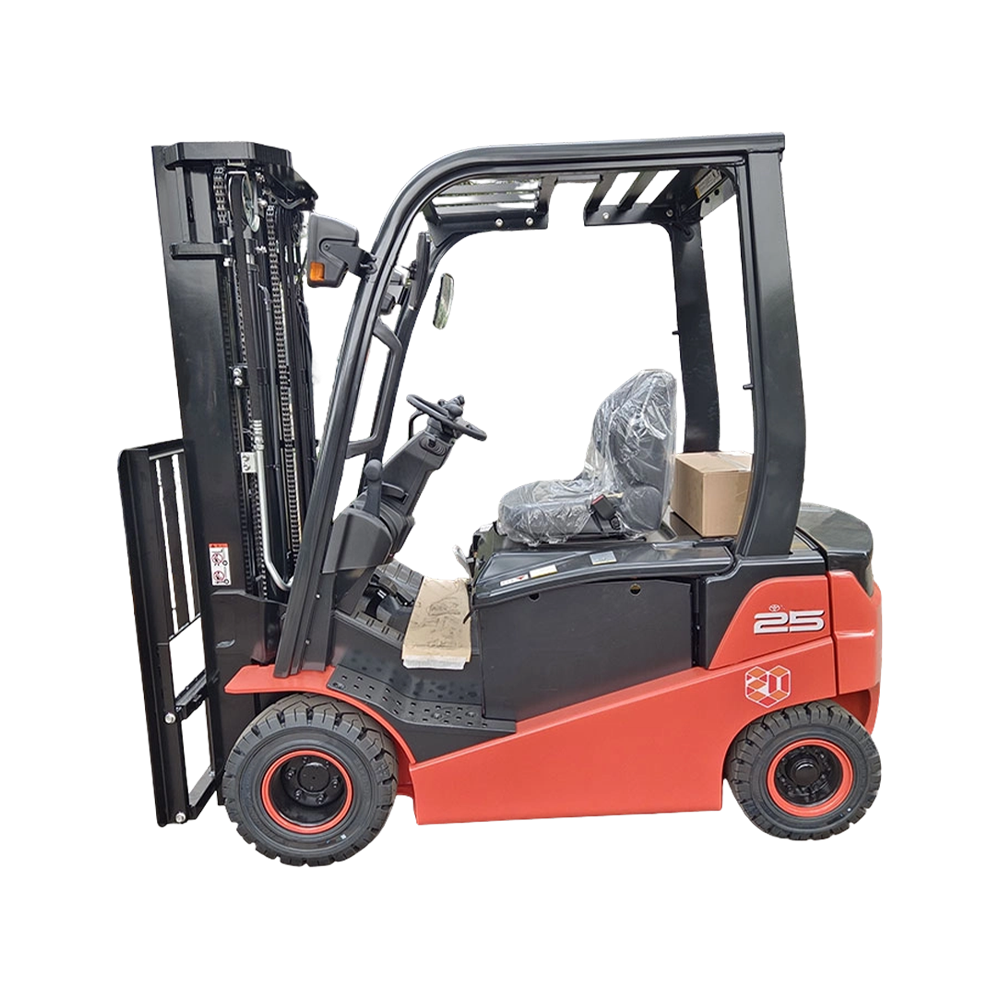
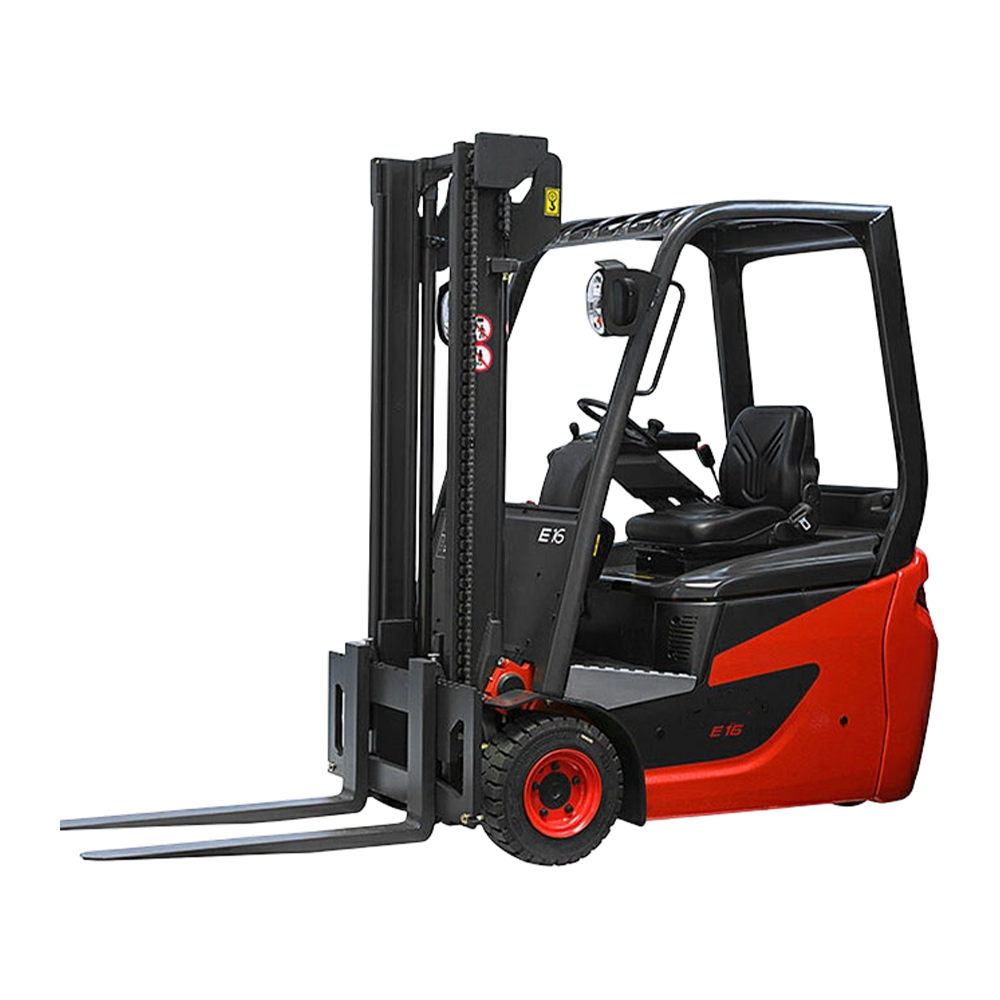
Core Foundation of Heavy-Duty Equipment: In-Depth Analysis of the Industrial Value of Lead Acid Forklift
In modern heavy industrial manufacturing, large logistics hubs, and busy port terminals, the efficiency of material handling directly determines the operational pulse of the entire supply chain. Faced with a dazzling array of industrial material handling equipment, many factories and warehousing enterprises still prioritize traditional and mature power systems when planning their fleets. Among them, the Lead Acid Forklift occupies an unshakable position in long-duration and high-intensity operating environments by virtue of its exceptional load stability and high reliability.
The Core Position of Lead Acid Forklift in Modern Warehousing and Manufacturing Systems
Modern factories and large warehousing centers face increasingly complex logistics challenges. From raw material unloading and warehousing to high-level stacking of finished products, every link requires equipment to possess strong continuous combat capabilities. As a seasoned service provider in the material handling field, Shanghai HanDavos International Trading Co., Ltd. has found when providing equipment matching solutions for global clients that many large workshops long-term trust the Lead Acid Forklift not only because of its sturdy structure, but also because it can adapt to rigorous industrial tempos.
In actual production and operations, this type of equipment perfectly balances the physical center of gravity of the entire vehicle through the huge deadweight and surging power provided by the lead-acid storage battery. This inherent design enables the vehicle to maintain excellent anti-overturning capabilities when lifting tons of heavy objects. For production-type enterprises whose daily throughput is massive and who frequently need to deal with multi-shift operations, it is not just a handling tool, but the core foundation that guarantees the non-stop logistics of the entire factory area.
Why Do Large Workshops and Outdoor Yards Still Prefer Lead Acid Forklift?
Walking into the workshops or outdoor building material yards of large machinery manufacturing plants, people can always see the busy figures of the Lead Acid Forklift. Compared with other power types of vehicles, this type of forklift demonstrates unique physical advantages when facing harsh road surfaces, slope climbing, and long-term continuous heavy loads.
From the perspective of chassis and counterweight engineering, the lead-acid battery itself possesses considerable weight. This natural heavy-duty counterweight endows the Lead Acid Forklift with extremely strong traction and balance, enabling ultra-high tonnage stable lifting without the need to add excessive dummy counterweights.
To give workshop managers a clearer intuitive understanding during equipment selection, the following is a physical and application characteristic comparison of common power forms in industrial handling equipment:
| Performance Dimension | Lead Acid Forklift (Lead-Acid Battery Driven) | Internal Combustion Forklift (Diesel/LPG Driven) | Lithium Battery Forklift (Modern Lithium Electric Driven) |
| Work Environment Adaptability | Indoor, semi-outdoor, warehouses and yards with good ventilation | Pure outdoor, harsh dust, not afraid of rain environments | Indoor warehousing, cold chain logistics, clean workshops |
| Initial Investment Cost | Moderate, mature technology, extremely complete supply chain | Relatively low, but later fuel and maintenance costs are high | High, initial purchase investment for battery and system is large |
| Vehicle Counterweight & Stability | Excellent (heavy battery weight naturally forms a stable chassis) | Excellent (engine and cast iron counterweight blocks provide heavy load support) | Good (requires structural design or counterweight blocks to compensate for lightweighting) |
| Continuous Operation & Battery Swapping Support | Supported via side battery swapping or backup battery packs for multi-shifts | Quick refueling, but high emissions and noise, indoor limitations | Supported via opportunity charging at any time |
| Maintenance Complexity | Medium (requires regular watering and equalization charging maintenance) | Complex (involves maintenance of engine, three filters, exhaust systems, etc.) | Extremely low (almost maintenance-free daily, but relies on BMS systems) |
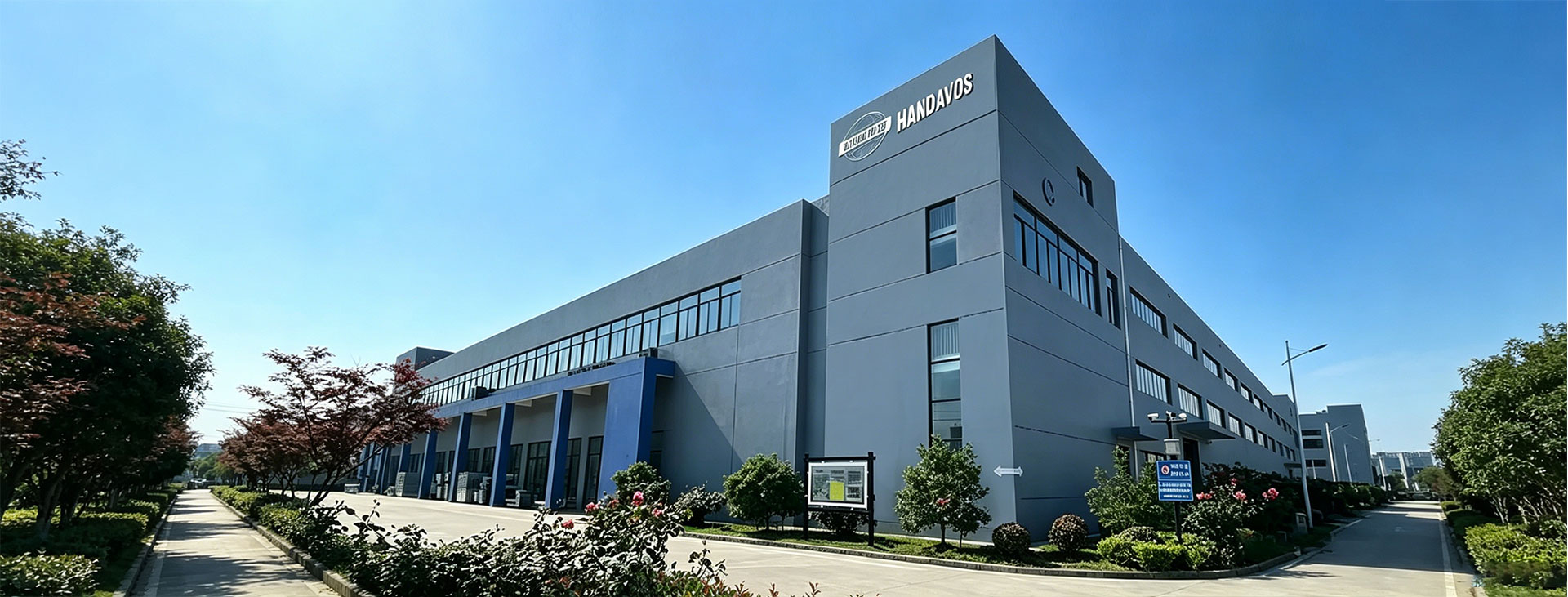
Based precisely on the aforementioned characteristics, Shanghai HanDavos International Trading Co., Ltd. relies on its industry accumulation of over twenty years in the warehousing equipment field to provide global industrial clients with a rich equipment selection including the Lead Acid Forklift. Backed by a modern standardized warehouse covering an area of over 20,000 square meters located in Kunshan City, the enterprise maintains sufficient spot inventory year-round, capable of instantly responding to the emergency deployment demands of various large factory areas for mature and stable heavy-duty equipment.
Core Performance and Technical Specification Breakdown of Lead Acid Forklift
When evaluating the hard strength of material handling equipment, technical parameters are often the key indicators determining workshop production efficiency. For high-intensity industrial production environments, the vehicle power output, load distribution, and environmental adaptability directly constitute the golden triangle measuring equipment performance.
Power System Analysis: Working Principle of Deep-Cycle Lead-Acid Batteries
As the heart of industrial vehicles, the core of the lead-acid power system lies in providing sustained and stable current output through deep-cycle technology. Unlike ordinary starting batteries, the industrial-grade deep-cycle storage battery carried by the Lead Acid Forklift is specially designed for long-duration, high-current discharge. In the process of continuous heavy object lifting and long-distance transfer, this battery can maintain a stable voltage platform, avoiding the impact on work progress caused by power attenuation.
Combined with the charge and discharge characteristics of deep-cycle batteries, the following is a core parameter technology comparison between industrial-grade lead-acid battery systems and ordinary starting batteries:
| Technical Parameter Dimension | Industrial-Grade Deep-Cycle Lead Acid Battery | Ordinary Starting Battery (e.g., Car Battery) |
| Design Depth of Discharge (DOD) | Supports 80% depth of discharge, greatly extending a single work cycle | Usually only supports 20%-30% shallow discharge; deep discharge causes sharp lifespan reduction |
| Charge and Discharge Cycle Lifespan | Approximately 1200 to 1500 cycles (under standard maintenance specifications) | Approximately 300 to 500 cycles |
| Plate Structure Thickness | Adopts thick and sturdy tubular or pasted positive plates with strong anti-sulfation capabilities | Thinner plates designed to output high current instantly but unable to endure continuous heavy loads |
| Electrolyte Thermal Management | Possesses strong heat capacity, with relatively stable temperature rise during heavy-load continuous operation | Prone to overheating during continuous heavy-load discharge, accelerating water loss |
To ensure that global clients can acquire power configurations with precise parameters and extremely high matching degrees, Shanghai HanDavos International Trading Co., Ltd. keeps a large amount of brand-new and high-quality used Lead Acid Forklift inventory with different ampere-hour (Ah) specifications year-round in its large modern warehousing base in Kunshan City. Backed by over twenty years of professional technical accumulation deeply cultivated in the material handling equipment field, its senior technical engineer team can accurately calculate and match the optimal battery capacity solution according to clients specific workshop power environments and load demands.
Matching Matrix of Load Capacity and Lift Height
In actual working conditions, cargo weight and warehouse racking height constitute the hard constraints of space utilization. The Lead Acid Forklift relies on its sturdy mast structure and scientific wheelbase design to exhibit extremely high safety redundancy across different load ranges.
To enable factory technical evaluation personnel to understand equipment performance boundaries more intuitively, the following is the parameter matching matrix of typical loads and lift heights in industrial standards:
| Equipment Rated Load (Capacity) | Recommended Standard Lift Height (Lift Height) | Mast Forward/Backward Tilt Angle at Full Load | Core Application Scenario Examples |
| 2.0 Tons - 2.5 Tons | 3.0 Meters to 4.5 Meters | 6° / 12° | Standard warehouses, electronic component warehouses, light machinery processing workshops |
| 3.0 Tons - 3.5 Tons | 3.0 Meters to 5.0 Meters | 6° / 12° | Automotive component assembly lines, heavy hardware warehousing, logistics sorting centers |
| 4.0 Tons - 5.0 Tons | 3.5 Meters to 5.5 Meters | 6° / 10° | Large steel plate sheets, wood processing yards, heavy building material transfer stations |
| 6.0 Tons and Above | 4.0 Meters to 6.0 Meters | 6° / 10° | Port terminals, heavy industrial foundries, large machinery equipment manufacturing workshops |
Operating Performance in Extreme Environments: Cold Storage and High-Dust Workshops
In addition to conventional indoor warehouses, many industrial scenarios are often accompanied by harsh physical challenges. For example, the sub-zero low-temperature environment of cold chain logistics centers causes ordinary battery activity to plummet; whereas high-dust workshops such as building materials or flour processing place extremely high demands on the sealing performance of electrical systems.
Aiming at these extreme working conditions, Shanghai HanDavos International Trading Co., Ltd., relying on its comprehensive product supply chain and professional technical service team, can provide clients with Lead Acid Forklift solutions that have undergone special protective modifications. For instance, targeting cold storage environments, vehicles are retrofitted with low-temperature anti-freezing hydraulic oil, cold-resistant cables, and special battery insulation heating layers to ensure equipment can still operate at full power under low temperatures; whereas for dust environments, through upgrading the protection level of electrical components (such as IP54 and above), dust intrusion leading to short circuits is effectively prevented, maximizing the continuity and safety of workshop operations.
Cross-Industry Heavy-Duty Handling: Multi-Scenario Adaptability and Non-Standard Customization Solutions for Lead Acid Forklift
The sites of industrial production are often vastly different, and no two factory workshop layouts or logistics routes are completely identical. For enterprises undertaking heavy-duty transfer tasks, material handling equipment not only needs to possess solid paper parameters, but also needs to possess strong on-site adaptability and flexible customization space. The Lead Acid Forklift has become an ideal platform to cope with complex working conditions by virtue of its stable mechanical architecture and highly mature electrical layout.
From Building Material Yards to Chemical Logistics: Chassis and Mast Design Matching Different Working Conditions
In actual operations, many heavy industrial factory areas face physical challenges such as outdoor ramps, uneven ground, or narrow aisles. To keep equipment running smoothly in these specific environments, the geometric design of the chassis and the rigidity of the mast are crucial.
Backed by over twenty years of deep precipitation in the material handling equipment field, Shanghai HanDavos International Trading Co., Ltd. owns a modern warehousing and modification base covering an area of over 20,000 square meters, capable of providing specialized optimization configurations extending to the chassis and mast levels tailored to the physical environments of different industry clients. Whether it is wheelbase ratio adjustments aimed at enhancing traction on large outdoor ramps or custom-tailored full-free three-stage masts adapted to low workshop door openings, this tailor-made equipment upgrading ensures that the Lead Acid Forklift maintains precise control performance under harsh road conditions.
To help on-site engineering personnel better evaluate the physical performance of equipment under different working conditions, the following is a comparison of equipment configuration adaptability for typical industrial scenarios:
%0A
| Industrial Application Scenario | Main Physical Challenges | Lead Acid Forklift Adaptive Configuration Solution | Core Physical Advantages |
| Outdoor Building Material/Steel Yards | Uneven ground, many ramps, accompanied by muddy rainwater | Equipped with super-elastic solid tires or wide-base deep-tread pneumatic tires, optimizing ground clearance | |
| Enhances overall vehicle traction and passability, preventing slipping and getting stuck | |||
| Large Machinery Manufacturing Workshops | Long-distance heavy-duty transfer, high ground load-bearing requirements, frequent aisle crossing | Adopts reinforced front axle and high-strength wide-track chassis design | Significantly enhances lateral anti-overturning capability during turns, ensuring high-position operation safety |
| Chemical and Paper Warehousing | Frequent start-stops, multiple chemical residues or slightly damp ground on the floor | Selects anti-acid-alkali anti-corrosion chassis coatings, upgrading key electrical connectors with waterproof seals | Extends the lifespan of metal structural parts, reducing failure rates caused by moisture and chemical erosion |
Attachment Expansion Capability: The Core of Satisfying Special Cargo Handling
What factory workshops handle is often not just standard specification pallet cargo, but also includes cylindrical paper rolls, heavy soft-pack fibers, large timber, and even irregular metal castings. Relying solely on standard forks makes it difficult to meet diversified loading and unloading demands.
To solve the clamping and turning difficulties of various special cargoes, the Kunshan headquarters of Shanghai HanDavos International Trading Co., Ltd. stocks massive professional forklift attachments and spare parts. By perfectly integrating efficient hydraulic systems with the Lead Acid Forklift, vehicles can rapidly integrate various functional attachments.
The following are several mainstream attachments commonly used in industrial sites and their parameter matching relationships with the Lead Acid Forklift:
| Common Industrial Attachment Type | Typical Application Industry | Core Attachment Functions and Technical Characteristics | Impact Adjustments on Host Load-Bearing Capacity |
| Paper Roll Clamp | Papermaking printing, packaging logistics | Achieves 360-degree continuous rotation and efficient clamping, avoiding paper roll edge damage | Since the attachment carries its own forward-shifting weight, rated lift height needs appropriate reduction and remaining load center calculation |
| Bale Clamp | Textile hemp, waste recycling, warehousing logistics | Directly and efficiently handles compressed soft packs such as sponge, cotton, waste paper without pallets | Needs to match hydraulic multi-way valve systems capable of high-pressure large-flow output |
| Sideshifter | Comprehensive warehousing, high-density racking areas | Allows forks to shift left and right overall by about 100mm, substantially reducing alignment time | Minimal impact on longitudinal stability, significantly enhancing stacking efficiency in narrow aisles |
| Carton Clamp | Home appliance manufacturing, fast-moving consumer goods warehousing | Clamps palletless box-packed goods via uniform surface pressure, reducing wooden pallet costs | Requires precise system pressure regulation to prevent excessive compression damage to internal products |
Ergonomics and Safety Protection Matrix Design
Long-duration continuous operations pose a severe test to the physical strength and mental concentration of operators. At the initial design stage of the modern Lead Acid Forklift, ergonomics is treated as a core link to enhance overall operational throughput.
By optimizing cockpit pedal layouts, adopting damping suspension seats, and equipping panoramic visibility masts, vehicles can effectively alleviate driver fatigue during multi-shift operations. Meanwhile, safety protection matrices such as the standard-equipped OPS (Operator Presence Sensing System) can automatically cut off driving and lifting power when the driver leaves the seat, fundamentally eliminating safety hazards brought by misoperations. Shanghai HanDavos International Trading Co., Ltd. has always been committed to delivering these high-safety, high-comfort equipment items to global partners, fully safeguarding the high efficiency, smoothness, and safety of workshop operations.
Enhancing Fleet Attendance: Standardized Maintenance and Safety Management of Lead Acid Forklift
In the high-intensity operation of large manufacturing factories and modern logistics centers, fleet attendance directly hooks into the throughput efficiency of the entire supply chain. For a large number of Lead Acid Forklift fleets, equipment maintaining stable online status day in and day out relies not only on superior manufacturing quality, but also on the scientification and standardization management of daily operations and maintenance.
Formulating Scientific Charge-Discharge Cycling Strategies (8-8-8 Rule)
To keep the power system in a healthy state for a long time, reasonable charge and discharge management is crucial. The classic 8-8-8 rule circulating in the industrial community is the core strategy ensuring the efficient operation of lead-acid powered fleets: namely 8 hours of work, 8 hours of charging, and 8 hours of cooling.
Under high-intensity working conditions of multi-shift rotations, if continuous use is unchecked or incomplete charging is performed frequently, it easily leads to irreversible sulfation phenomena inside the battery, thereby shortening its overall service life. To assist global clients in optimizing the usage lifecycle of equipment from the source, Shanghai HanDavos International Trading Co., Ltd., relying on its over twenty years of rich experience accumulated in the material handling equipment field, not only owns a modern warehousing base exceeding 20,000 square meters in Kunshan City to provide clients with sufficient Lead Acid Forklift spot goods and spare part support, but its senior technical engineering team can also custom-tailor scientific fleet battery swapping and charging schedules for enterprises, ensuring each piece of equipment can be in the optimal energy state when put into high-intensity operations.
Battery Watering and Equalization Charging: Daily Norms for Reducing Depreciation Rates
As the most core link in the daily maintenance of lead-acid storage batteries, the monitoring of electrolyte fluid levels and regular water replenishment often determine the ultimate depreciation cost of equipment. In the process of continuous high-current discharge and charging, water in the electrolyte undergoes electrolytic loss. If deionized water or purified water is not replenished in time, the tops of the plates exposed to air will be permanently damaged.
To give workshop equipment management personnel rules to follow, the following are standardized daily and regular maintenance operation parameter specifications for Lead Acid Forklift traction batteries:
| Maintenance Project Category | Recommended Execution Frequency | Core Technical Operation Specifications | Potential Risks Brought by Ignoring This Item |
| Electrolyte Fluid Level Check | Every 5 to 10 charge cycles (usually once a week) | Must check the fluid level **after battery charging is completed**, ensuring the fluid level is 10-15 millimeters above the top of the plates, and only distilled or deionized water may be added | Plates exposed, oxidized, and dried out, leading to permanent decay of battery storage capacity, or even causing internal short circuits |
| Equalization Charging | 1 to 2 times a month | After routine charging ends, adopt low current for overcharging to eliminate voltage imbalance among individual cells | Unable to eliminate sulfation crystals, voltage differences are generated among individual cells, and overall endurance declines rapidly |
| Terminal Cleaning and Anti-Corrosion | Once a quarter | Remove acid corrosion residues on terminal surfaces, applying petroleum jelly or dedicated anti-corrosive conductive grease to protect contact surfaces | Contact resistance increases, causing heating during high-current discharge; minor cases burn plugs, major cases trigger electrical failures |
Safety Ventilation and Warehousing Compliance Construction of Charging Areas
Lead-acid storage batteries undergo electrolytic reactions at the final stage of charging, generating small amounts of hydrogen and oxygen. Therefore, reasonable charging area planning and safety protection design are key points ensuring plant-wide fire and safety compliance.
To assist enterprises in building a safe and compliant material handling ecosystem, Shanghai HanDavos International Trading Co., Ltd., while providing complete vehicle and battery matching solutions to clients, will also provide professional safety layout guidance combined with their actual factory building conditions. When setting up an exclusive Lead Acid Forklift charging station, it must be ensured that the area is equipped with good natural ventilation or mechanical exhaust systems, strictly controlling the hydrogen concentration in the air below safety thresholds. Simultaneously, eye-washing devices, firefighting equipment, and clear fire warning signs need to be configured around the charging area, combining hardware and management to fully safeguard the stability and safety of workshop operations.
Factory Direct Procurement Guide: How to Evaluate High-Quality Lead Acid Forklift Manufacturing Suppliers
When deciding to introduce a new batch of heavy-duty handling equipment for a large production base or warehousing logistics center, choosing a partner with deep foundations and reliable delivery capabilities is often more critical than simply comparing single-vehicle prices. The procurement of industrial-grade equipment involves long-term, high-frequency subsequent support, thus the comprehensive evaluation of manufacturing and supply chain service providers requires extremely high rigor.
International Quality Certification and Export Compliance Standards
For large factory areas operating cross-regionally on a global scale, whether equipment passes rigorous international quality systems and safety standard certification is the first threshold to circumvent operational risks. High-quality heavy-duty equipment must completely benchmark against international mainstream specifications in manufacturing processes, electrical safety, and environmental protection indicators.
In over twenty years of deep cultivation in the material handling industry, Shanghai HanDavos International Trading Co., Ltd. has always placed product compliance and manufacturing quality at its core position. The corporate headquarters is located in Kunshan City with extremely convenient transportation, boasting a modern standardized warehouse covering an area of over 20,000 square meters. Here, whether it is a newly introduced fleet or high-quality used Lead Acid Forklift screened through rigorous testing, all are screened and reconditioned under complete quality control and international certification standards, ensuring every piece of equipment delivered to clients can directly meet entry requirements across different global industrial sites.
To assist the engineering technology and asset management departments of equipment in performing supplier qualification reviews more efficiently, the following is a core standard comparison that needs key verification when evaluating high-quality equipment suppliers:
| Evaluation Dimension | Industry High Standard Requirements (High-Quality Supplier Performance) | Low-Quality or Non-Standard Supplier Performance |
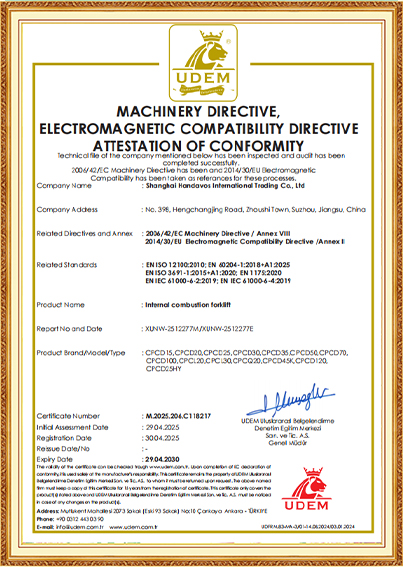
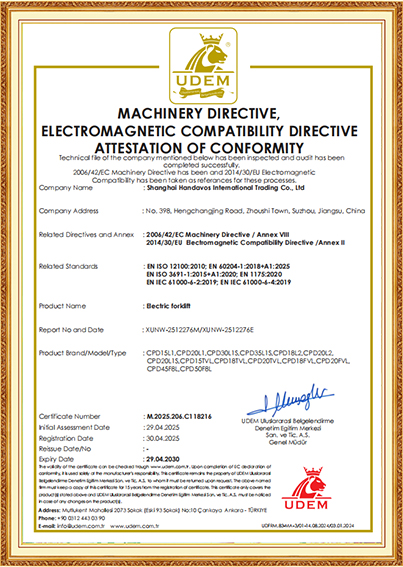
| International Quality and Safety Certification | Strictly holds a full set of qualifications such as ISO international quality management system certification and CE safety compliance certification | Lacks authoritative certification, or certificates are expired, bearing risks of failing customs and local safety supervision audits |
| Pre-Factory Testing and Reconditioning Standards | Possesses standardized full-vehicle load testing, hydraulic system pressure testing, and electrical insulation testing processes | Only performs simple exterior cleaning, lacking professional bench test reports for core power and powertrain assemblies |
| Technical Parameter Transparency | Provides detailed rated load curve charts, mast height matching data, and electrical schematic explanation documents | Parameter descriptions are vague, unable to provide effective payload safety margin proof targeting specific working conditions |
Customized Production Capability and Large-Batch Delivery Schedule Control
The landing of large projects is often accompanied by tight time nodes and unique on-site working conditions. Whether it requires special color spray markings on the vehicle body or non-standard modifications according to special mast and attachment demands, the local capacity and supply chain coordination capabilities of suppliers directly determine project success.
Relying on the modern warehousing and integration base located in Kunshan, Shanghai HanDavos International Trading Co., Ltd., with its massive spot inventory and rich product matrix, is capable of achieving large-scale rapid order response and one-stop delivery for domestic and overseas clients. The enterprise not only maintains year-round reserves of full series of brand-new and selected used Lead Acid Forklift units, but also synchronously matches massive spare parts and various professional attachments. This comprehensive stock preparation and supply chain dispatching capability enables the team to rapidly complete modifications, debugging, and shipping when facing complex and urgent equipment addition demands, effectively avoiding production line shutdown losses caused by equipment delivery delays.
Global Spare Parts Network and Warranty System
Equipment delivery is merely the beginning of long-term cooperation, and subsequent years of operation and maintenance support are the touchstones testing the true strength of partners. Heavy-duty industrial equipment inevitably encounters wearing parts consumption or sudden technical adjustment demands during high-intensity multi-shift operations.
To thoroughly eliminate client worries regarding equipment after-sales maintenance, Shanghai HanDavos International Trading Co., Ltd. has assembled a professional team covering technical research and development, market service, and after-sales support. Senior technical engineers and after-sales specialists can provide timely pre-sales consultation, remote technical guidance, and comprehensive spare part supply solutions for global clients. By deeply combining high cost-performance products and a sound supply chain service system, it genuinely helps every partner realize maximum equipment attendance and continuous optimization of operational costs in complex industrial environments.
Frequently Asked Questions and Technical Popularization
Before formally putting heavy-duty handling equipment into large-scale factory area operations, engineering technical personnel and equipment asset managers usually raise various practical questions regarding core performance, daily maintenance, and the adaptability of special working conditions. To help you understand and efficiently apply related equipment more deeply, we have combed through several core questions and professional answers most frequently mentioned in daily industrial deployments.
Q1: How Many Hours Can a Standard Lead Acid Forklift Work Continuously at Full Load?
In high-intensity industrial environments with multi-shift rotations, the single-trip endurance capability of equipment is the core basis for fleet scheduling. Usually, the continuous working time of a standard-configured heavy-duty vehicle under full-load operating conditions is around 5 to 6 hours. This duration is dynamically affected by specific working conditions; for example, frequent full-height mast lifting, large-angle slope climbing, and high-intensity steering will all accelerate power consumption.
To ensure fleets do not experience gaps during cross-shift operations, reasonable energy management and equipment matching are crucial. As an industry service provider deeply cultivating the material handling equipment field for over twenty years, Shanghai HanDavos International Trading Co., Ltd. not only maintains massive spot equipment reserves inside its modern warehousing base covering over 20,000 square meters in Kunshan City, but can also provide high-efficiency matching solutions of vehicle plus backup battery packs according to clients actual work shifts, thoroughly dispelling endurance concerns through scientific battery-swapping workflows.
Q2: What is the Average Lifespan of a Lead Acid Forklift Battery? How to Extend It?
The lifecycle of a battery directly determines overall operational costs. Under standard charge and discharge specifications, the average lifespan of high-quality industrial-grade deep-cycle lead-acid batteries is usually between 3 and 5 years, translating to supporting roughly 1200 to 1500 complete charge and discharge cycles.
To make the return on investment of equipment optimal, scientific battery management must be strictly executed in daily operations and maintenance. The following is a comparison of core technical points for extending battery lifespan:
| Maintenance Operation Method | Correct Standard Practice | Incorrect or Ignored Violation Practice | Actual Impact on Battery Lifespan |
| Charging Timing Selection | Charge in time when power drops to 20% to 30%, avoiding excessive deep discharge | Long-term draining power completely (using until completely unable to turn on) before charging | Long-term deep discharge causes active substances on plates to shed, directly shortening lifespan by more than half |
| Watering and Fluid Level Management | Strictly check fluid levels after battery charging completes, and replenish purified distilled water | Adding water before charging or when the battery is hot, or using tap water containing impurities | Causes electrolyte overflow or plate dry corrosion, generating irreversible sulfation crystals internally |
Q3: What Special Ventilation Preparations Are Needed When Using a Lead Acid Forklift in Indoor Warehouses?
Lead-acid storage batteries generate small amounts of hydrogen and oxygen at the final stage of completing a charge. Although in normally open indoor workshops these trace gases rapidly disperse in the air, for warehousing areas with relatively closed spaces or poor ventilation conditions, scientific ventilation planning remains an indispensable safety link.
It is usually recommended to configure mechanical exhaust fans in indoor exclusive charging areas to ensure smooth air circulation, strictly controlling hydrogen concentrations in the environment below very low safety thresholds. Simultaneously, the senior technical engineer team of Shanghai HanDavos International Trading Co., Ltd., when outputting equipment solutions for global clients, will also combine clients specific factory building structures and space layouts to provide customized charging area safety protection and exhaust system construction guidance, fully safeguarding the compliance and safety of the operating environment.
Q4: If a Factory Needs to Supplement Multiple Equipment Units at Once, What Customized Support Can Be Provided?
Facing tight demands for overall large-scale factory expansions or logistics production line upgrades, standard specification equipment is often difficult to completely fit all details on-site. When enterprises introduce equipment in batches, they usually require suppliers to possess strong comprehensive supply chain coordination and non-standard modification capabilities.
Relying on the modern warehousing and integration base headquartered in Kunshan, Shanghai HanDavos International Trading Co., Ltd., by virtue of massive spot reserves, is capable of instantly responding to large-scale equipment deployment demands. Whether it is performing specific corporate visual spray markings on vehicle bodies, retrofitting special hydraulic attachments, or carrying out custom modifications targeting special mast heights, the experienced technical team can complete reconditioning and debugging within strict delivery schedules, ensuring every delivered Lead Acid Forklift seamlessly integrates into your production ecosystem and creates continuous and stable logistics value for global partners.
