


 English
 中文简体
中文简体 русский
 Español
 عربى
عربى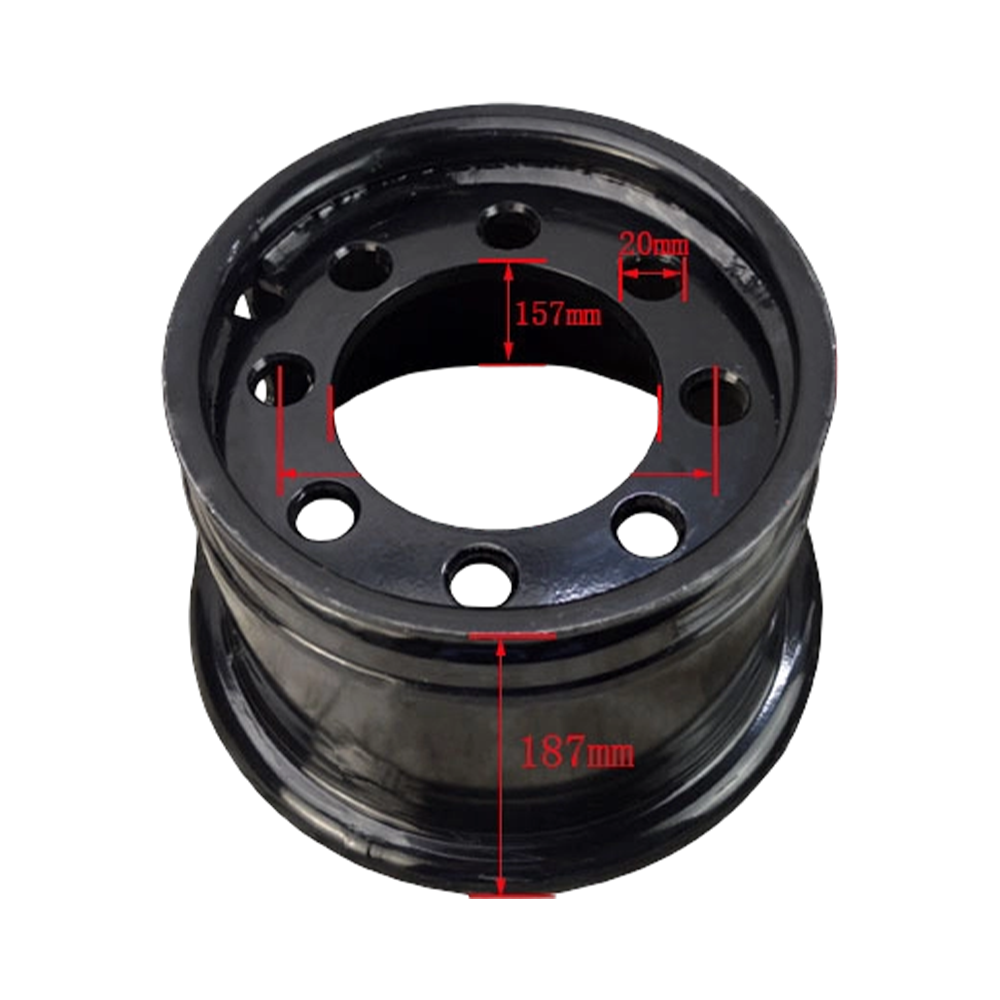
Forklift Rims and the Mechanics of Industrial Wheel Assembly
Forklift rims serve as the foundational link between a vehicle’s drive system and the heavy-duty tires required for material handling. These components are far more than simple metal circles; they are precision-engineered load-bearing structures that must endure extreme stresses, including high-frequency vibrations, heavy vertical loads, and the constant torque involved in maneuvering heavy pallets through busy warehouses or industrial loading docks.
In the realm of material handling, the integrity of the rim directly correlates to vehicle safety and operational uptime. When a rim loses structural stability, it can compromise the entire wheel assembly, leading to uneven tire wear, steering misalignment, and potential hazards during high-stacking operations. Shanghai HanDavos International Trading Co., Ltd. has observed, through over 20 years of experience in the material handling industry, that the synergy between a high-quality rim and the tire is what ultimately determines the lifespan of the wheel unit. Operating as a core branch of Kunshan Hanzhi, our team emphasizes that choosing the right rim configuration is the first step in ensuring long-term equipment efficiency and safety.
Core Design and Structural Types of Forklift Rims
Industrial applications demand specific rim designs tailored to the intensity of the work environment. Understanding these designs is essential for maintaining equipment that operates continuously.
Split Rims (Multi-Piece Rims): These are the standard for most heavy-capacity industrial trucks. Typically consisting of two or three components—a base, a side ring, and a lock ring—these rims allow for the removal and installation of solid and pneumatic tires without the need for high-pressure industrial presses in some field configurations. They are designed for durability, capable of sustaining massive radial loads common in heavy-duty logistics.
Flat Base Rims & Drop Center Rims: These are commonly utilized on various electric and internal combustion models. The flat base design provides a stable, uniform support for heavy-duty pneumatic tires, while drop-center versions are often found on smaller equipment where ease of tire mounting is a priority.
The material composition is equally vital. Shanghai HanDavos International Trading Co., Ltd. supplies rims constructed from high-grade forged steel, which offers superior fatigue resistance compared to cast iron alternatives. Forged steel provides the necessary ductility to withstand impact from uneven floor surfaces or debris, ensuring that the rim maintains its circular integrity under significant pressure.
Technical Specifications and Compatibility Matrix
Selecting the correct component requires attention to specific geometric parameters. A mismatch in these dimensions can lead to hub vibration or compromised bolt-hole stability. The following table highlights standard technical parameters that should be considered when assessing compatibility for heavy-duty industrial equipment:
| Parameter | Function | Importance |
| Bolt Circle Diameter (PCD) | The diameter of the circle passing through the center of the bolt holes. | Ensures secure fitment to the wheel hub. |
| Center Bore Diameter | The diameter of the center hole in the rim. | Provides central alignment on the hub. |
| Offset | The distance from the mounting surface to the centerline of the rim. | Determines the track width and suspension clearance. |
| Flange Thickness | The thickness of the outer rim edge. | Dictates structural rigidity and tire bead seating. |
When sourcing components, it is critical to match these parameters precisely to the machine's specifications. At our 20,000 square meter warehouse facility in Kunshan City, we maintain a vast inventory of standardized wheel components. This allows us to provide exact matches for a wide range of industrial equipment, ensuring that replacements integrate perfectly without the need for modifications.
Manufacturing Standards, Quality Control, and Factory Testing
The production of an industrial-grade rim requires strict adherence to precision engineering and metallurgical standards. Because these components endure constant rotational stress and massive weight distribution, the manufacturing process leaves no room for error. High-grade raw steel undergoes automated cutting, precise roll-forming, and heavy-duty welding to create a unified structure capable of resisting dynamic loads.
Quality control begins long before a component is packaged for distribution. Every batch of rims must pass rigorous dimensional tolerance checks, including laser measurements for roundness, runout, and center bore concentricity. Any minor deviation in these metrics can cause rotational imbalances, leading to premature wear on wheel bearings and steering assemblies.
Quality Verification Protocols
| Testing Phase | Inspection Focus | Standard Threshold |
| Raw Material Verification | Tensile strength and carbon content analysis | Conforms to international industrial steel grades |
| Structural Integrity Check | Automated ultrasonic and X-ray weld inspection | Zero internal porosity or micro-cracking |
| Dimensional Tolerance | Laser check for roundness and flange alignment | Within plus or minus 0.5 mm of engineering blueprints |
| Surface Coating Adhesion | Salt spray test and cross-hatch adhesion test | Minimum 500 hours of corrosion resistance |
Operating with a deep understanding of these manufacturing demands, Shanghai HanDavos International Trading Co., Ltd. works closely with certified production facilities to ensure that every wheel component meets stringent quality benchmarks. Maintaining a massive inventory within our 20,000-square-meter standardized warehouses in Kunshan City allows our technical team to verify batch specifications directly, ensuring that maintenance directors and fleet operators receive parts that perform reliably under pressure.
Surface treatment is the final, critical line of defense against premature degradation. Industrial environments are rarely kind to metal components. Exposure to moisture, abrasive chemicals, and outdoor elements can quickly compromise unprotected steel. To counter this, top-tier rims utilize advanced surface preparation, including abrasive blast cleaning followed by electrophoretic deposition (ED coating) and an outer layer of UV-resistant powder paint. This multi-stage coating seals the metal against oxidation, ensuring the components maintain their structural integrity even when deployed in demanding settings like marine ports, chemical processing plants, or cold storage warehouses.
Bulk Supply, Customization, and Manufacturing Partnerships
Managing a large fleet or an extensive inventory of material handling equipment requires a reliable, consistent supply chain for replacement parts. When maintenance supervisors or operational directors need to restock components, minimizing equipment downtime is always the top priority. Securing industrial wheel rims directly from an established source ensures that replacement schedules remain uninterrupted and that large-scale operations maintain peak efficiency.
Sourcing Models and Operational Impact
| Sourcing Approach | Inventory Availability | Lead Time & Fulfillment | Customization Flexibility |
| Traditional Local Distribution | Often limited; prone to regional stockouts | Moderate to long due to multi-tier supply chains | Minimal; limited to off-the-shelf catalog items |
| Direct Wholesale Partnership | Massive, consolidated inventory | Rapid dispatch from centralized warehouses | High; custom PCD, offset, and color options available |
Leveraging over 20 years of profound expertise in the material handling industry, Shanghai HanDavos International Trading Co., Ltd. has structured its supply operations to eliminate common logistical bottlenecks. Strategically headquartered in Kunshan City with superior transportation accessibility, the enterprise maintains more than 20,000 square meters of modern standardized warehouses. This massive infrastructural footprint enables the storage of a diverse inventory of complete spare parts and wheel components, supporting rapid order fulfillment and seamless one-stop acquisition for clients worldwide.
Beyond standardized off-the-shelf options, industrial projects frequently demand specialized engineering to match unique machinery requirements. Fleet managers often encounter custom modifications, such as non-standard Pitch Circle Diameter (PCD) patterns, specialized offset adjustments, or heavy-duty protective coatings tailored to specific corporate branding or corrosive environments. Backed by a professional full-service team covering technology, marketing, and after-sales support, Shanghai HanDavos International Trading Co., Ltd. collaborates closely with clients to deliver tailored manufacturing solutions. Experienced technical engineers provide prompt pre-sales consultation and technical guidance, ensuring that every custom rim specification is accurately met before production begins.
Adhering to the principle of quality-oriented and customer-centric service, the enterprise bridges the gap between large-scale manufacturing output and individual project demands, delivering cost-effective products and streamlined logistics to create maximum value for every operational partner.
Maintenance, Inspection, and Replacement Best Practices for Equipment Operators
Maintaining the structural health of heavy-duty industrial equipment relies heavily on proactive inspection routines. Because wheel assemblies endure continuous load-bearing stress, cyclic fatigue, and environmental exposure, overlooking minor surface wear can lead to sudden mechanical failures on the warehouse floor or loading dock. Establishing a strict maintenance schedule helps facility supervisors catch early signs of degradation before they disrupt daily operations.
Regular checks should focus on the rim's critical stress zones, including the bolt holes, flange edges, and weld seams. Over time, constant torque and heavy impacts can cause microscopic fatigue cracks or structural deformation.
Inspection and Maintenance Guidelines
| Inspection Area | Potential Issue | Recommended Action |
| Bolt Holes & Hub Mountings | Elongation, micro-cracks, or thread wear | Inspect torque levels regularly; replace immediately if elongation exceeds 0.5 mm |
| Rim Flanges | Denting, corrosion pitting, or bead seat wear | Clean and inspect during every tire change; remove rust and recoat exposed metal |
| Weld Seams | Fatigue cracking from high-frequency vibration | Perform non-destructive testing (NDT) or dye-penetrant inspection annually |
Safety is paramount during tire-and-rim servicing, particularly when dealing with multi-piece split rims. These designs utilize locking rings that hold immense internal pressure from heavy-duty tires. Improper disassembly or failing to completely deflate a tire before removing the lock ring can result in severe workplace accidents. Maintenance teams must always follow standardized deflation and safety cage protocols during any tire or rim replacement procedure.
When parts reach the end of their functional service life, prompt replacement is essential to protect adjacent drivetrain components like wheel bearings and axle shafts. To assist maintenance directors in minimizing operational downtime, Shanghai HanDavos International Trading Co., Ltd. provides a comprehensive portfolio of replacement parts alongside expert technical guidance. Backed by experienced technical engineers and after-sales specialists, the enterprise delivers timely support and clear recommendations on equipment operation and maintenance, ensuring that fleet managers can resolve technical challenges swiftly and maintain continuous site safety.
Frequently Asked Questions (FAQ) & Technical Insights
Navigating the technical details of heavy-duty industrial components often raises specific operational questions for fleet managers and warehouse directors. Below are answers to some of the most common inquiries regarding selection, maintenance, and field application.
What are the primary operational differences between split-type forklift rims and standard drop-center rims?
Split rims (often configured in two or three pieces) are engineered specifically for high-capacity industrial trucks utilizing massive solid or heavy pneumatic tires. Their modular design allows maintenance crews to mount and dismount tires more easily without heavy-duty hydraulic press equipment in certain field scenarios. In contrast, standard drop-center rims are typically utilized on lighter-duty electric or internal combustion models where a single-piece, welded structure provides sufficient rigidity for standard material handling tasks.
What is the standard methodology for accurately measuring bolt patterns and hub diameters when selecting replacement components?
To ensure a precise fit and avoid dangerous hub wobbling, accurate measurement of the mounting interface is essential.
| Measurement Parameter | Measurement Method | Precision Requirement |
| Bolt Circle Diameter (PCD) | Measure from the center of one bolt hole across to the center of the opposite hole (for an even number of holes). | Within plus or minus 0.2 mm |
| Center Bore | Measure the inner diameter of the exact center pilot hole using digital calipers. | Exact match to axle hub diameter |
| Offset Distance | Measure the distance from the hub mounting face to the exact centerline of the rim width. | Plus or minus 0.5 mm tolerance |
Which surface treatment specifications are most effective for rims operating in high-salinity marine or corrosive chemical environments?
Environmental exposure can rapidly degrade structural steel. For operations situated in coastal ports, chemical processing facilities, or cold storage units utilizing corrosive agents, a multi-stage coating process is vital. This typically involves abrasive blast cleaning down to bare metal, followed by an electrophoretic deposition (ED coating) primer layer for deep corrosion resistance, finished with an outer coat of UV-resistant industrial powder paint. Shanghai HanDavos International Trading Co., Ltd. frequently consults with industrial clients operating in severe environments to recommend components equipped with these advanced anti-corrosion treatments, ensuring maximum service longevity.
What are the typical lead times and industrial packaging standards for large-volume factory orders?
Minimizing equipment downtime requires predictable logistics and secure transit preparation. Utilizing a strategically located headquarters in Kunshan City with superior transportation accessibility, Shanghai HanDavos International Trading Co., Ltd. maintains over 20,000 square meters of modern standardized warehouses stocked with a massive inventory of wheel components and complete spare parts. This robust stockholding enables rapid order fulfillment and streamlined dispatch. Standard export orders are secured onto heavy-duty wooden pallets, wrapped in moisture-resistant industrial film, and reinforced with steel banding to prevent shifting or surface scratching during international transit.
