2026-11-19
Content
A repair quotation for a bent upright covers steel, fixings and an installer's afternoon. It does not cover the pallets that cannot be picked while the bay is offloaded, the supervisor who spends a shift on paperwork, or the customer order that ships a day late. When a warehouse manager puts all of those lines on one sheet, the true cost of one strike is usually several times the price of the replacement part, and that is the figure that justifies spending on prevention.
The four planning assumptions below are typical ranges used when building a cost sheet for a mid-sized site. Replace them with your own numbers after the first month of logging, because every building has a different pick rate, labour cost and stock value per pallet position.
Illustrative split for worksheet purposes. Actual proportions depend on stock value, shift pattern and how quickly spare parts can be sourced.
The pattern behind the chart is consistent across sites: the part that gets approved quickly, the steel, is the smallest slice. The largest slice is time. That is why prevention measures that keep trucks moving, such as better lane lighting or a truck that fits its aisle, tend to repay their cost faster than measures that simply make the rack stronger.
Drivers and supervisors often assume that a heavier load is the main driver of damage. The physics points elsewhere. Kinetic energy rises with the square of speed, so a truck that doubles its speed through a corner delivers four times the energy to whatever it touches. Weight matters, but it scales in a straight line; speed scales in a curve.
The chart below plots the energy released at contact for a loaded truck (truck plus load, 4,000 kg combined) and an empty truck (3,000 kg) at speeds between 2 and 10 km/h. These are ordinary warehouse speeds, well inside most site limits, yet the highest points are large enough to buckle an upright section.
Calculated as half the mass multiplied by speed squared. The values show the energy available at contact, not the energy absorbed by a particular rack, which depends on the contact point and the section.
| Speed | Speed in metres per second | Energy at contact | Relative to 2 km/h |
|---|---|---|---|
| 2 km/h | 0.56 | about 620 J | 1 times |
| 4 km/h | 1.11 | about 2,470 J | 4 times |
| 6 km/h | 1.67 | about 5,560 J | 9 times |
| 8 km/h | 2.22 | about 9,880 J | 16 times |
| 10 km/h | 2.78 | about 15,430 J | 25 times |
The practical reading is simple. Moving the speed limit inside the aisle from 8 km/h to 5 km/h cuts available energy by roughly 60 percent, without touching the truck, the rack or the budget. Speed limits are only as good as their enforcement, which is why the next sections look at how a truck and an aisle can be arranged so that the slow speed is the natural one rather than the imposed one.
The pallet is the part of the load that actually meets the rack. A pallet with a cracked bottom board, a leaning stack or a loose wrap film does not behave as the driver expects, and a driver compensating for an unpredictable load is a driver who is not watching the upright. Many contact events that are blamed on steering are really load events.
Missing or split deck boards let a fork tip drop or catch. Reject the pallet before it reaches the aisle, not at the bay.
Cartons that extend past the pallet edge reduce the margin to the upright by the same distance on every pick.
A stack that leans shifts the centre of gravity during a turn, so the tail of the truck swings wider than normal.
Trailing stretch wrap catches on beam corners and pulls a carton forward just as the forks begin to withdraw.
| Check | Accept | Reject or re-pack | Reason |
|---|---|---|---|
| Deck boards | All boards present and fixed | Any board split, missing or lifted | Fork tips can snag and push the load forward |
| Overhang | Load within the pallet footprint | Anything beyond 20 mm per side | Reduces the working gap at the upright |
| Height profile | Level top, stable stack | Visible lean or crushed bottom layer | Load shifts as the truck steers |
| Wrap and banding | Tight and tucked | Loose ends or open film | Catches on beams and connectors |
| Fork entry | Full-width openings clear | Entry blocked by stretched film or labels | Forks enter at an angle and lift unevenly |
An inbound goods check that rejects poor pallets costs a few seconds per load. Placed at the receiving dock, it prevents the same pallet being handled by three different drivers in three different aisles, each of whom would have to adapt to its faults.
Some damage has nothing to do with the rack face at all. It happens where lanes meet, where trucks leave an aisle and where a pedestrian walkway crosses the route. These zones concentrate the sudden stops and sharp turns that cause contact, and they are worth treating as a separate design problem.
What happens: two trucks arrive at the same junction with a blind corner between them, and one brakes hard while turning.
Remedy: convex mirrors mounted above truck height, a painted stop line, and a one-way rule for the busiest cross-aisle.
What happens: a truck leaves a narrow aisle and swings the tail wide into the end frame of the neighbouring rack.
Remedy: a chalked swing envelope converted to floor paint, plus end-frame protectors set outside that envelope.
What happens: loads arrive on mixed pallet types and drivers rush the transfer to clear the dock.
Remedy: a marked staging area with room for two pallets side by side, and a rule that racked aisles start only after the dock handover.
One-way flow is the least expensive structural change available. When trucks travel in a single direction, head-on meetings disappear, the blind-corner problem halves, and the lane can often be marked with a narrower safety margin on the passing side. Not every building can adopt it, but any lane with recurring junction strikes should be evaluated.
| Marking | Where it belongs | What the driver should understand |
|---|---|---|
| Solid stop line | Before every cross-aisle and exit | Come to a full stop and look both ways |
| Hatched keep-clear zone | In front of rack end frames | No parking, no staged pallets, no turning inside |
| Dashed swing arc | At the exit of narrow aisles | The rear of the truck will pass through this space |
| Walkway boundary | Wherever pedestrians cross lanes | Slow to walking pace and give way |
| Staging box | Dock side and aisle entry | Pallets are placed here, not in the lane |
A driver can only avoid what the driver can see. Most trucks are designed with a mast, a guard and a battery compartment that block part of the view, and the blocked part is often the exact corner where contact happens. A set of low-cost aids restores that view or warns people when the truck approaches a risk, and several can be fitted to existing trucks without major modification.
| Aid | What it does | Best used where | Limit to keep in mind |
|---|---|---|---|
| Fork-tip lights | Projects a beam onto the floor or load ahead | Low-light aisles and cold stores | Does not show the truck tail |
| Mast or carriage camera | Shows the fork position at height on a cab screen | Tall racking above eye level | Screen must be placed within the natural eye line |
| Rear-view camera | Covers the blind area behind the counterweight | Reversing out of narrow aisles | Lens needs cleaning at every shift start |
| Speed control by zone | Caps travel speed inside marked areas | Aisles, junctions and dock approaches | Needs a reliable zone marker and regular testing |
| Proximity warning | Alerts the driver as the truck nears a rack or person | Mixed traffic and tight lanes | Alert thresholds must be tuned to avoid nuisance alarms |
| Blue or red floor spot | Projects a warning mark ahead of the truck | Blind corners and junctions | Less visible in bright daylight near open doors |
Nuisance alarms deserve a separate remark. A warning that sounds every few seconds is soon ignored, and an ignored warning is worse than none because it teaches drivers to disregard the next one. Whichever aid is selected, set the thresholds during a trial week, invite the drivers to comment, and adjust until alarms only appear when something genuinely needs attention.
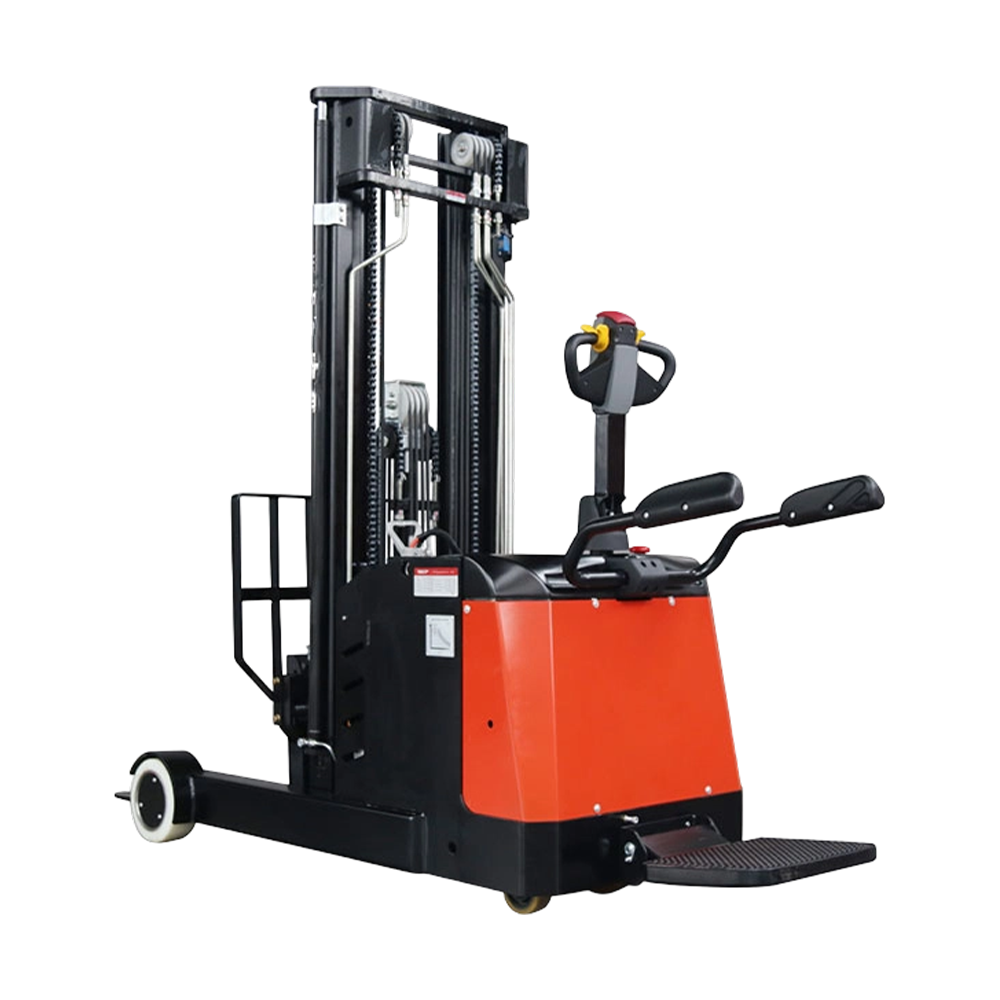
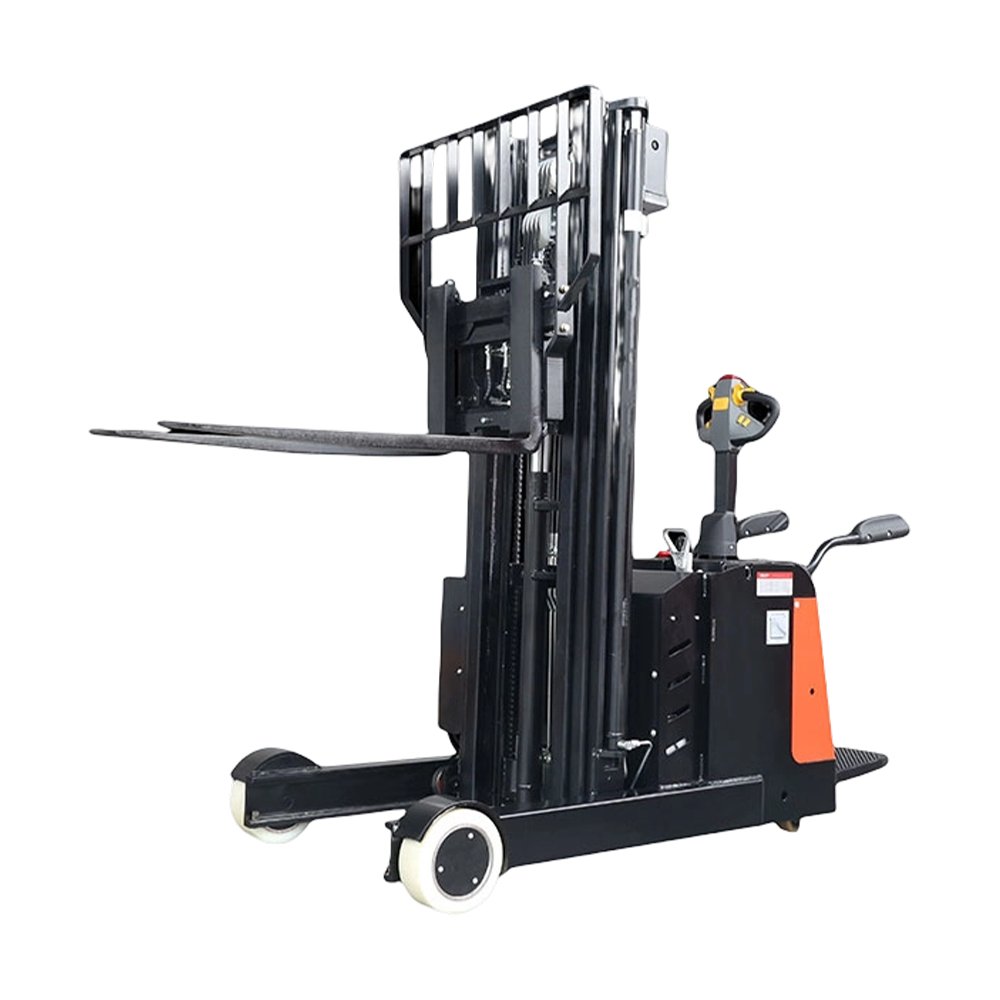 Stand-Up Electric Reach Truck, 1.2 and 1.5 TonneCompact chassis, forward-mounted mast and a driver position that keeps the rack face in view. Built for operations that want tighter aisles without giving up lift height.View Product
A manufacturing plant that builds trucks in volume can usually adapt a standard model to a site rather than forcing the site to adapt to the truck. That flexibility is where a large share of rack damage can be designed out before the first pallet moves. The decisions below are the ones that most often change how a truck behaves inside an existing aisle.
A mast that is only slightly taller than the top beam level keeps overhead clearance healthy. A free-lift mast keeps the truck low when it enters a doorway or a mezzanine passage.
Forks that match the pallet depth stop the tips from protruding into the next bay. Over-long forks are a frequent reason for beam strikes on the far side of a double-deep rack.
Electric power steering with adjustable sensitivity lets a new driver work with a gentle response, and an experienced driver switch to a sharper setting.
A programmable controller can limit top speed while the mast is raised, while allowing a faster run along open lanes when the forks are low.
The battery is also the counterweight. A different capacity changes the truck's tail length and weight distribution, and both change how the truck behaves in a turn.
Clear-view mast channels, lowered overhead guard bars and mirrors positioned to cover the tail are inexpensive options that often matter more than extra lift capacity.
| Question to settle | Why it affects rack contact | Information to supply |
|---|---|---|
| Which pallet sizes will the truck handle? | Determines fork length and spread, and the working gap at the bay | Pallet dimensions and loaded footprint |
| What is the lowest overhead obstruction? | Sets the maximum lowered height and mast type | Sprinkler, duct and door heights |
| How narrow is the tightest aisle? | Decides truck family and turning method | Measured aisle width at floor level |
| What is the floor surface like? | Affects tyre compound, traction and drift | Concrete type, joints, ramps and coatings |
| How many shifts will the truck run? | Sets battery capacity and charging plan | Shift hours and charging windows |
| Which attachments are expected? | Changes residual capacity and carriage length | Attachment type and typical load weight |
Supplying a completed version of this table to the factory at enquiry stage shortens the quotation cycle and reduces the risk of an unsuitable specification. It also leaves a written record of what the truck was designed for, which is useful the first time someone asks why a particular lane works or does not.
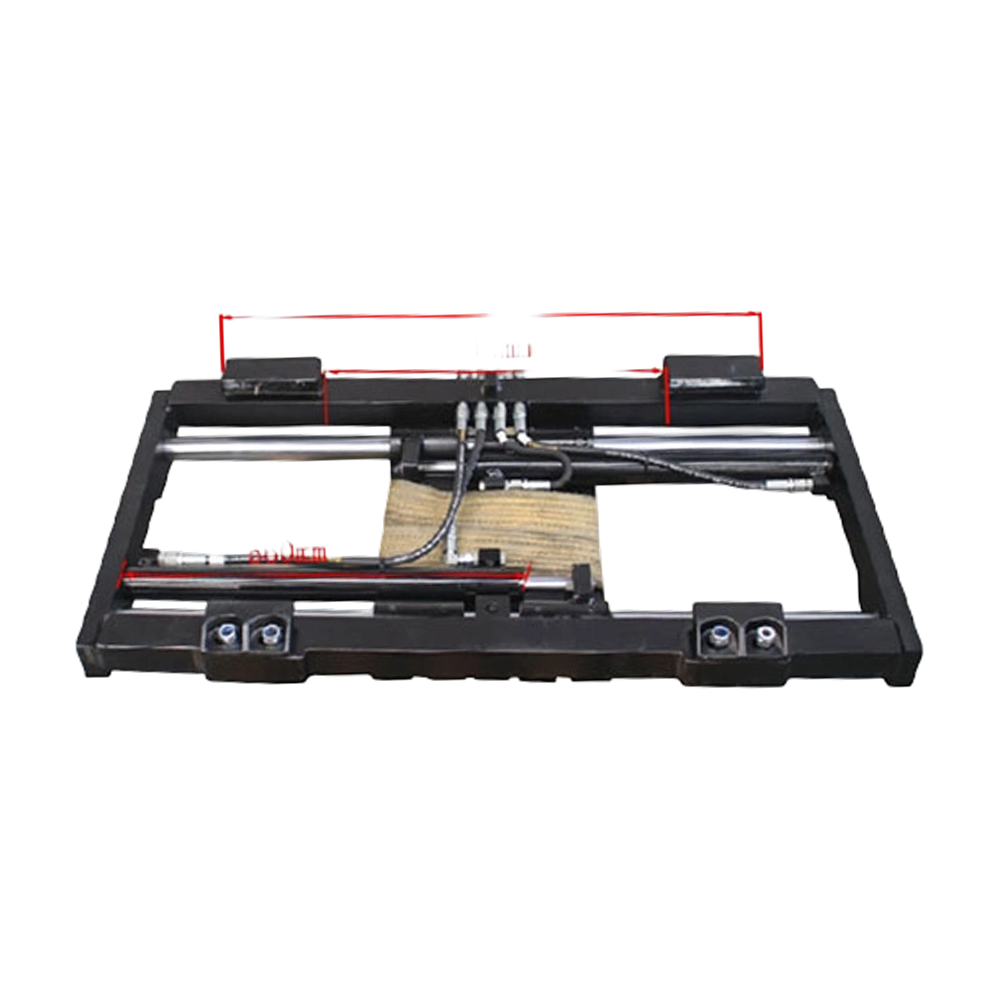 Hydraulic Fork Positioner With Side ShiftAdjust fork spread and shift the load sideways from the seat. Useful where pallet widths change through the day and a few centimetres of lateral correction decide whether a pick is clean.View Product
Tyres do not work in isolation. The same compound that grips well on a rough warehouse slab may slide on a polished epoxy floor, and a tyre that wears evenly on a flat floor can scallop on a floor with frequent joints. The most useful way to think about tyre choice is as a pairing between the compound and the surface, then to add the load and speed profile on top.
Look for a compound with a higher grip rating and a tread that clears dust. Slippage on these surfaces shows up as a slow, late reaction when braking.
A harder, more rigid carcass resists chunking at joints and keeps the rolling radius constant, which keeps the truck tracking straight.
A tyre that handles both surfaces without picking up grit protects the indoor floor and reduces the dusty film that reduces traction near the rack face.
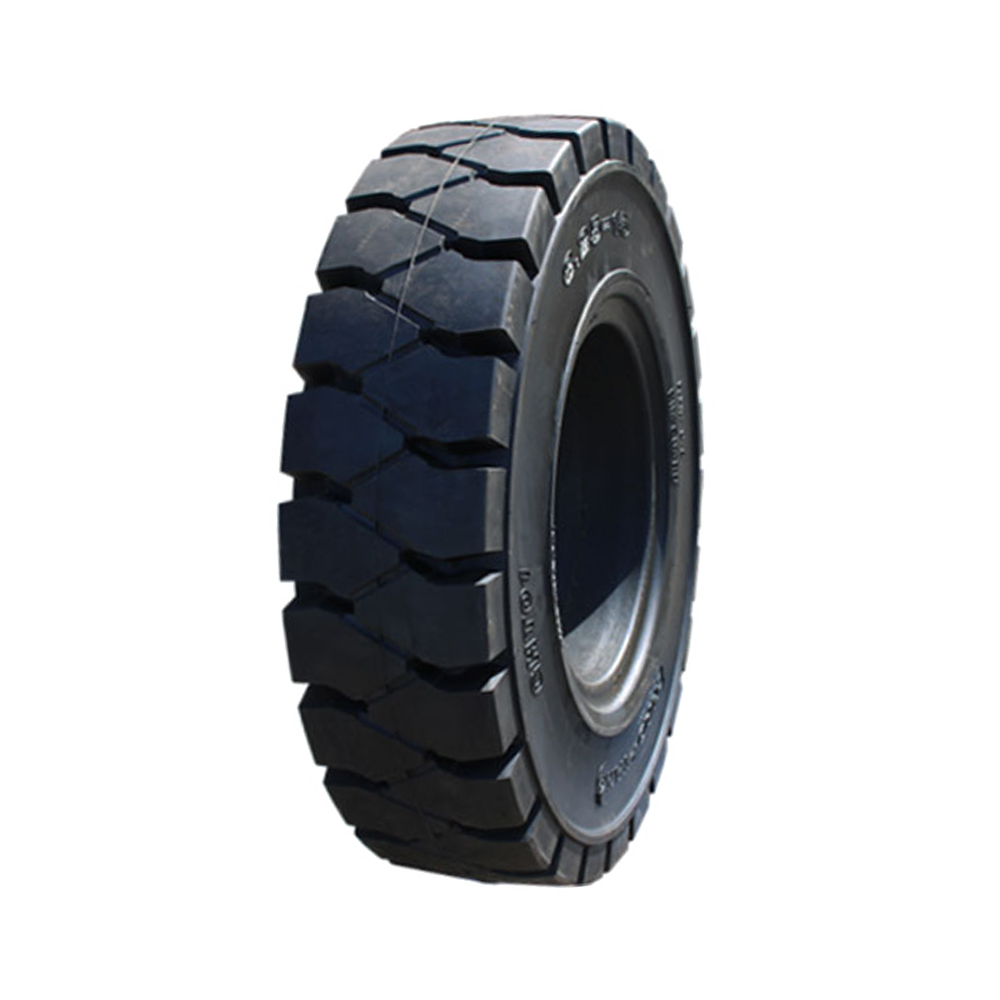 Solid Rubber Forklift Tyre, Wear-Resistant TreadA puncture-free design with a rigid carcass for steady rolling. Ordering tyres in sets that match the truck's drive axle keeps steering behaviour even from one side to the other.View Product
When a site changes its floor coating, tyre choice should be reviewed in the same week. Coatings change grip dramatically, and a truck that was stable on bare concrete can behave differently on the new surface until the compound is revisited.
General training tells a driver what to do. A scorecard shows how well it is done. Five short observations, scored from one to five by a supervisor during a normal shift, can reveal which skills need attention and which drivers are ready to work the tightest aisles. The scorecard works best when it is positive in tone, shared openly and used to assign work rather than to reprimand.
Does the truck enter the aisle square, without a late correction?
Is travel speed reduced before the turn rather than during it?
Do the forks enter the pallet openings in one clean movement?
Does the driver check the rear swing before steering away?
Is every touch reported on the day it happens?
| Total score | Assessment | Suggested assignment | Follow-up |
|---|---|---|---|
| 22 to 25 | Consistent and careful | Any aisle, including the tightest lanes | Recheck every quarter |
| 17 to 21 | Solid with some gaps | Standard aisles, supervised in narrow lanes | Short coaching on the lowest score |
| 12 to 16 | Developing | Wide aisles and dock work | Paired practice with a senior driver |
| Below 12 | Needs structured retraining | Open areas only until retested | Repeat the scorecard after two weeks |
Whatever the scoring, pair it with a short debrief of three minutes. A driver who hears one specific observation, such as slowing earlier before the left turn at aisle six, improves faster than a driver who receives a general reminder at a monthly meeting.
When a programme works, the monthly strike count does not drop in a straight line. It falls quickly in the first weeks as the easiest causes are fixed, then flattens as the remaining events become harder to explain. A log that shows this shape is a sign that the fast fixes have been done and the slower ones, such as lane redesign or truck reassignment, are now the focus.
Two readings of the log are worth separating. The first is the total count, which tells you whether the programme is working. The second is the location of the remaining strikes, which tells you what to do next. If three of the remaining events sit at the same aisle exit, that exit deserves a layout review. If they are scattered, the issue is probably behaviour or shift pattern.
Budget holders respond to numbers they can check. A short worksheet that links the strike log to a cost per strike, an expected reduction and a programme cost produces a payback period in minutes. The example below uses round figures; the structure is what matters, and the inputs should be replaced with the site's own.
| Line | Input | Example value | Source of the number |
|---|---|---|---|
| A | Strikes logged in the last 12 months | 48 | Strike log or inspection records |
| B | Average full cost per strike | $1,100 | Cost sheet, including downtime and goods |
| C | Annual cost of strikes (A multiplied by B) | $52,800 | Calculated |
| D | Expected reduction after the programme | 60 percent | Based on the first quarter of results |
| E | Annual saving (C multiplied by D) | $31,680 | Calculated |
| F | Programme cost: lighting, paint, protectors, training | $18,500 | Quotations and internal labour estimate |
| G | Payback period (F divided by E, in months) | about 7 months | Calculated |
Lighting, floor paint, swing envelopes and a written strike log. Low cost and visible within days.
Tyre replacement as matched sets, mirror installation, one-way flow trials and driver scorecards.
Truck replacement or reconfiguration, attachment upgrades and rack changes where the survey shows a structural mismatch.
The sequence matters because each step produces data for the next. By the time the larger spending decisions arrive, the log already shows which lanes, which trucks and which shifts account for most of the cost, and the purchase can be targeted rather than general.
Many sites set a limit between 5 and 8 km/h inside aisles and lower still at junctions and exits. Because energy at contact rises with the square of speed, even a small reduction in the limit has a large effect on damage. The right figure is one that drivers can keep while still meeting pick targets, which is why the limit should be tested during a normal shift before it is written into procedure.
A wider aisle gives more margin for error, but it also reduces storage density, so it is rarely the first choice. In many cases a better truck match, improved lighting or a modified entry line recovers most of the benefit at a fraction of the space cost. Widening is best reserved for lanes where measurement shows that the truck simply cannot pass with a safe gap.
Yes. A mast tilted forward at height shifts the load toward the rack and can lower the fork tips into the pallet beneath. Travelling with the mast tilted back and the load close to the carriage keeps the centre of gravity stable and the forks level, which reduces both beam strikes and load slips during the withdrawal.
It can, particularly where pallet widths vary. A positioner lets the driver set the fork spread to match each load from the seat, instead of stopping, leaving the cab and adjusting by hand, or forcing a wide-set pair of forks into a narrow opening. Fewer manual adjustments mean fewer interruptions in the lane and a lower chance of a rushed approach.
Choose a colour that contrasts strongly with the surrounding rack and floor, because the purpose is to be seen from the driver position. Yellow and black diagonal bands are widely recognised, while red-and-white bands suit prohibited zones. The colour matters less than the consistency: use the same scheme across the whole building so drivers learn the meaning once.
Add the replacement parts and fitting, the engineering inspection, the labour hours lost while the bay was out of use, the cost of damaged or re-handled goods and the time spent on reporting. Divide the annual total by the number of logged strikes to obtain an average, then use that figure to evaluate each prevention measure against the number of strikes it is expected to remove.
Start with the strike log. If damage clusters in one lane, check whether the truck in that lane is suited to it before adding hardware. If damage is spread across all lanes and all trucks, look at speed, behaviour and lighting first. Hardware is most valuable where the cause has been understood and the remaining risk is a rare, low-speed touch.
Recommended Products
Recommended NEWS



 English
 中文简体
 русский
 Español
 عربى