2026-11-23
Content
A warehouse forklift is a counterbalanced or narrow-aisle lift truck designed to move palletized loads inside a building where space, floor condition, racking height, and pedestrian traffic matter as much as lifting capacity. The common warehouse forklift is not simply a smaller general forklift. Its mast, chassis, battery compartment, tyres, and operator compartment are usually configured around indoor work: smooth concrete, tight turns, frequent lift cycles, and loads that must be placed into or taken out of racking with repeatable accuracy.
The practical definition comes from the job, not the name. A 2-ton electric counterbalance truck moving pallets from a loading dock to floor storage is a warehouse forklift. A 1.5-ton reach truck working a 3.2-metre aisle is also a warehouse forklift. A 2-ton electric stacker feeding a packing line is often grouped into warehouse forklift equipment because it performs the same internal pallet-flow function, even though its legal classification and operating limits differ. The key question is whether the machine is built for dense indoor pallet handling and repeated lift cycles, or for outdoor yard work, rough ground, and high-capacity bulk handling.
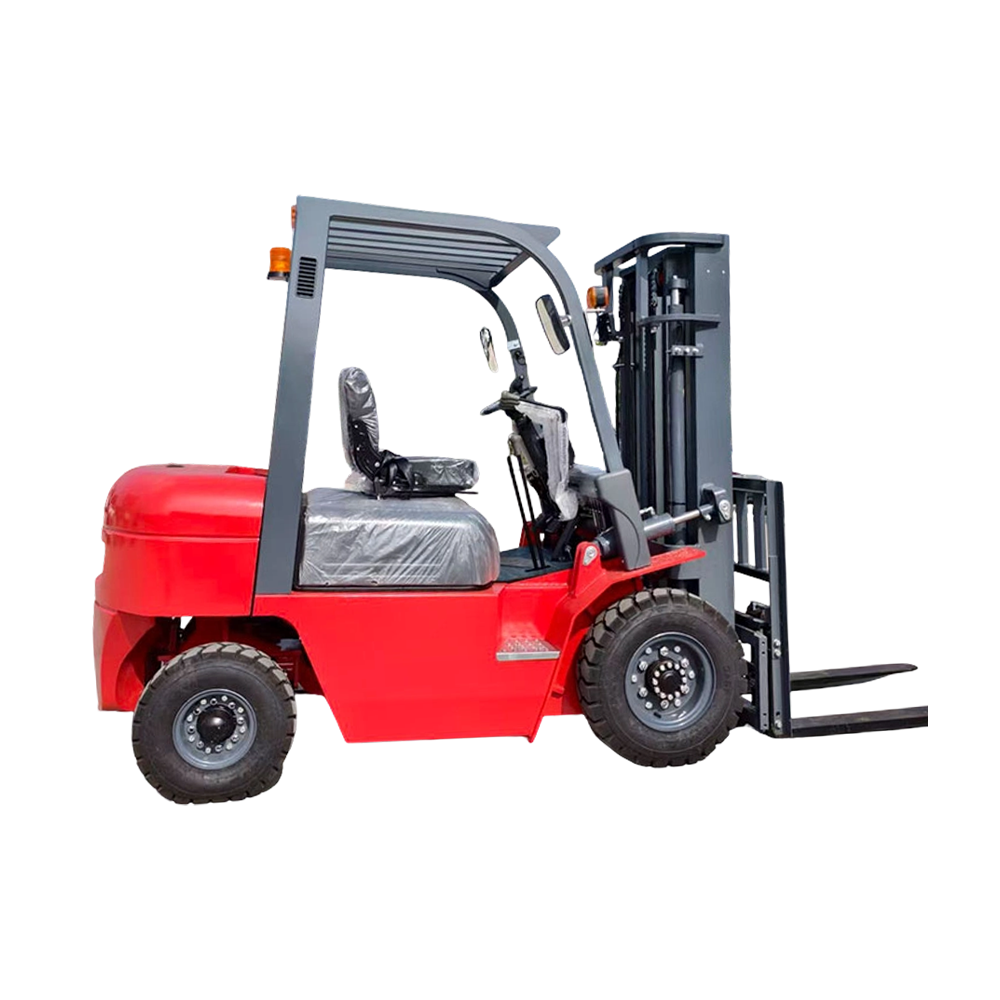
A typical warehouse forklift includes a mast assembly, carriage, forks, overhead guard, operator compartment, traction battery or engine, hydraulic system, steering axle, and a counterweight. In a true warehouse context, the most important numbers are not only rated capacity. They include load centre, lift height, overall lowered height, right-angle stack, aisle width, tyre type, battery voltage, and the number of shifts the truck must run between charges. A truck that looks suitable on a specification sheet can fail in service if the aisle is 150 mm too narrow, the racking beam is higher than the remaining capacity allows, or the battery cannot last a double shift.
Warehouse forklifts also differ from outdoor forklifts in how they manage heat, dust, and traction. Electric warehouse trucks produce no exhaust emissions, which makes them suitable for enclosed buildings, cold stores, food areas, and retail backrooms. Diesel and LPG trucks remain useful where ventilation is adequate and where higher continuous power or rapid refuelling is needed, but they require exhaust management and usually suit yards, loading areas, or mixed indoor-outdoor operations rather than sealed storage aisles.
Start with the aisle, not the pallet. A warehouse forklift that fits the racking and aisle can handle the load safely; a truck that only matches the load weight may still be the wrong machine. A standard counterbalance forklift often needs a wider aisle because it turns around the load and the rear counterweight swings outward. A reach truck keeps the load inside the chassis footprint during travel and reaches into the rack, so it can work in narrower aisles. An electric pallet truck is lower and simpler, but it is normally used for horizontal transport and low-level lifting rather than putting pallets into high racking.
The difference is measurable. If the racking is 3.5 metres high, the mast must be selected so that the collapsed height, free lift, and extended height all work inside the building. If the aisle is 2.8 metres wide, a counterbalance truck may be unable to turn a 1.2-metre pallet without contact. If the floor has expansion joints, thin concrete, or a slope at the dock, a small wheel may wear quickly or lose traction. A warehouse forklift selection should therefore collect aisle width, rack beam height, pallet size, load weight, floor loading, door openings, turning radius, and charging position before discussing brand or price.
The chart is a planning comparison, not a universal rule. Aisle requirements change with pallet size, load length, mast type, and local safety rules. For a new warehouse, the safer method is to give the supplier a layout drawing and a load profile, then ask for the minimum right-angle stack and the recommended aisle width for the exact model. For an existing building, measure the narrowest point, not the average aisle. A single column, doorway, or fire equipment cabinet can decide whether a warehouse forklift works in practice.
Most warehouse forklift discussions become confusing because the same word is used for different machines. The table below separates the common categories by working position, typical aisle demand, and best use. It is written for practical selection rather than catalog classification.
| Type | Typical role | Aisle and height notes | Best fit |
|---|---|---|---|
| Electric counterbalance forklift | Dock-to-rack handling, floor storage, mixed pallet work | Wider turning envelope; mast selected for rack height | General warehouse work with moderate aisle width |
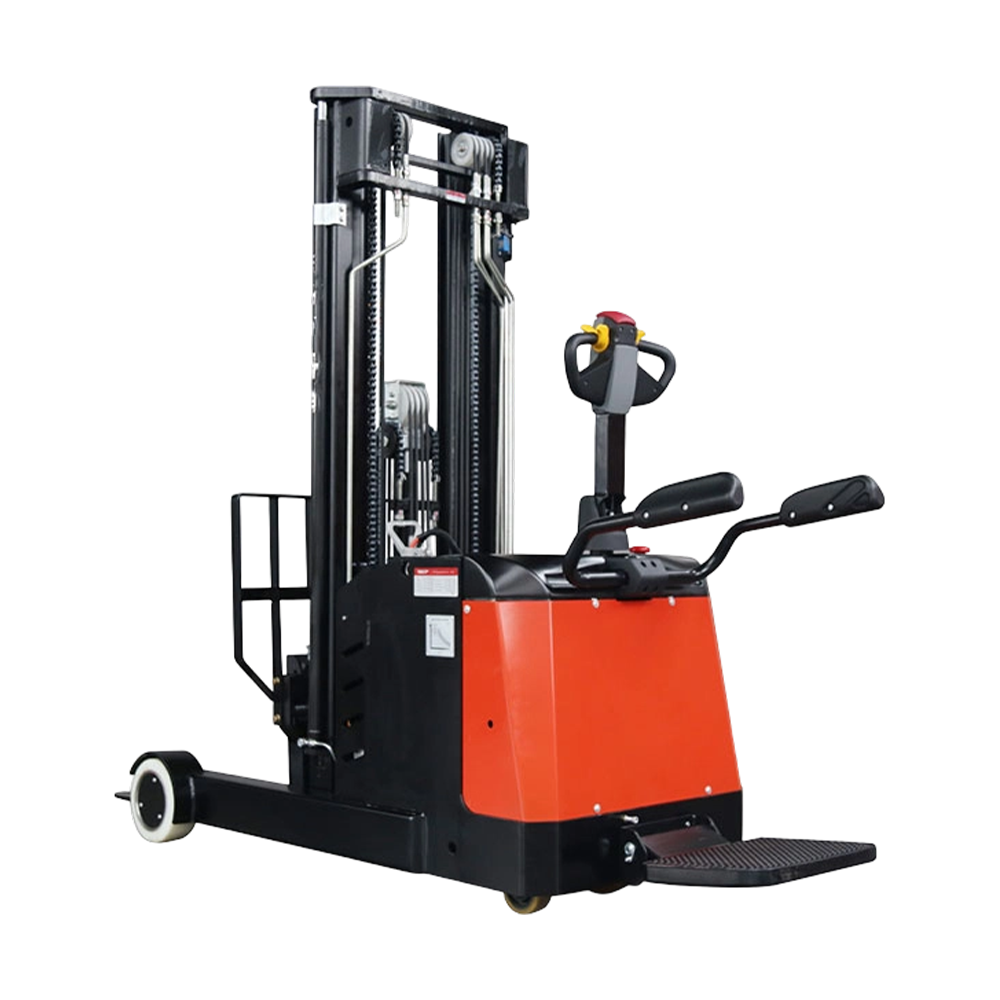
| Reach truck | Put-away and retrieval in narrow aisles | Load stays within chassis during travel; reaches into rack | Higher racking density and narrow aisle layouts |
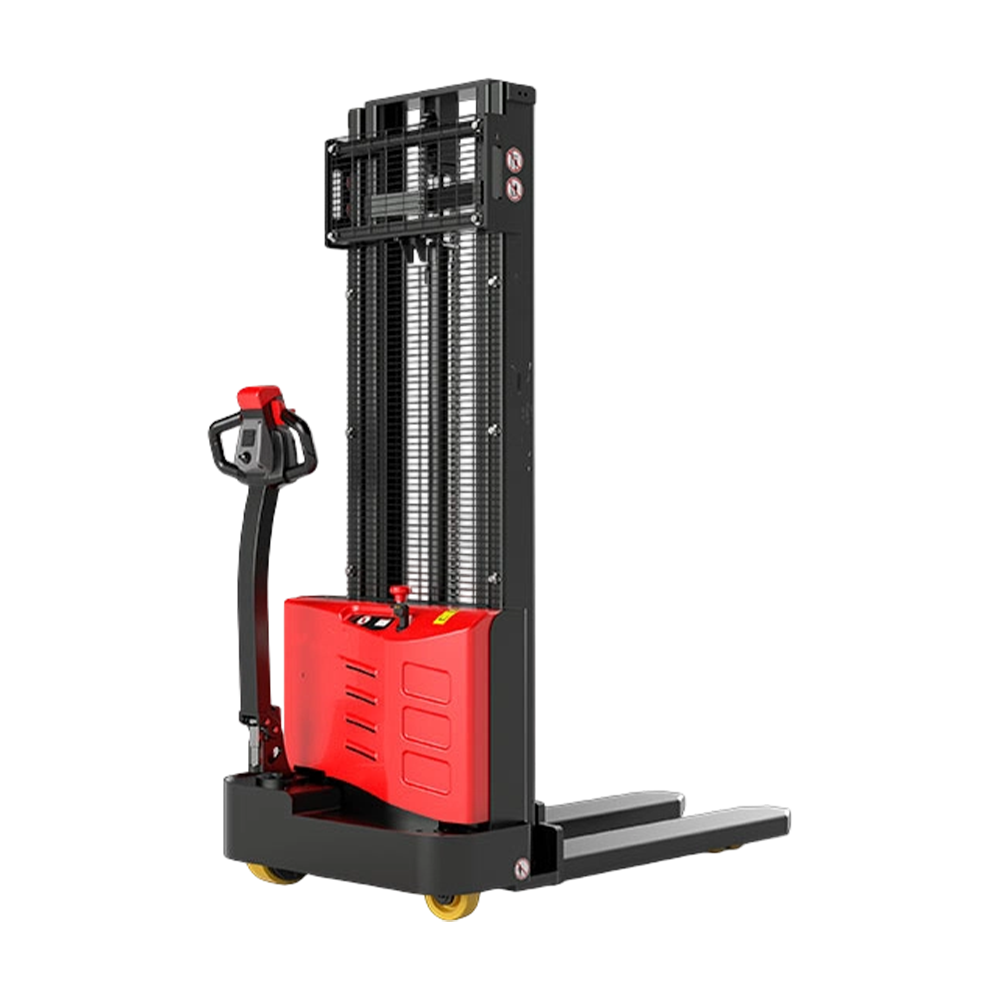
| Electric stacker | Low-to-medium lift, pallet transfer, line feeding | Compact footprint; often limited to low rack or floor work | Packing, staging, and small storage areas |
| Electric pallet truck | Horizontal transport and dock loading | Very compact; not intended for high racking | Long runs, loading bays, and pallet movement |
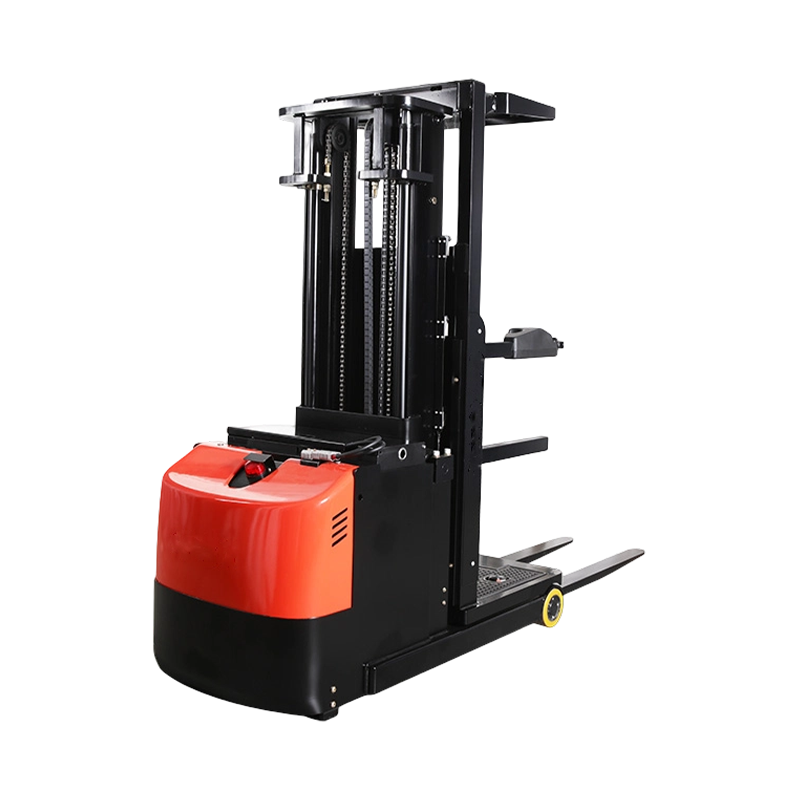
| Order picker | Case picking at height with an operator platform | Designed for picking faces and multi-level order assembly | Retail, spare parts, and high-SKU picking |
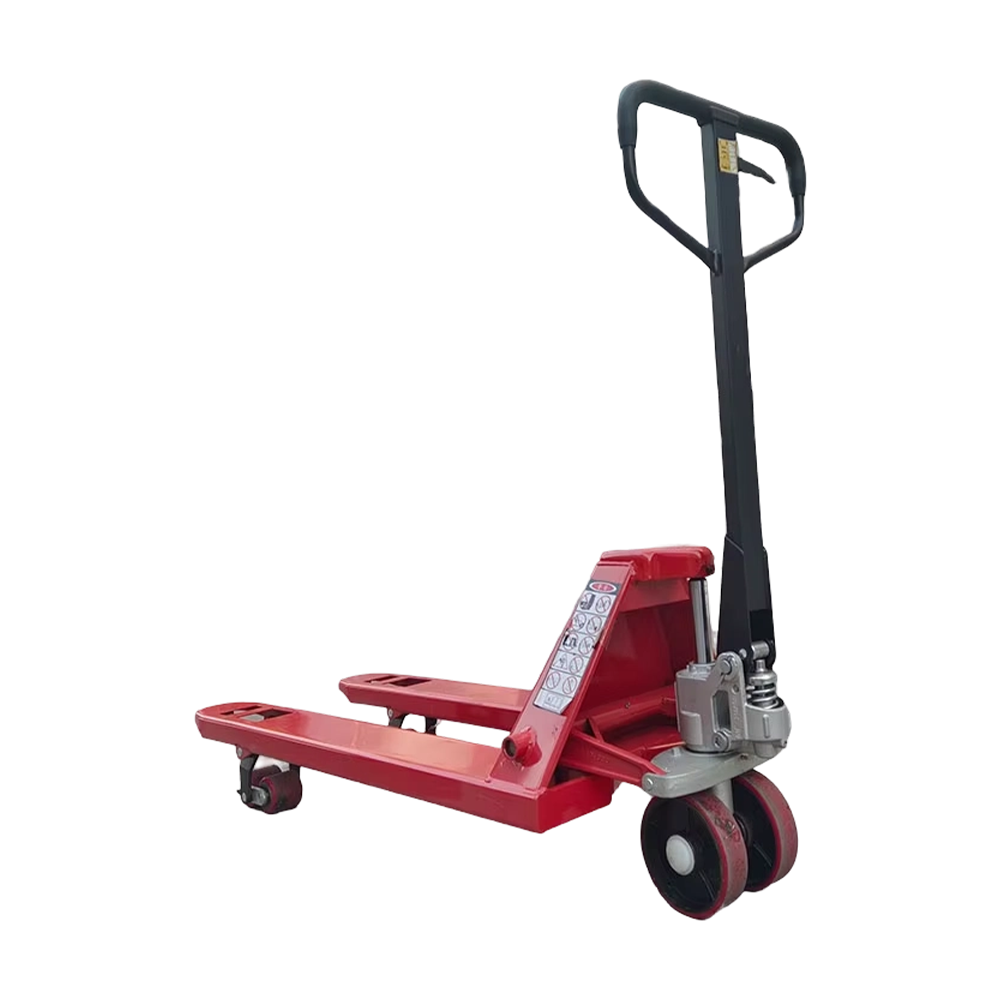
| Hand pallet truck | Short manual moves and low-volume handling | No powered lift; depends on operator effort | Small stores, backup equipment, and low throughput |
If the building has narrow aisles and high racking, the reach truck is often the first candidate. If the work is mainly horizontal movement and dock transfer, the electric pallet truck can reduce cost and space use. If the operation needs a flexible general truck that can unload a trailer, move a pallet across the yard, and place it on a low rack, an electric counterbalance forklift is often more versatile. The correct answer is usually a mix of types, not one machine for every task.
An electric stacker sits between a pallet truck and a full counterbalance forklift. It is useful where the operator needs powered lifting but does not need the cost, size, or travel speed of a full warehouse forklift. Common uses include feeding a packing line, moving pallets onto low racking, lifting dies or containers, and working in a storage room where a larger truck cannot turn. The limitation is stability and visibility at higher lifts. A stacker should be matched to the actual lift height, load centre, and floor condition rather than treated as a small counterbalance truck.
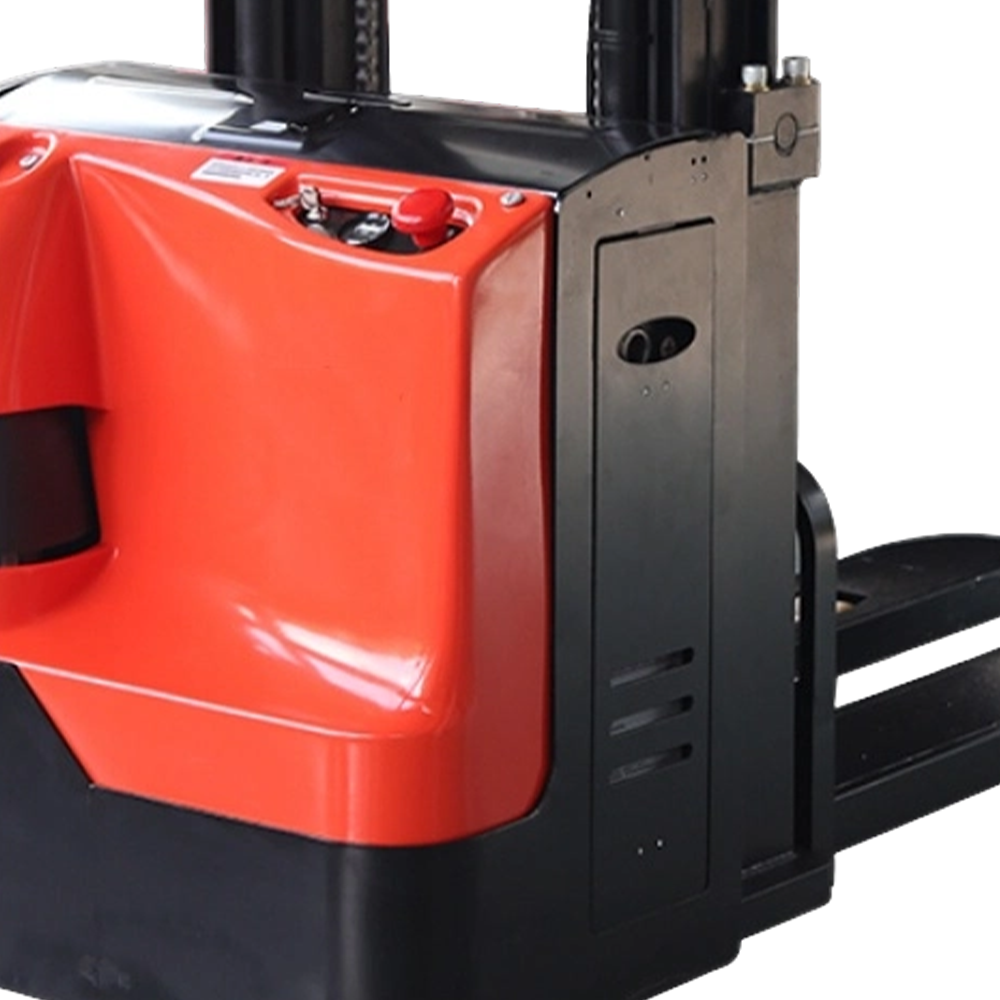 2-Ton Lithium-Ion Electric Stacker for Narrow WarehousesPedestrian-operated 2,000 kg stacker with AC drive and a 1,589 mm turning radius for powered lifting in space-constrained warehouse tasks.View Product →
A reach truck is chosen when the racking height increases and the aisle cannot be widened. The operator travels with the load inside the chassis, then the reach mechanism extends the forks into the rack. This reduces the turning envelope and can improve storage density. However, reach trucks demand good floor flatness, disciplined aisle management, and operator training. A damaged floor joint or a pallet that overhangs the rack can turn a narrow-aisle advantage into a safety problem. When comparing models, check residual capacity at height, not only the nominal capacity at the carriage.
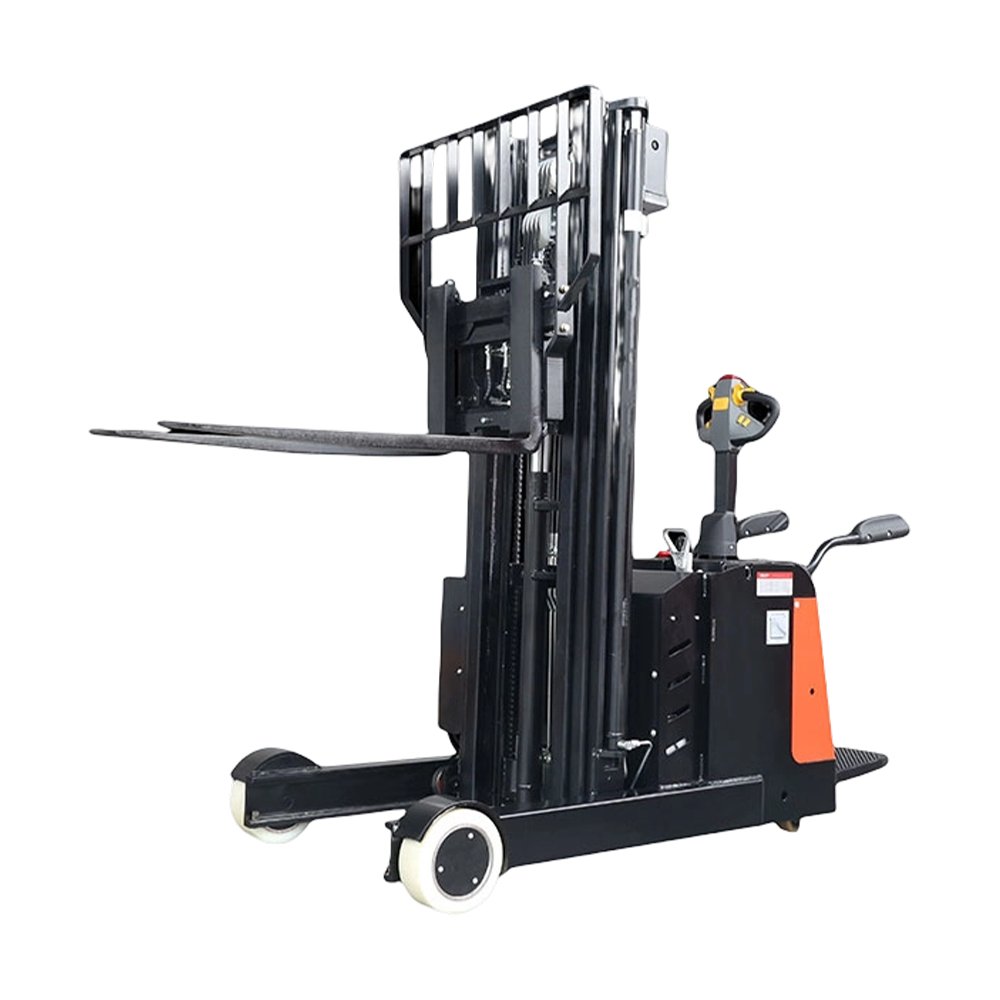 1.2/1.5-Ton Electric Reach Truck for Narrow AislesStand-up 1.2/1.5-ton reach truck with 3,000 mm standard lift and tight turning radius for high-bay narrow-aisle stacking.View Product →
Electric pallet trucks are the workhorses of dock and floor movement. They are not designed to replace a warehouse forklift for high racking, but they can remove many low-value horizontal trips from a counterbalance truck. In a busy warehouse, using a 2-ton electric pallet truck for trailer unloading and long runs can free a reach truck or counterbalance forklift for put-away. The trade-off is that pallet trucks have lower ground clearance and are sensitive to debris, dock plates, and uneven joints. They suit clean, smooth floors and planned routes.
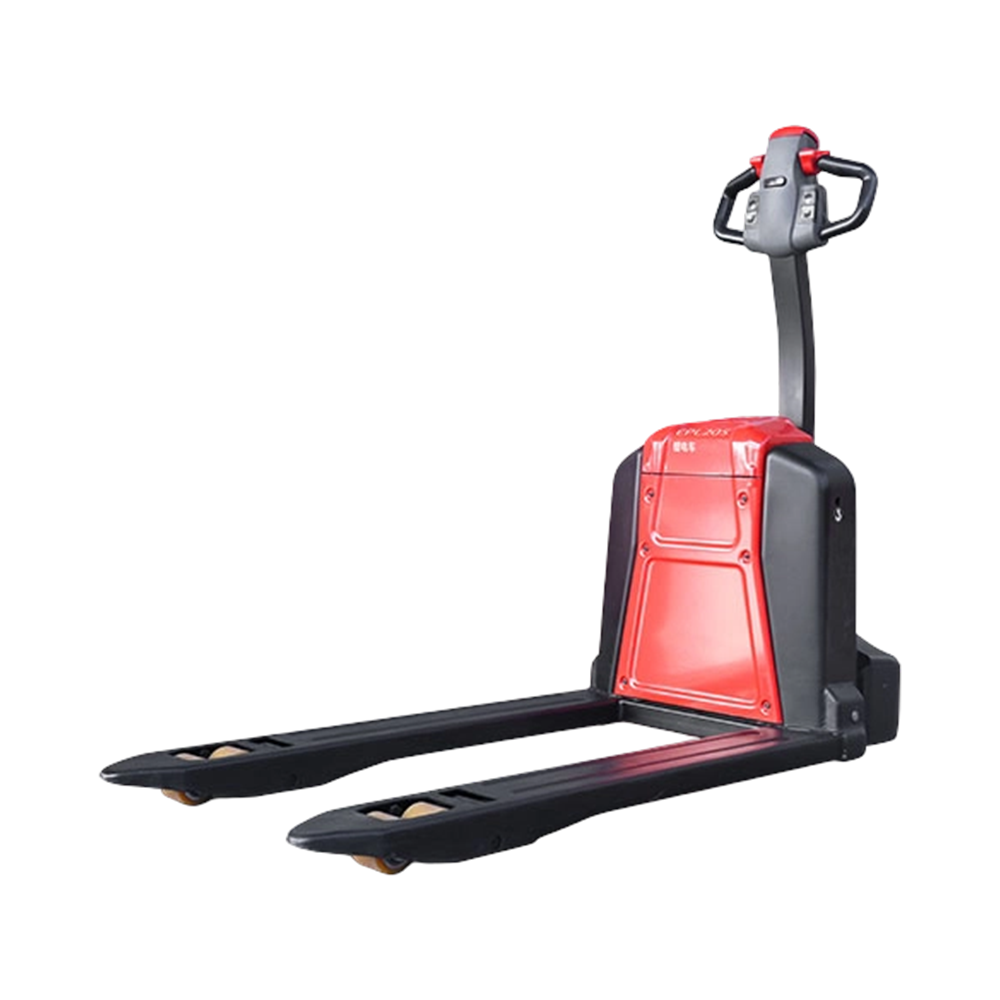 2-Ton Lithium-Ion Electric Pallet Truck for WarehousingWalking-style 2,000 kg pallet truck with quick-plug charger and interchangeable lithium batteries for dock and horizontal transport duties.View Product →
For enclosed warehouses, electric power is usually the default because there is no exhaust emission at the point of use. Lithium-ion and lead-acid battery trucks both fit indoor work, but they support different operating routines. Lithium-ion trucks can opportunity-charge during breaks and often suit multi-shift operations where a fixed battery room is inconvenient. Lead-acid trucks usually require a dedicated charging area, ventilation, watering routines for flooded batteries, and a battery change plan if the truck runs long shifts. The purchase price difference is only one part of the decision; the real comparison includes charging space, electrical capacity, shift pattern, battery life, and maintenance labour.
LPG forklifts can be practical for mixed indoor-outdoor operations where rapid refuelling matters and ventilation is adequate. Diesel forklifts are generally better suited to yards, construction sites, and rough ground than to sealed storage aisles. A diesel truck inside a warehouse introduces exhaust, noise, and particulate concerns that usually require engineered ventilation and a clear risk assessment. If the work is truly indoor pallet handling, an electric warehouse forklift is normally the cleaner and more controllable choice.
You need opportunity charging, stable power through multiple shifts, low routine battery maintenance, and a clean indoor charging position.
Your duty cycle is predictable, a ventilated battery room is available, and the lower initial battery cost suits the budget model.
The truck works mainly outdoors, refuelling speed matters, and ventilation or site rules allow combustion-engine operation.
A common procurement mistake is to compare only the truck price. A lithium-ion warehouse forklift may cost more upfront but reduce battery changes and charging downtime. A lead-acid truck may be cheaper to buy but require more space and labour. The correct comparison is cost per operating hour over the planned service life, including energy, battery replacement, maintenance, and downtime.
Rated capacity is not a fixed number that applies to every lift. A warehouse forklift rated at 2,000 kg at a 500 mm load centre may have a much lower capacity when the load centre moves forward or when the mast is raised. Long pallets, wide loads, non-standard attachments, and high lift heights all reduce the safe residual capacity. The load centre is the horizontal distance from the front face of the forks to the centre of gravity of the load. If a pallet is deeper than the standard load, the effective load centre increases and the truck's stability margin falls.
Lift height has a similar effect. A truck that handles 1,500 kg at low height may not handle the same load at 6 metres. The mast, carriage, and hydraulic system add weight and change the stability profile. Before ordering, ask for the capacity chart at the actual lift height and load centre. Do not accept a single capacity figure without the corresponding load centre and mast specification. For attachments such as a side shifter, fork positioner, or clamp, the attachment weight and forward offset must be deducted from the rated capacity. A side shifter is common in warehouse work because it saves repositioning time, but it still changes the capacity calculation.
| Check | Why it matters | What to request |
|---|---|---|
| Load centre | Longer loads reduce stability and residual capacity | Capacity at the actual pallet depth, not only the standard value |
| Lift height | Higher lifts can reduce safe load and affect mast choice | Capacity chart at the highest rack beam |
| Attachment weight | Side shifters and positioners move the load forward | Net capacity with the attachment fitted |
| Tyres and floor | Wheel type affects traction, wear, and turning | Recommended tyre compound for the actual floor |
| Battery and shift | Voltage and capacity must match the duty cycle | Battery capacity, charger size, and charging window |
Attachments deserve separate attention. A fork positioner can improve pallet handling and reduce damage, but it adds weight and length. A side shifter is useful in racking where the operator needs lateral adjustment, but it must be included in the capacity calculation. If the warehouse handles double-deep pallets, bales, or special containers, the attachment may change the entire truck category. The safest method is to give the supplier the load, the attachment, the rack height, and the aisle drawing as one package.
A warehouse forklift is only productive when the battery plan matches the shift plan. One truck running one shift may need a simple overnight charge. Two or three shifts may need opportunity charging, a spare battery, or a larger battery capacity. Lead-acid batteries are often sized for a full shift and then charged during off hours; frequent partial charging can affect service life unless the charger and battery are matched correctly. Lithium-ion batteries generally accept opportunity charging better, but the charger, battery management system, and operating temperature still need to be specified.
Charging position is part of warehouse layout. A charger placed in a busy aisle creates a collision risk. A battery room without ventilation can create gas, heat, or acid handling issues with lead-acid batteries. A cold-store application needs a battery and charger rated for low temperature, and the truck may need a cold-store protection package. If the building has limited electrical capacity, the charger load may become a constraint before the truck itself does. Check the available voltage, phase, current, and charging window before selecting the battery.
List the number of hours the truck actually moves, the number of lifts per hour, the average lift height, and the longest route. A truck that runs 6 hours with 20 lifts per hour is a different duty cycle from one that runs 10 hours with 45 lifts per hour. The battery and motor specification should follow that duty cycle, not the calendar shift length alone.
For multi-shift operations, compare the cost of a spare battery and battery-change equipment with the cost of a larger lithium-ion battery and opportunity charging. The lower-price option is not always the lower-cost option. Downtime at the dock can cost more than the battery difference, especially when a warehouse forklift is the only link between receiving and put-away.
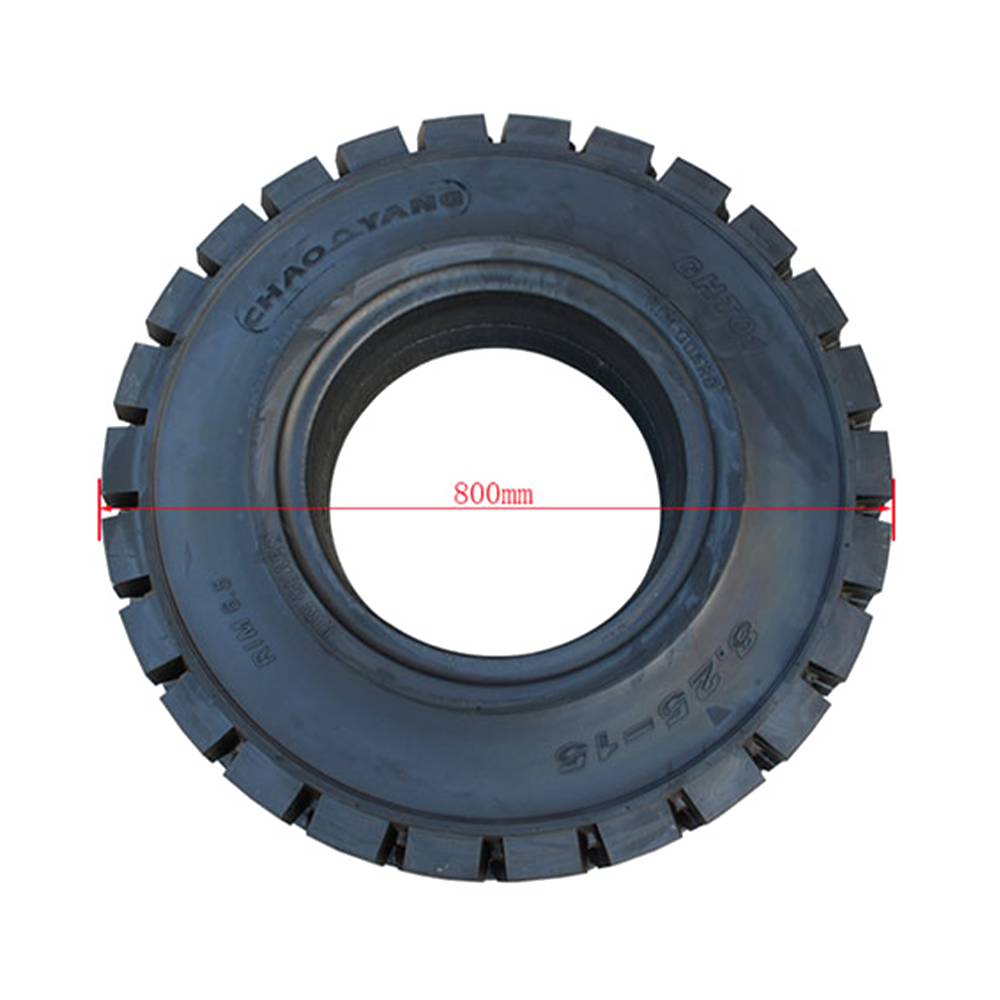
Warehouse forklift tyres are selected for the floor, not for appearance. Smooth press-on tyres suit clean concrete and indoor aisles. Solid rubber tyres resist wear and punctures in mixed areas. Pneumatic or turf tyres may be needed outdoors, but they are usually not the best choice for tight indoor racking. The wrong tyre can increase turning effort, damage the floor, reduce traction on ramps, or change the truck's stability. If the floor has oil, water, or dust, the tyre compound and tread pattern matter more than the nominal capacity.
Floor condition also affects the truck structure. Thin concrete, poor joints, and uneven dock plates increase shock loading on the mast and wheels. A warehouse forklift that works over a damaged joint every few minutes may need a more robust tyre or a lower speed limit. The building owner may also need to repair the floor rather than expect the truck to absorb the problem. In narrow aisles, a small amount of floor deflection can change the clearance between the load and the rack.
Safety details are part of the buying decision. The overhead guard, operator restraint, horn, lights, and visibility package should match the site rules. In a warehouse with racking, the mast and carriage must give the operator a clear view of the forks at height. A truck with poor visibility may be technically capable but slower and more damaging in daily use.
A new warehouse forklift gives a known specification, warranty support, and a predictable maintenance baseline. A used forklift can reduce capital cost, but the buyer must verify the hour meter, battery condition, mast wear, hydraulic leaks, tyre condition, and controller history. A used truck that has worked in a cold store or a corrosive environment may have hidden issues that do not appear in a short test run. The lower purchase price is only useful if the truck can complete the required duty cycle without early repair.
Rental or lease can be suitable for seasonal peaks, short contracts, or a new warehouse that has not yet stabilized its layout. The operational risk is lower, but the long-term cost may be higher. The decision should include the expected hours per year, the internal maintenance capability, the availability of spare parts, and the cost of downtime. If the operation runs one shift and has a trained technician, a used truck may be a practical option. If the truck is critical to a multi-shift flow, a new truck with a clear service agreement may be safer.
Best when the duty cycle is known, uptime is critical, and the specification must be guaranteed for several years.
Best when the buyer can inspect the machine, verify the battery and mast, and accept a shorter warranty position.
Best for peak demand, trial layouts, or short projects where the fleet plan may change quickly.
For used equipment, ask for the actual model year, battery voltage and capacity, charger compatibility, and any history of major repairs. A demonstration in an empty yard is not enough. Test the truck in the real aisle with the real pallet and at the real rack height. If that is not possible, reduce the risk by using a supplier who can provide service records and parts support.
A warehouse forklift needs a planned maintenance path from the first day. The most common wear items are tyres, brakes, hydraulic hoses, mast chains, forks, batteries, chargers, and controllers. In a busy warehouse, a small hydraulic leak or a worn mast chain can become a safety issue before it becomes a breakdown. The maintenance plan should define inspection intervals based on hours, not only calendar time. A truck used in a dusty area or cold store may need a different interval from a clean, light-duty truck.
Parts availability is part of the purchase decision. If the truck uses a common controller, motor, or hydraulic component, the repair may be faster. If the model is unusual, a small failure can cause a long wait. Buyers should ask which parts are stocked locally, what the typical lead time is for a mast chain or controller, and whether the supplier can support the truck after delivery. For mixed fleets, standardizing batteries, chargers, and tyres can reduce inventory and training complexity.
Warehouse operations also benefit from a simple pre-shift check: horn, lights, brakes, steering, tyres, hydraulic level, battery charge, and fork condition. The check does not need to be complex, but it must be recorded. A warehouse forklift that is allowed to run with a damaged fork or a leaking hose creates a risk that is far more expensive than the repair.
Different warehouse environments create different forklift priorities. A retail distribution centre may need fast case picking and high racking, which points toward reach trucks and order pickers. A manufacturing warehouse may need counterbalance trucks for incoming material and stackers for line feeding. A cold store needs lithium-ion or lead-acid trucks rated for low temperature, with battery and charger protection. A port or transit warehouse may need a mix of counterbalance trucks, pallet trucks, and outdoor-capable equipment for the yard. The right fleet is the lowest-cost combination that completes every task without forcing one truck to work outside its design role.
In warehousing and logistics operations, the usual split is between long horizontal runs and high put-away. Electric pallet trucks handle the long runs; reach trucks handle the high racking; counterbalance trucks handle dock work and mixed loads. If the operation also serves retail stores, a hand pallet truck or small stacker may be enough for backroom work. The equipment mix should be reviewed when the SKU profile, rack height, or order volume changes. A warehouse forklift plan that was correct at 5,000 pallet positions may not be correct at 12,000 positions.
For a more detailed comparison of truck types by facility layout, the warehouse forklift selection guide can help frame the aisle and throughput questions. If the wider flow includes receiving, storage, picking, and dispatch, the warehousing and logistics solutions page provides a useful application view. The goal is not to buy the largest truck. It is to remove the bottleneck without creating a new one at the rack face, the dock, or the charging area.
Before ordering, convert the operational need into a written specification. The supplier should confirm the model, mast type, closed height, extended height, rated capacity at the required load centre, tyre type, battery voltage and capacity, charger, attachment, and safety features. A warehouse forklift quotation that lists only the capacity and price is incomplete. The following checklist is a practical way to compare offers.
| Item | Required confirmation |
|---|---|
| Load | Pallet size, weight, load centre, and any overhang |
| Racking | Beam height, clear height, and residual capacity at height |
| Aisle | Minimum aisle, right-angle stack, doorway, and column clearance |
| Power | Battery type, voltage, capacity, charger, and charging window |
| Floor | Surface, slope, joints, floor loading, and tyre recommendation |
| Safety | Overhead guard, restraint, lights, horn, visibility, and site rules |
| Service | Parts availability, maintenance interval, and technical support |
Also verify the delivery condition. Does the price include battery and charger? Are the forks the required length? Is the mast a standard or full-free-lift type? Is the truck configured for cold storage or dust protection? These details change the usable capacity and the total cost. A clear specification protects both the buyer and the supplier because it defines what the truck must do in the actual warehouse.
The first mistake is buying by capacity alone. A 2-ton truck is not automatically suitable because the pallet weighs 1.8 tons. The load centre, lift height, attachment, and mast may reduce the safe capacity below the load weight. The second mistake is measuring the aisle at its widest point. The truck must pass the narrowest point, turn at the tightest corner, and enter the rack without striking the upright. The third mistake is ignoring the battery and charging plan. A truck that cannot complete the shift is not a lower-cost option; it is a bottleneck.
Another common problem is mixing indoor and outdoor requirements without a clear operating plan. A truck that works in a yard and then enters a sealed warehouse may bring dust, moisture, and exhaust into the building. A truck designed for indoor aisles may not have the ground clearance or tyre protection for a rough yard. If both duties are real, the operation may need two truck types or a carefully specified dual-purpose machine. The cheapest solution is often the one that separates the tasks clearly.
Finally, do not delay operator training until after delivery. A warehouse forklift is only as productive as its operator. Reach trucks, order pickers, and narrow-aisle equipment require specific training. Even a standard counterbalance truck needs training on the actual rack height, load weights, pedestrian routes, and charging procedure. A good truck in an untrained operation will still damage racking, pallets, and the floor.
A warehouse forklift is used to move, lift, stack, and retrieve palletized loads inside a warehouse. Typical work includes trailer unloading, put-away into racking, replenishment, order assembly, and transfer to dispatch. The truck type depends on aisle width, rack height, load weight, and shift pattern.
Not always. A counterbalance forklift is one common type of warehouse forklift, but the warehouse category also includes reach trucks, stackers, order pickers, and pallet trucks. A counterbalance truck is more versatile for mixed duties, while a reach truck is usually better for narrow aisles and high racking.
Common warehouse models range from about 1.2 tons to 5 tons, but the safe capacity depends on load centre, lift height, mast type, and attachments. Always use the capacity chart for the actual lift height and load position. A nominal 2-ton rating may be lower at a forward load centre or high lift.
Aisle width depends on the truck type, pallet size, and turning method. Pallet trucks may work in about 1.8 to 2.2 metres, reach trucks often need around 2.4 to 3.0 metres, and counterbalance trucks may need 3.2 to 4.0 metres or more. These are planning ranges, not universal rules; the supplier should confirm the right-angle stack for the exact model.
Choose lithium-ion when opportunity charging, multi-shift use, and lower battery maintenance matter. Choose lead-acid when the duty cycle is predictable, a ventilated battery room is available, and the lower initial battery cost is important. Compare the total operating cost, not only the purchase price.
Yes, but the truck needs a cold-store configuration. Battery, hydraulic oil, seals, display, and charger must be suitable for low temperature. Condensation and ice also affect visibility and braking. A standard warehouse forklift should not be sent into a freezer without confirmation from the supplier.
A reach truck is built for narrow-aisle racking and can reach the load into the rack while the chassis remains in the aisle. A stacker is simpler and usually used for lower lifts, line feeding, and compact storage. The reach truck has higher reach and greater residual capacity at height, while the stacker is smaller and lower cost.
Inspection intervals depend on local rules and operating hours. A practical plan includes a pre-shift check by the operator and a scheduled maintenance inspection based on hours or calendar time. High-duty, cold-store, and dusty operations may need shorter intervals. Record the checks and repair defects before the truck returns to service.
Check the hour meter, battery condition, charger compatibility, mast chains, hydraulic hoses, forks, tyres, brakes, steering, controller, and fault history. Test the truck in the real aisle with the real load. Ask for service records and confirm parts availability before purchase.
Recommended Products
Recommended NEWS



 English
 中文简体
 русский
 Español
 عربى