2026-10-27
Content
A Class 6 forklift is a tow tractor. In the seven-class powered industrial truck system used by OSHA and the Industrial Truck Association, Class VI covers electric and internal combustion engine tractors — machines built to pull loads mounted on trailers, carts, or dollies rather than lift them. You have seen them at airports pulling long baggage cart trains, in distribution centers moving roll containers between docks, and on factory floors towing rows of parts carts to assembly stations.
The quickest way to understand a Class 6 forklift is to compare it to a standard counterbalance forklift. A Class I or Class V forklift lifts one pallet, carries it a short distance, and sets it on a rack or trailer. Its productive radius is usually a few hundred feet, and its payload is capped by what the forks can physically carry. A Class VI tractor works on different logic: it attaches to a hitch, pulls a train of carts that can weigh several times the tractor's own weight, and runs hundreds or thousands of feet on a regular route. It never lifts the load off the floor. That is not a limitation of the design; it is a deliberate efficiency strategy for horizontal material movement.
For buyers accustomed to comparing mast heights and lifting capacities, this shift matters. A Class 6 truck is selected not by how much it can lift but by how much it can pull, how far, and for how many hours. That core metric, drawbar pull, drives every other specification on the machine.
OSHA classifies powered industrial trucks into seven categories together with the Industrial Truck Association. The grouping is based on four factors: power source, tire type, operator position, and intended application. The seven classes are:
Class VI is unusual because it is the only class in which the primary task is towing. It also spans two power sources: electric motor and internal combustion engine. That means a buyer choosing a Class 6 tractor makes two separate decisions — the towing specification and the energy platform. The two are related but not the same. A 48-volt electric tugger with 1,500 pounds of drawbar pull and a diesel tractor rated at the same drawbar pull can serve very different facilities.
For a complete side-by-side view of every category, including how Class VI compares with Class I, II, III, IV, V, and VII on structure, tires, and training, see our full guide to common forklift classifications and how they map to equipment types.
A Class 6 tractor is a surprisingly simple machine under its bodywork. It has a compact chassis, a driver position, a steering axle, a drive axle, and a rear-mounted hitch. The engine or electric motor drives the wheels, and the hitch transfers pulling force to the train of trailers behind it.
Drawbar pull is the force available at the hitch, measured in pounds or kilograms. It is the specification that determines how heavy a train the tractor can move. Two factors combine to create the total resistance the tractor must overcome: rolling resistance and grade resistance.
Rolling resistance is the friction between the trailer wheels and the floor. It is expressed as a coefficient — a fraction of the total train weight. On smooth industrial concrete with polyurethane wheels, the coefficient is usually between 0.02 and 0.03. On rough asphalt it can reach 0.05 to 0.08. Steel wheels on rails are much lower, around 0.01 to 0.02. A simple estimate of required drawbar pull uses this formula:
Required pull = train weight x rolling resistance coefficient + train weight x percent grade + acceleration force
A practical example: a distribution center moves 12 carts weighing 1,500 pounds each, so the total train weight is 18,000 pounds. The floor is smooth concrete with a 0.025 coefficient; one section has a 2 percent ramp. Floor resistance alone is 18,000 x 0.025, or 450 pounds of drawbar pull. On the ramp, grade resistance adds 18,000 x 0.02, or 360 pounds. Total steady-state pull needed is roughly 810 pounds. A compact electric tugger rated at 800 to 1,200 pounds of continuous drawbar pull can handle the route, but only with a comfortable margin for acceleration and slight variations in floor finish.
The hitch is the mechanical interface between the tractor and the load train. Common types include pintle hitches with a lunette ring, ball hitches, drawbar eyes, and automated coupling systems used at ports. The hitch rating must match the trailer kingpin or ring, and it must be rated above the maximum train weight. A worn or mismatched hitch is a safety risk because the train can detach mid-route, especially on ramps and corners.
Because a tow tractor is constantly turning with attached trailers, it uses automotive-style Ackermann steering rather than rear-wheel forklift steering. This gives the driver precise path control, which matters when a long train must track through narrow doorways. Turning radius is compact because the tractor itself is short, but the driver must account for trailer off-tracking — the rear carts of a train cut toward the inside of a turn. Aisles and corners must be wide enough for the full train, not just the tractor.
Class 6 tractors come in three operator configurations. Walk-behind units are small, slow, and used for light tasks such as pulling a single cart in healthcare or retail settings. Stand-on riders suit stop-and-go routes where the driver frequently enters and exits to connect or release carts. Sit-down tractors are the standard for longer routes and heavier trains because they reduce operator fatigue over a full shift.
Specifications vary by manufacturer and model, but the ranges below represent typical Class 6 equipment available on the market today. When comparing models, focus on continuous drawbar pull rather than peak pull. Continuous pull reflects sustained capability on real routes.
| Specification | Compact Electric Tugger | Mid-Size Electric Tugger | IC Engine Tractor |
|---|---|---|---|
| Continuous drawbar pull | 300 – 800 lb | 1,000 – 2,500 lb | 1,500 – 6,000 lb |
| Typical trailing load | Up to 10,000 lb | 10,000 – 40,000 lb | 40,000 – 100,000+ lb |
| Maximum travel speed | 5 – 7 mph | 6 – 8 mph | 7 – 15 mph |
| Power source | 24V or 36V battery | 36V or 48V battery | 25 – 80 hp diesel or LPG engine |
| Operator position | Walk-behind or stand-on | Stand-on or sit-down | Sit-down |
| Tire type | Solid rubber | Solid rubber or pneumatic | Pneumatic |
| Typical turning radius | 55 – 80 in. | 80 – 120 in. | 120 – 180 in. |
Towing capacity is not the same as drawbar pull. Towing capacity is the total weight of the train, while drawbar pull is the force exerted to move that train. Two tractors with identical drawbar pull can have very different towing capacity ratings depending on tire type, floor conditions, brake equipment, and maximum speed. Always confirm both ratings before specifying a machine.
Buyers evaluating Class 6 equipment often ask why they should choose a tow tractor over another forklift class. The comparison table below highlights the structural difference.
| Feature | Class VI Tow Tractor | Class III Pallet Jack | Class I Counterbalance | Class V IC Forklift |
|---|---|---|---|---|
| Primary job | Towing trailers and carts | Lifting and moving one pallet | Lifting and stacking in racks | Lifting and stacking with outdoor capability |
| Lifting height | None | Low (3 – 6 in.) | High (up to 20+ ft) | Moderate to high |
| Loads per trip | Multiple carts or trailers | One pallet | One pallet | One pallet |
| Typical travel distance | Long, fixed routes | Short, dock to stock | Short to medium | Medium |
| Indoor use | Yes, electric models | Yes | Yes | Ventilation required |
| Outdoor use | Yes, with appropriate tires | Limited | Limited | Yes |
Notice that Class VI is the only configuration where the load stays on the floor. This is its core advantage: instead of lifting a single pallet, the tractor pulls a chain of carts, multiplying the payload per operator trip by five to ten times on long horizontal routes. That is why warehouses with large cross-dock operations, factories running just-in-time lines, and airports cannot function efficiently without them.
Tow tractors appear wherever material moves horizontally in volume. The cards below summarize the most common operating environments.
Parts kitting trains pull bins and sub-assembly carts to workstations on a fixed schedule. A single tractor replaces several forklifts on replenishment duty, keeps aisles clear, and delivers parts at operator height.
Baggage tugs pull trains of loaded baggage carts between aircraft and terminals. They must handle ramps, tight apron corners, and outdoor weather. Electric models are preferred indoors; IC models handle ramp gradients with heavy loads.
Cross-docking relies on cart trains moving freight from inbound docks to outbound staging. Roll containers and cage carts are pulled in long trains, reducing dock congestion and walking time.
Yard tractors move chassis trailers short distances between crane zones and gates. Some port operations use automated guided versions of Class 6 tractors for repeatable shuttle runs. Every port operates its own yard tractor fleet; our port terminal handling solutions describe how this equipment fits into larger terminal logistics.
Rolling cages, hanging garment racks, and tote carts are standard in retail DCs. Tow tractors pull garment rails through pick tunnels without damaging hanging product, and they move outbound cages directly onto trailer tail lifts.
Parcel hubs sort thousands of items per hour. Tow tractors move rolling mail containers between unload, sort, and load areas on continuous circuits, keeping the sortation equipment fed without constant forklift intervention.
Across all these industries, the common pattern is the same: a repeated horizontal route, large cumulative volume, and a load that arrives on wheels. Select a Class 6 tractor when that pattern describes your operation.
Class VI is the only forklift class that gives buyers both electric and internal combustion options within the same category. The right choice depends on route length, indoor/outdoor mix, emissions limits, and charging infrastructure.
| Factor | Electric Tow Tractor | IC Engine Tow Tractor |
|---|---|---|
| Emissions | Zero at point of use | Exhaust requires ventilation or outdoor use |
| Noise | Low | Moderate to high |
| Indoor suitability | Yes | Limited by emission and noise rules |
| Refueling / recharging | Battery charger and charging bay needed | Diesel or LPG refueling station needed |
| Energy cost per operating hour | Lower | Higher |
| Maintenance profile | Battery care, motor and controller checks | Engine oil, filters, cooling, fuel system |
| Multi-shift duty | Excellent with lithium or hot-swap batteries | Excellent, quick refueling |
| Cold storage operation | Requires cold-storage-rated batteries | Works but exhaust must be managed |
For a warehouse running two shifts in a refrigerated or clean environment, an electric tractor with lithium-ion batteries removes ventilation concerns and cuts energy cost. For a port yard moving trailers over distances of a mile or more, an internal combustion tractor avoids long charging downtime and delivers higher sustained speed. Some large fleets run electric tractors on indoor shuttle routes and keep a few IC units for yard and ramp work.
Selecting a Class 6 unit requires matching the machine to the route, not just the load. Work through these questions before contacting a supplier.
Every tow tractor manufacturer publishes a drawbar pull chart showing continuous pull at different speeds. The pull available at 3 mph is much higher than at full speed. A common error is selecting a tractor based on peak pull, then discovering that continuous pull on the actual route is insufficient. Use the calculation method above with your own train weight, surface, and grade data.
Comparative trailing load per trip for typical equipment types
Bars show relative single-trip trailing load, not drawbar pull. A tow tractor multiplies payload per operator trip versus lift-only equipment.
Drawbar pull typically needed for common tow operations
Chart scale: 5,000 lb maximum drawbar pull. These are representative planning figures for smooth concrete at low speed; verify grade and acceleration on your site.
For a new route or a first-time towing operation, renting a Class 6 tractor for 30 to 60 days is a practical way to validate train configuration and route times before committing capital. For established operations with predictable duty, purchasing new equipment with lithium batteries and a full warranty gives the lowest total cost over five years. For auxiliary routes, backup capacity, or seasonal peaks, a warehousing logistics solution can include used tow tractors, leased units, and hybrid new/used fleet planning. Used tow tractors retain value well because their powertrains are simple and the frame experiences lower stress than a lifting forklift of similar age.
A Class 6 tractor never works alone. The carts it pulls must be loaded and unloaded, inventory must be picked into the carts, and spot loads must be moved where the train cannot go. An efficient operation combines the tow tractor with pallet trucks, order pickers, and handling accessories.
At the ends of every tow route, pallet trucks handle the transfer between pallet storage and cart staging areas. A 2-ton lithium battery pallet truck gives an operator the ability to pull loads directly onto the trailers, position them, and move staged pallets without calling a counterbalance forklift. This keeps the tow tractor on its route instead of waiting for loading support.
 锂电2吨电动托盘车在拖车路线的两端,这款锂电托盘车能快速完成托盘转移和装车定位,让牵引车专心跑路线,提升装卸效率。View Product →
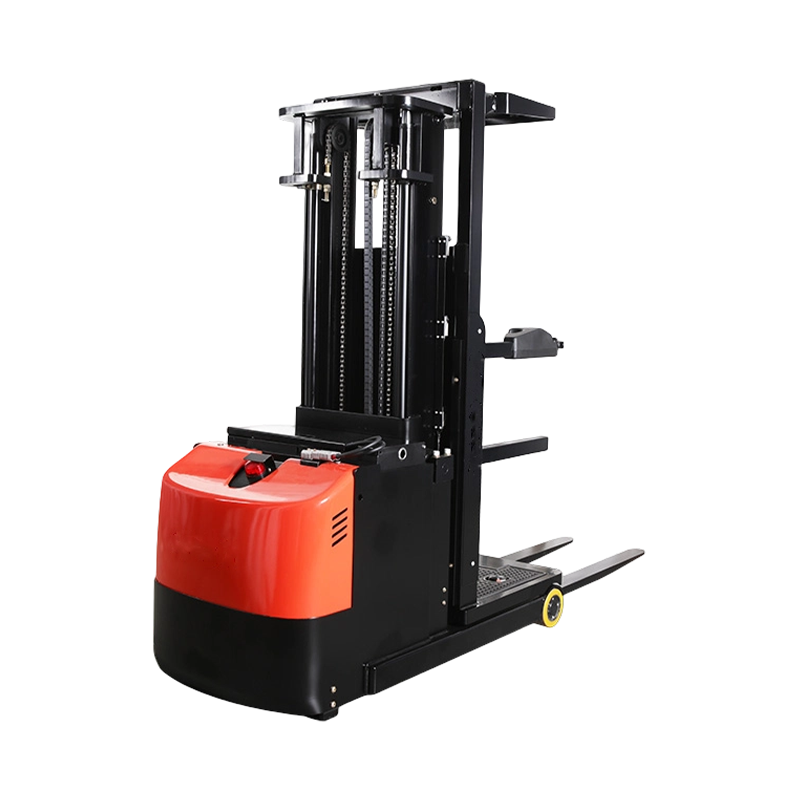
In picking operations, order pickers assemble the carts that the tow tractor later pulls to the dock. The combination of picker and tractor divides labor correctly: the order picker travels through the racks and builds the load; the tugger moves the completed train to outbound staging. This split is standard in retail and parts distribution because it doubles the throughput of the same labor hours.
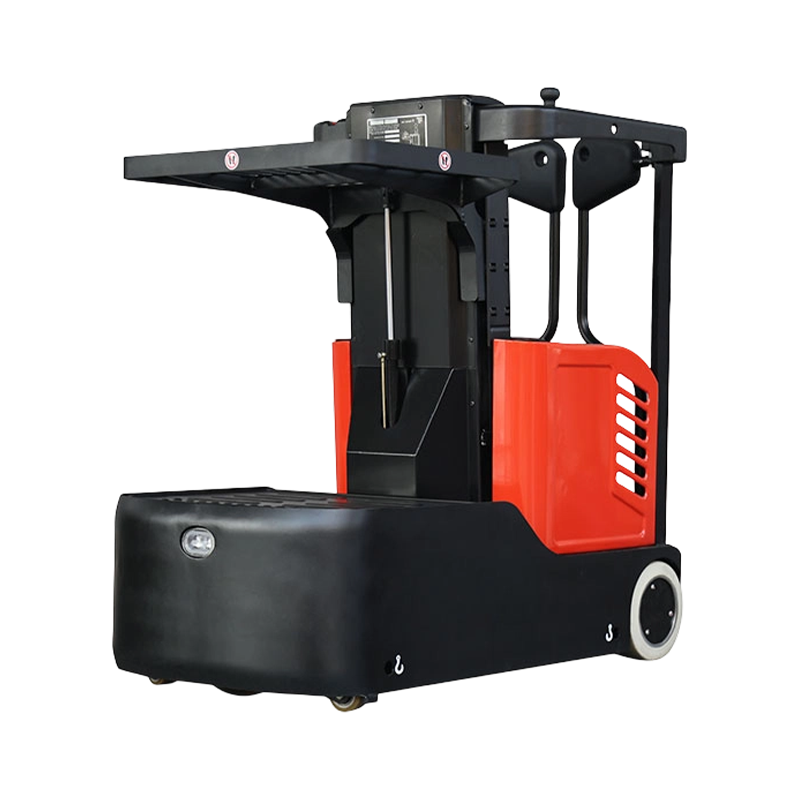 锂电0.5吨电动拣货车针对拣货作业设计,小转弯半径和电动助力转向让操作更灵活,有助于快速组装配送推车,提高拣货吞吐量。View Product →
Maintenance and spot moves also create demand for simple manual equipment. A hand pallet truck is the cheapest and most reliable backup for a Class 6 operation: it can clear a jammed cart, move a single pallet in a narrow cage aisle, and provide redundancy when powered equipment is down. Many facilities keep one at every loading dock for exactly this reason.
 手动液压托盘车(1.5-3吨)作为备用设备,这款手动托盘车在动力设备故障或狭窄通道中能轻松应急,是每个装卸平台都值得配备的可靠备份。View Product →
In addition to load handling, every Class 6 fleet relies on a steady supply of spare parts and replacement components. Hitches, wheels, tires, and towing attachments wear faster than the tractor itself. A documented parts strategy — original spare parts from the tractor manufacturer or verified replacement parts — prevents avoidable downtime. Our parts catalog covers drivetrain, tire and wheel assemblies, and attachments used across tow tractors and other Class I through Class VII trucks.
Operator training is mandatory for every powered industrial truck class, and Class VI is no exception. Training must be specific to the type of equipment the operator will use; a certification for Class I counterbalance forklifts does not automatically cover a Class VI tow tractor, because the driving skills are different.
The most critical pre-operation check is the hitch. Confirm the coupling engages fully, the safety latch functions, and the trailer's kingpin or ring is free of cracks and wear. A trailer that detaches from the tractor on a ramp creates an uncontrolled rolling load. Establish a daily inspection sheet that includes hitch condition, brake function, tire pressure, and warning devices.
Towing multiplies stopping distance. A tractor that stops quickly when running solo can take twice as long to stop with an 18,000-pound train behind it. Site speed limits for tow routes should be set lower than standard forklift limits — commonly 5 mph indoors. Drivers must also account for the fact that trailers have no brakes on many designs; the tractor brakes carry the entire train, plus the push from any carts with defective wheels.
Trailers follow a tighter path than the tractor through a turn. This off-tracking effect causes the rear carts to swing toward the inside of corners, and the tail of a long train can hit racking, doorframes, or pedestrians even when the tractor clears them easily. Mark tow routes with floor lines, install convex mirrors at blind corners, and train drivers to widen their turns.
Tow tractors operate in the same aisles as walkers, pickers, and other equipment. Use designated tow routes, audible warning devices, and spotter procedures when crossing pedestrian zones. Some facilities adopt a rule that the train never enters a pedestrian aisle until a spotter confirms the path is clear, particularly in warehouses with row-end doors.
Cart contents can shift during towing, especially on ramps and rough surfaces. Make sure the carts themselves are stable when loaded, that palletized loads on carts are stretch-wrapped or restrained, and that no cart is overloaded beyond its rated capacity. The tractor can pull far more than a badly loaded cart can carry safely.
Class 6 tractors are simpler than lifting forklifts because they have no mast, no hydraulic lifting system, and no fork carriage. This simplicity reduces some maintenance costs but introduces others.
For electric models, battery care is the main recurring task. Lead-acid batteries need water checks, equalization charges, and connector maintenance. Lithium batteries reduce daily maintenance but require a battery management system matched to the charger. Drive motors and controllers accumulate fewer service hours than an engine, but wheel motors on electric drive axles must be inspected for seal wear and contamination, especially in dusty operations.
Internal combustion tractors follow the standard engine maintenance cycle: oil and oil filter, air filter, fuel filter, coolant, and valve adjustments at the intervals specified by the engine manufacturer. Diesel units with DPF filters require regular regeneration or cleaning when operating mostly at low speed and low load, which is common on yard shutdown routes. LPG units are generally simpler on emissions equipment but require vaporizer and pressure-regulator inspection.
Regardless of power source, tow tractors wear through tires, wheels, and hitch components. The table below summarizes typical service intervals, though actual intervals depend on duty hours.
| Component | Electric Tractor | IC Engine Tractor |
|---|---|---|
| Tires | Every 2,000 – 4,000 hours | Every 2,000 – 4,000 hours |
| Wheel bearings | Inspect at 2,000 hours | Inspect at 2,000 hours |
| Battery | Water check weekly; replace every 4 – 6 years | Not applicable |
| Engine oil | Not applicable | Every 500 – 1,000 hours |
| Air and fuel filters | Not applicable | Every 500 – 1,000 hours |
| Hitch and coupling | Inspect daily; replace at wear indicator | Inspect daily; replace at wear indicator |
| Brakes | Check every 1,000 hours | Check every 1,000 hours |
Budget for a replacement battery or overhaul as a mid-life expense on electric models. On IC models, the equivalent mid-life event is an engine overhaul or, in some fleets, a powertrain replacement. Factoring these costs into the five-year total cost of ownership gives a more accurate comparison than the purchase price alone.
No. A Class VI tow tractor has no forks and no mast. It is designed exclusively to pull loads on wheels. If your operation needs both towing and occasional lifting, pair the tractor with a pallet jack or counterbalance forklift instead of expecting a single machine to do both jobs.
A Class III pallet jack lifts one pallet an inch or two off the floor and moves it over short distances. A Class VI tugger pulls a train of carts or trailers, none of which are lifted. The tugger can move far more total weight per trip but cannot lift anything on its own.
It depends entirely on the model. Compact electric tuggers move 5,000 to 10,000 pounds of trailing load on flat floors. Mid-size electric tractors handle 10,000 to 40,000 pounds. Large internal combustion yard tractors can pull 70,000 to 100,000 pounds or more. The limiting factor is continuous drawbar pull, surface condition, and grade, not the simple weight figure.
In most jurisdictions, OSHA and counterpart regulatory agencies require training specific to the equipment class. A Class VI operator needs documented training on tow tractors, including hitching, coupling, braking distance, and train handling. A general forklift certification alone is not sufficient in practice.
Yes, with the right specifications. Choose models with weather-sealed electrical components, pneumatic or heavy-duty solid tires, and adequate battery capacity for the route. For continuous outdoor operation over long distances, an IC tractor is often more practical because refueling is faster and the machine is not limited by battery range.
Well-maintained tow tractors routinely last 10 to 15 years, and longer for some IC models used in mild conditions. Battery electric models may need one or two battery replacements during that period. Frame stress is lower than on lifting forklifts, which is why used tow tractors often perform reliably and attract a strong resale market.
Occasional overloads above the rated train weight can be pulled on flat, clean floors with a low rolling resistance, but this practice creates real risks: increased braking distance, tire overheating, hitch stress, and motor or engine strain. Repeating it shortens component life and creates a liability exposure. Purchase or rent a tractor with a rating above the actual train weight instead of relying on overload margin.
Cart count is limited by total train weight, route geometry, and brake capacity. If carts weigh 1,500 pounds loaded and the tractor's safe train rating is 30,000 pounds, a train of 20 carts is theoretically possible, but the route must have enough straight aisle length, corner width, and dock apron for a 40-foot train to maneuver. Most operations run 6 to 15 carts per train depending on available space.
Recommended Products
Recommended NEWS


 English
 中文简体
 русский
 Español
 عربى