2026-10-06
Content
In a busy distribution center, a warehouse operator spots a pallet of bottled water labeled at approximately 2,100 kg and reaches for the nearest forklift, a compact electric truck rated at 1.8 tons. The machine will move, but the rear wheels become light, the load sways over every floor joint, and the operator instinctively slows to a crawl. The pallet is outside the safe working limit of that forklift, and the difference between 1.8 and 2.1 tons is the difference between routine work and a serious incident.
So how much weight can a warehouse forklift actually lift? For most machines used inside warehouses, the working figure sits between 1 ton and 5 tons. A counterbalanced electric or internal combustion forklift of the type commonly seen in distribution centers is usually rated from 1.5 tons to 3.5 tons. Electric pallet trucks typically handle 2 to 3 tons, electric stackers 1 to 2 tons, reach trucks 1.2 to 2.5 tons, and specialized warehouse trucks such as heavy order pickers can be rated up to 5 tons. The exact number for any individual truck is printed on its nameplate and is valid only under the conditions described on that plate.
The phrase "valid only under certain conditions" is the most important part of that answer. The rated capacity is connected to the position of the load center, the height of the forks, the presence of attachments, and the mechanical condition of the truck. Change any of those factors, and the safe lift weight changes with it. The sections below explain how to read a capacity rating, why the same truck handles less at higher lift heights, and how to select the right capacity for your loads. The same logic applies across most warehouse logistics operations, from basic pallet transport to high-bay storage.
The lift capacity printed on a forklift data plate is the maximum weight the truck may carry when three conditions are met: the load is positioned at a defined load center distance, the mast is vertical, and the load is carried at or below a reference fork height. This is not a marketing claim; it is an engineered figure used for stability calculations and safety certification.
To understand why the weight limit exists, picture the forklift as a lever. The front axle is the pivot point. The load and the mast create a moment that tries to tip the truck forward, while the counterweight at the rear, together with the weight of the chassis and the battery or engine, creates an opposing moment. As long as the rearward moment is larger, the truck stays balanced on all wheels. Every increase in load weight or load center distance adds to the tipping moment, which is why a capacity rating cannot be treated as a simple number to exceed.
Manufacturers base their ratings on a concept called the stability triangle. When a forklift is viewed from above, the three contact points between the front wheels and the rear axle form a triangle. If the combined center of gravity of the truck and its load moves outside this triangle, the truck will tip. The nameplate capacity is set so that the center of gravity remains safely inside the triangle under normal working conditions.
Capacity is quoted for a standard load center, most commonly 500 mm or 600 mm in front of the fork face. A load whose center of gravity sits farther from the carriage reduces the weight the truck can safely handle.
The rated figure is usually tied to a specific fork height, often the standard mast height. Above the reference height, the safe capacity falls along a curve that the manufacturer provides.
Forks of a different length, an added side shifter, or a heavier attachment all change the load position and the moving weight on the carriage, so the rating must be adjusted.
For a buyer, these three inputs mean that comparing forklifts by maximum tonnage alone is misleading. Two trucks with the same 3-ton rating can have very different real abilities once mast height and carriage equipment are taken into account.
Warehouse forklifts are divided into several families, and each family has its own expected capacity range. The table below shows the typical ratings you will encounter when comparing new and used equipment.
| Forklift type | Typical rated capacity | Typical working scenario |
|---|---|---|
| Manual pallet truck | 2-3 t | Moving pallets on flat floors |
| Electric pallet truck | 1.5-3 t | Order picking and short transport |
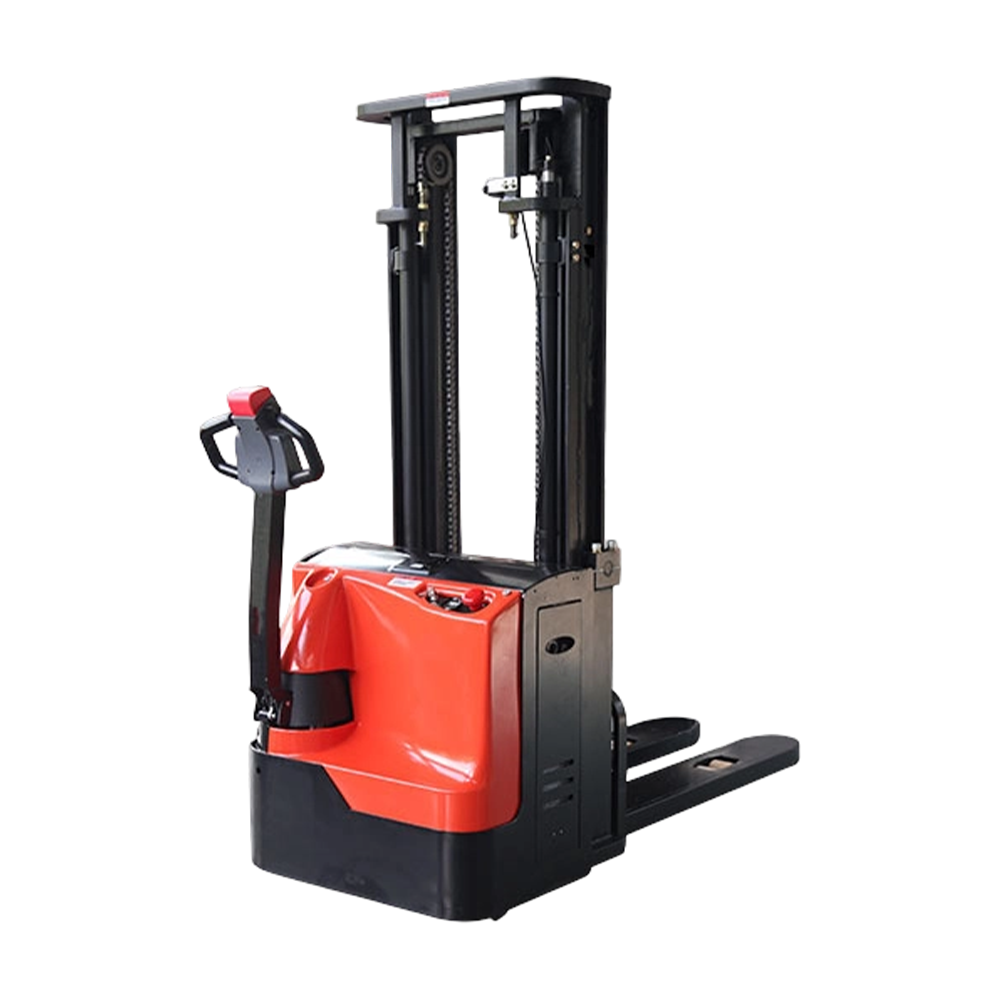
| Electric stacker | 1-2 t | Stacking pallets in narrow aisles |
| Reach truck | 1.2-2.5 t | High-bay storage |
| Electric counterbalanced forklift | 1.5-5 t | General lifting, loading, unloading |
| Diesel or LPG counterbalanced forklift | 2.5-5 t | Heavy-duty and outdoor work |
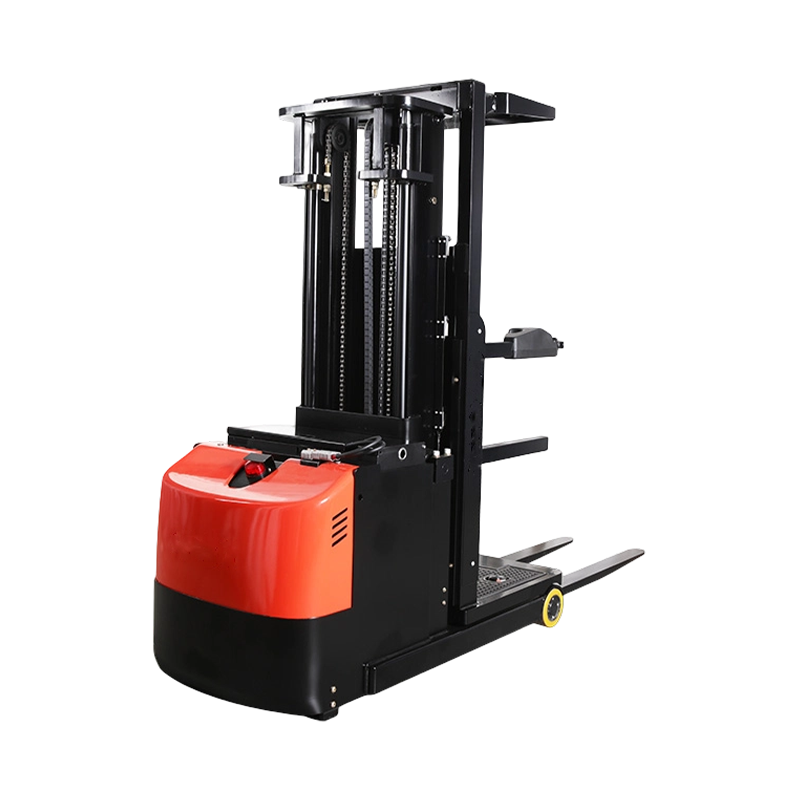
| Specialized order picker | Up to 5 t | High-level order picking |
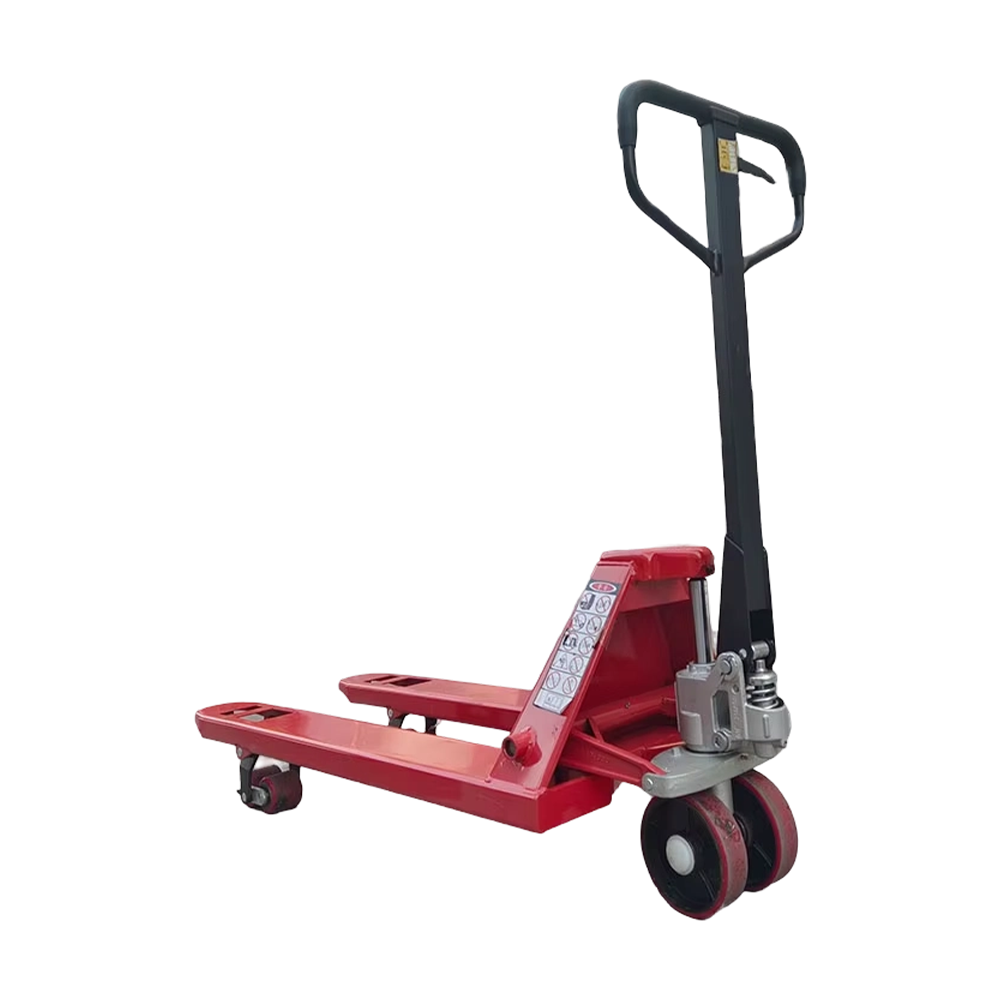
Pallet trucks are the workhorses of the warehouse floor because they combine low cost, a small footprint, and simple operation. A 2-ton lithium battery electric pallet truck is one of the most frequently specified models for standard pallet movement, order picking, and cross-docking, because it can carry the heavy unit loads found in grocery, beverage, and general merchandise operations while still moving quickly through narrow aisles.
 2 Ton Lithium Battery Electric Pallet Truck for Heavy LoadsThis electric pallet truck handles standard pallet movement, order picking, and cross-docking with a 2-ton capacity, brushless DC drive, and quick-charge battery, ideal for narrow warehouse aisles.View Product →
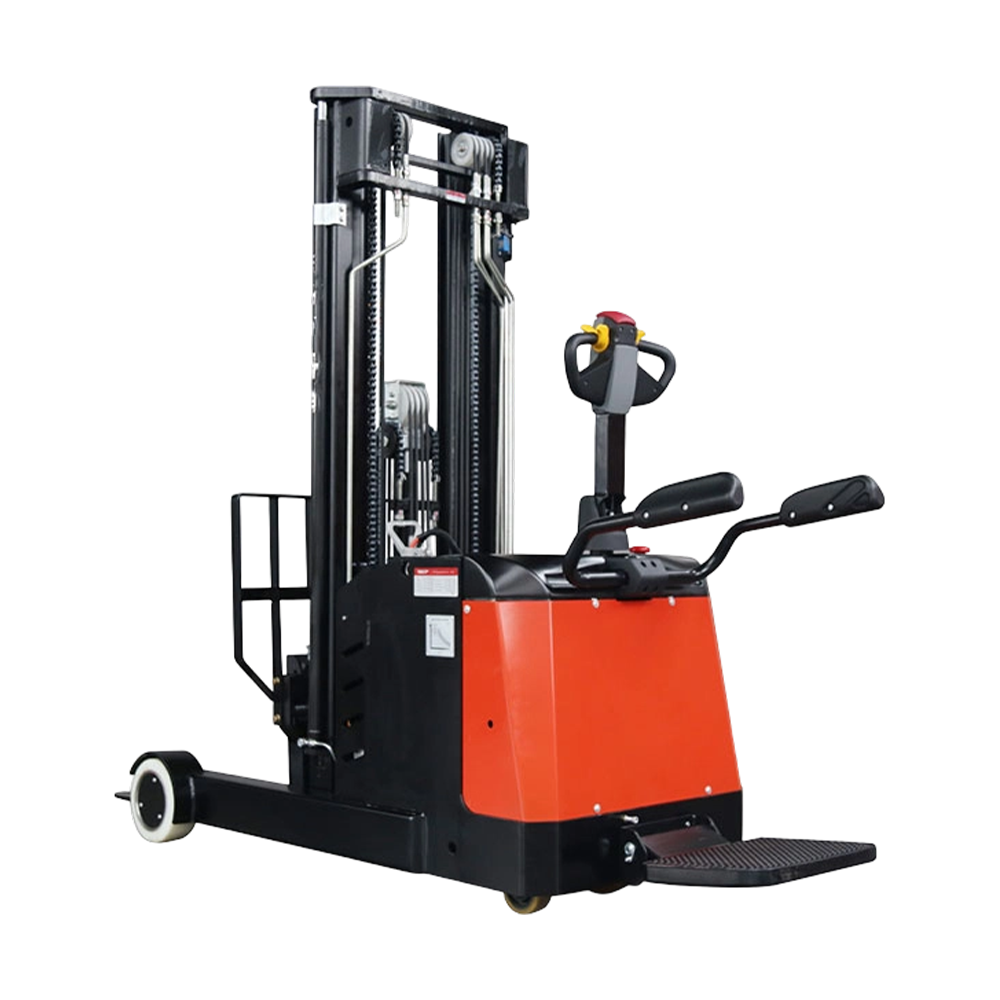
When pallets must be lifted onto racks, the choice moves to electric stackers and reach trucks. Electric stackers usually offer 1 to 2 tons of capacity and are ideal for second-level and low-to-medium racking in tight spaces. Reach trucks extend this idea with a retractable mast that keeps the truck compact in an aisle while placing loads on higher levels; typical capacity ratings run from 1.2 tons to 2.5 tons.
Counterbalanced forklifts, whether electric, diesel, or LPG, form the heavy end of the warehouse fleet. Electric counterbalanced trucks commonly span 1.5 tons to 5 tons, while internal combustion models of the same working class are usually specified from 2.5 tons to 5 tons. These trucks carry the load outside the wheelbase, which makes them more flexible on uneven floors and ramps, but it also makes the relationship between load center, lift height, and stability more critical.
As the chart shows, capacity ranges overlap considerably between types. A 2-ton electric stacker and a 2-ton counterbalanced truck both lift 2,000 kg at the forks, but they reach that limit at different heights and with different stability behavior.
The load center distance is the horizontal distance from the vertical face of the forks to the center of gravity of the load resting on them. Most forklift ratings are quoted at 500 mm or 600 mm. A compact, dense pallet has its center of gravity closer to the backrest and may improve the stability margin; a long crate, a bundle of pipes, or a wide drum pushes the center of gravity forward and reduces the safe capacity.
The table below shows how load center distance and load geometry work together in front of the mast.
| Load center distance | Effect on capacity | Typical load shape |
|---|---|---|
| 400 mm | Better stability margin than the rated condition; do not exceed the nameplate figure without a new rating | Compact cartons, tightly stacked unit loads |
| 500 mm | Rated capacity applies exactly | Standard pallets used in most warehouses |
| 600 mm | Effective capacity falls by approximately 8-15% because the load moment grows | Longer crates, sacks, wide pallets |
| 800 mm or more | Reduction can exceed 25%; a derating calculation is required | Pipes, lumber, long components |
The reduction is not a fixed number that you can simply subtract. It follows the same load-moment logic described in the first section. A 600 mm load center produces roughly 20% more load moment than a 500 mm center for the same weight, so the allowable weight must be reduced in inverse proportion. Manufacturers publish derating tables for their trucks, and a reliable supplier will provide one with every quotation.
If you need to measure a load center yourself, balance the load, find the point where it would pivot if the mass were uniform, and measure from that point back to the vertical face of the forks. For irregular or high-value materials, a certified load test is more reliable than a manual estimate.
A forklift that lifts 3 tons at ground level is not necessarily a 3-ton forklift at six meters. Lift height changes both stability and mast reach, and manufacturers express that relationship as a capacity curve.
The curve exists for three reasons. The mast tilts and flexes as it extends, which moves the load center forward and upward. The hydraulic system must support the combined weight of the load, the carriage, and the moving mast sections. Above all, the higher the load, the larger the moment arm around the front axle, so the operator has less margin before the stability triangle is exceeded.
Representative capacity curve for a 3-ton counterbalanced forklift with a standard mast. The exact figures depend on the model, mast type, and counterweight configuration.
When you request a quotation, ask for the capacity chart for the exact mast configuration you are considering. A supplier who provides it has verified the machine's behavior through testing. A supplier who cannot provide it is giving you an incomplete picture of the truck's real lifting ability.
Forklifts are often sold with attachments that make them more versatile, but every attachment changes the weight and geometry of the load-carrying assembly. A side shifter, fork positioner, clamp, or rotator adds mass to the carriage and typically pushes the load a little further from the mast. The result is a reduction in rated capacity that must be reflected on a new nameplate.
| Attachment | Typical added carriage weight | Typical capacity effect |
|---|---|---|
| Side shifter | 80-150 kg | 3-8% reduction |
| Fork positioner | 100-200 kg | 5-10% reduction |
| Clamp or rotator | 200-500 kg | 10-15% or more |
| Extended or heavier forks | Depends on model | Depends on load center shift |
Do not assume an attachment simply removes a fixed weight from the capacity. If the capacity plate still shows the original rating after an attachment has been installed, the truck is running outside its certified configuration. That situation should be corrected before the machine goes back to work.
The condition of the tires, mast, chains, hydraulics, and brakes directly affects the real safe capacity. Worn or underinflated tires lower the truck and change the ride height, which alters the effective mast tilt and stability. Leaking hydraulic cylinders, deformed fork arms, loose mast rollers, and weak brakes all narrow the safety margin of a calculation that assumed a perfectly maintained machine.
When inspecting a forklift for capacity-related safety, check the following:
Capacity specifications matter most when they are matched to the real loads in your building. Choose on the basis of the heaviest and most awkward load you will handle, not the average pallet. A truck that is comfortable with 80% of your loads but marginal with the remaining 20% will create daily stress for the operator and higher maintenance bills.
For standard pallet movement and loading areas, a 2-ton lithium pallet truck covers a large share of operations while keeping energy costs low. The balance shifts when you add stacking, cold storage, or very long loads.
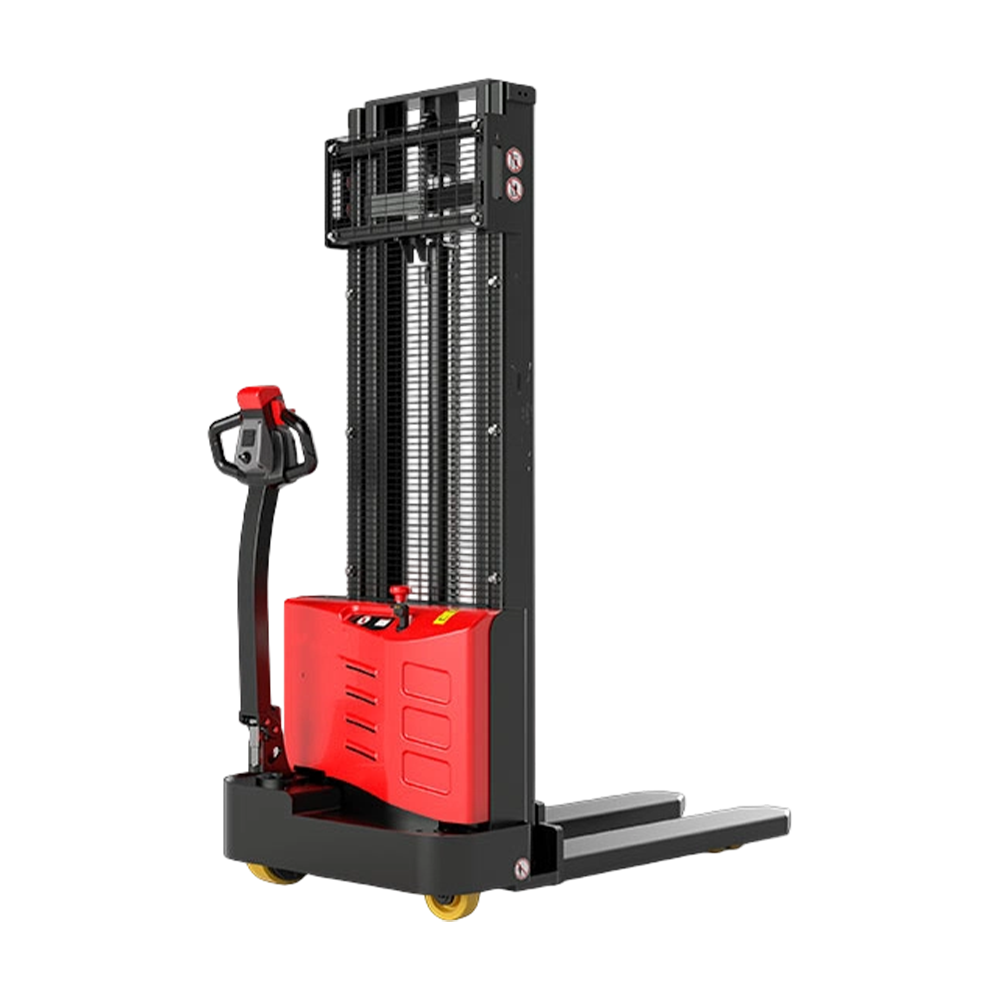
In high-density storage, the truck must lift a load, move it forward into a rack, and place it cleanly at the target level. An electric stacker rated for 2 tons is a practical option for lighter racking in narrow aisles because the load remains within the wheelbase during transport, giving the operator good control at moderate heights. For rack levels above about 4 meters, a reach truck provides better height performance, but the stacker remains the simpler, lower-cost solution for second- and third-level storage.
 2 Ton Lithium-ion Battery Electric Stacker for Narrow AislesThis stacker offers a practical, lower-cost solution for second- and third-level racking in tight spaces, with AC drive, high-stability hydraulics, and reliable performance for moderate lift heights.View Product →
Loads that extend well beyond the forks, such as steel bars, extrusion lengths, or long crates, push the load center forward beyond the rated distance. For these operations, either a truck with a higher nominal capacity is required, or the operator must use a controlled handling method such as long-fork configurations, mast tilt limits, and carefully supervised tandem lifting. It is always safer to specify a machine that keeps the center of gravity as close to the mast as possible.
If you are still moving between equipment families, read our guide to choosing the best warehouse forklift type for a broader comparison of reach trucks, stackers, counterbalanced trucks, and pallet trucks in the same facility.
Freezer operations add two demands to the capacity question: the forklift must handle heavy pallets of chilled or frozen goods, and it must do so in low temperatures where batteries lose efficiency and materials become brittle. A cold storage lithium forklift designed for 1.5 to 2 tons is built for this environment, with sealed components, cold-resistant electronics, and a lithium battery that holds its charge better than lead-acid in low temperatures. You can keep the same load ratings as an ambient warehouse machine, but the truck itself needs to be specified for the temperature range.
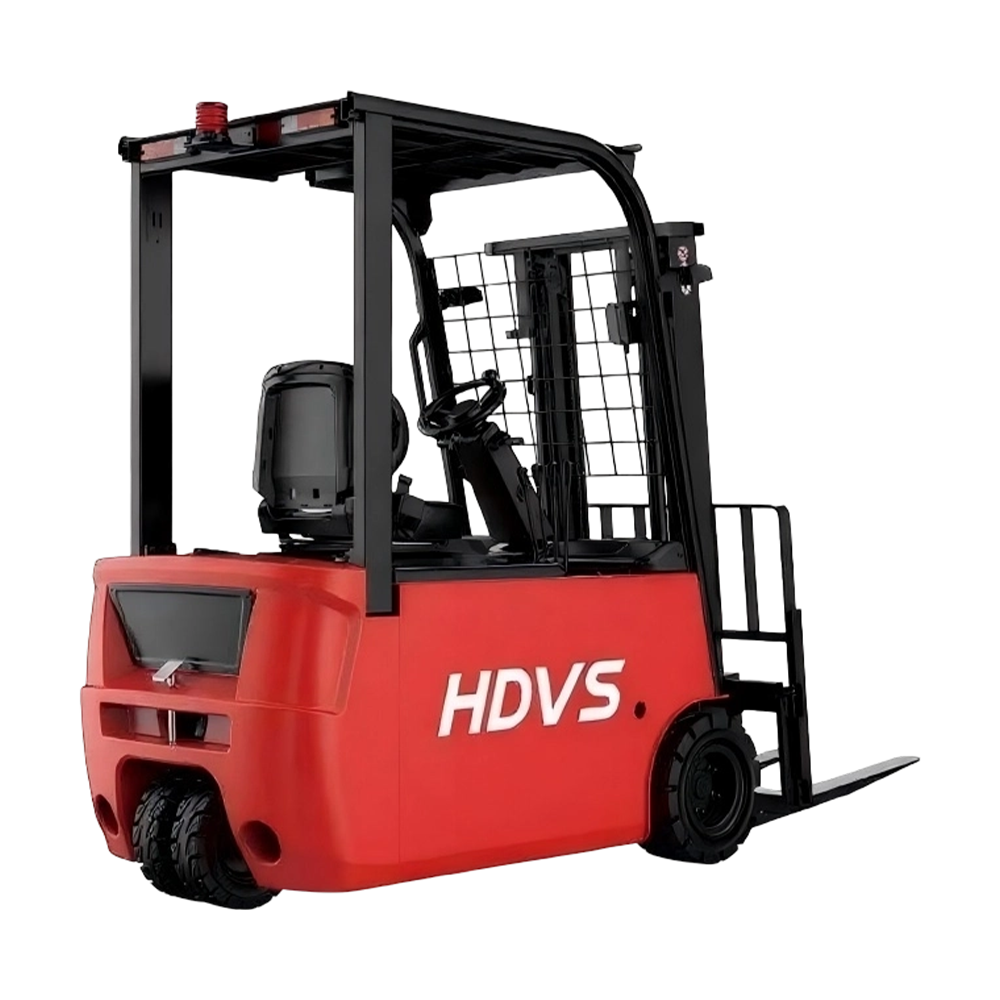 Cold Storage Lithium Battery Electric Forklift (1.5/1.8/2 Ton)Designed for freezer environments down to -25°C, this forklift combines sealed components and cold-resistant electronics with a lithium battery that retains charge better in low temperatures for heavy chilled or frozen goods.View Product →
When selecting a freezer truck, confirm that the rated capacity is certified at the actual room temperature where the truck will work. A rating measured in a warm test area may not translate directly to a -25°C environment, especially for lift speeds, brake response, and hydraulic behavior.
When the forklift is new, the rated capacity comes from the manufacturer's specification and is confirmed by the nameplate on the machine. Before accepting a delivery, compare the serial number, option codes, and mast height on the plate with the purchase order. A machine with the wrong mast or carriage should not be accepted merely because the label looks correct.
For used trucks, verifying capacity is more involved. A used forklift may have been fitted with a different mast, longer forks, an attachment, or a replacement counterweight. Each of these changes the certified capacity. Ask the seller for the original data plate, the factory specification sheet, and the capacity chart for the actual configuration. A supplier that also stocks original spare parts can often trace the original specification from the chassis number, which is a strong signal that the equipment has been properly cared for.
If those documents are missing, the safe capacity of the truck is unknown until a load test has been performed. When reviewing a used machine, check the following:
A seller that can document the capacity of a used forklift is offering more than a machine; they are offering the assurance that the truck can do its job within a known safety margin. That confidence is worth more than a low price.
Most standard counterbalanced warehouse forklifts are rated between 1.5 tons and 3.5 tons. Pallet trucks usually carry 2 to 3 tons, electric stackers 1 to 2 tons, reach trucks 1.2 to 2.5 tons, and order pickers can be rated up to 5 tons. The exact figure on the nameplate is the number to use in daily operation, and it is valid only at the documented load center and lift height.
A 3-ton rating means the truck can safely lift 3,000 kg when the load center is at the specified distance, often 500 mm, and the load is carried at or below the reference fork height. If the load is longer so its center of gravity sits farther from the carriage, or if the operator lifts above the reference height, the safe weight is lower.
Lifting increases the distance between the load center and the front axle, which increases the load moment and reduces stability. The mast also flexes and the hydraulic system has a finite capacity. Manufacturers express this loss in a capacity curve; on some 3-ton trucks, lifting at full mast height can cut the safe load to around 1.5 tons.
The forklift may become unstable, the load can slide off the forks, the mast can bend or crack, and braking distance increases dramatically. Overloading also accelerates wear on tires, bearings, chains, and hydraulic seals. Most importantly, it creates direct hazards for pedestrians and operators, which is why capacity limits are treated as hard requirements in safety audits.
Yes. Every attachment adds weight to the carriage and usually moves the load center forward. A side shifter can reduce capacity by 3-8% and a fork positioner by 5-10%. Because of this, the capacity plate on the truck must always reflect the actual attachment and fork configuration; an unchanged nameplate after fitting an attachment is a warning sign.
Electric pallet trucks are typically rated from 1.5 to 3 tons, with 2-ton models covering most standard distribution work. Electric stackers usually handle 1 to 2 tons, depending on the mast height and lifting height. Both types follow the same derating logic as counterbalanced trucks when stacking above the reference height.
Start with the nameplate mounted on the chassis or dash and check that the serial number matches the machine. Ask the seller for the original specification sheet and capacity chart. Inspect the mast, carriage, forks, and attachment for signs of modification or repair. If the plate looks replaced or the parts do not match the original configuration, arrange a load test before purchase.
Treat every capacity rating as a set of conditions rather than a fixed number. The question is not how much the truck can lift at ground level; it is how much it can lift at the height where the rack sits, with the load center and attachment you actually use. Set your operating rules from the capacity chart, check the nameplate against the truck configuration, and train operators to understand both. That habit turns a rated specification into a reliable daily safety factor.
Recommended Products
Recommended NEWS


 English
 中文简体
 русский
 Español
 عربى