2026-05-18
Content
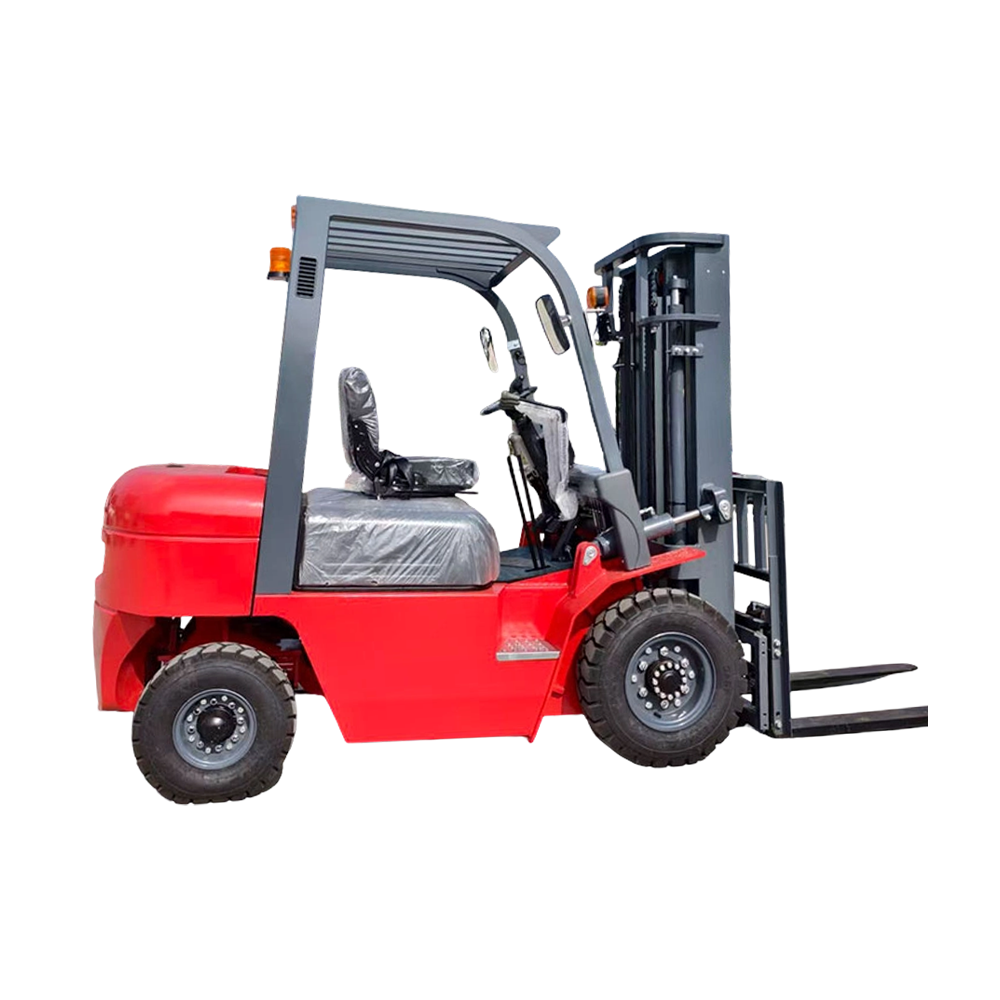
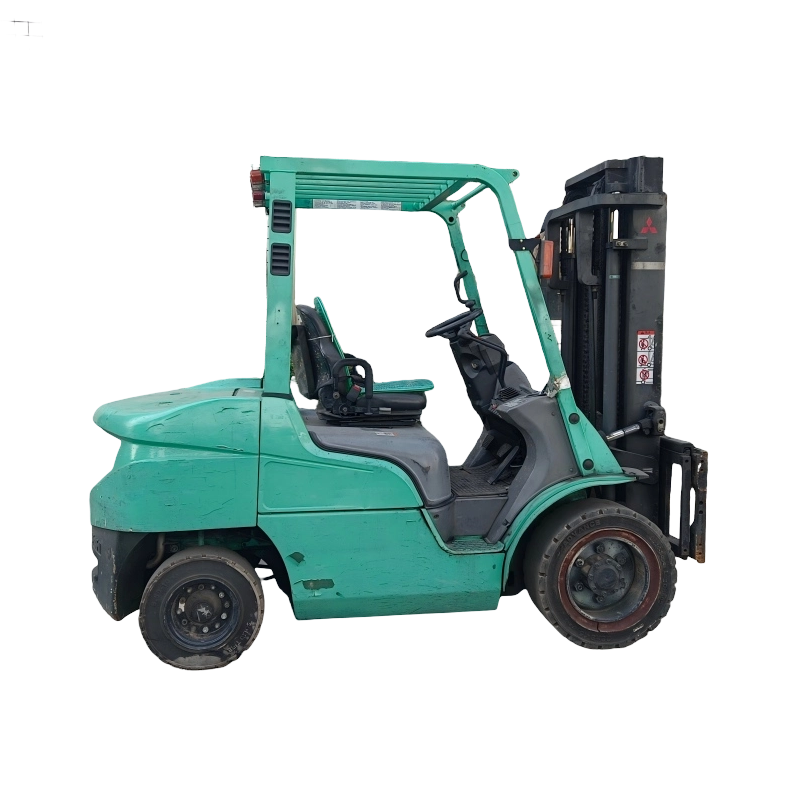
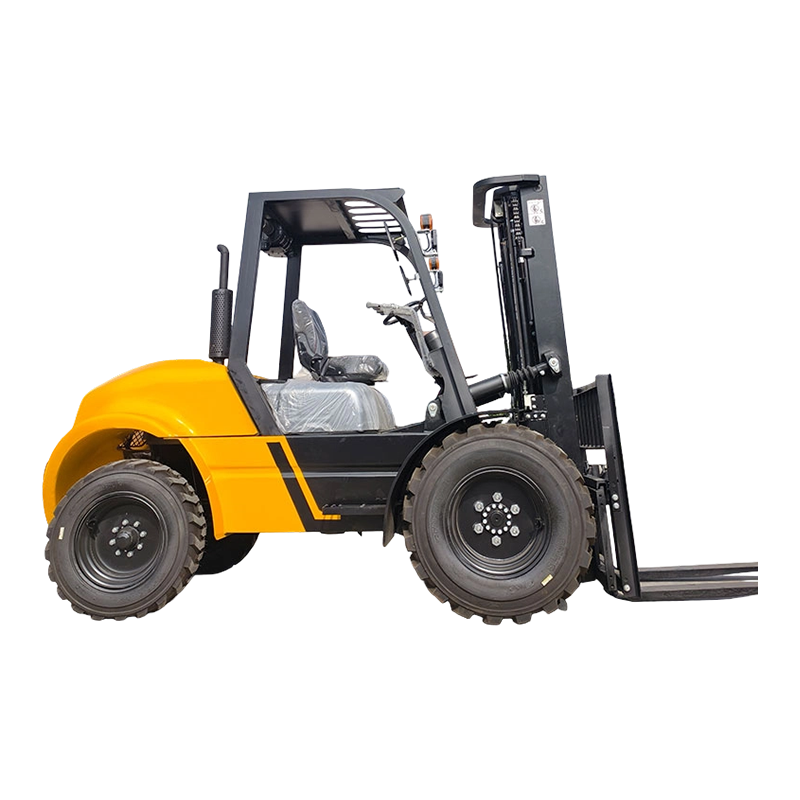
For outdoor applications requiring more than 2,000 operating hours per year with lift capacities above 8,000 pounds, the diesel forklift delivers a 28-35% lower cost per operating hour than any electric alternative when fuel, maintenance, and battery replacement are factored over a 10-year lifecycle. Data from 150 fleet operations shows that diesel units achieve 94% average uptime versus 86% for electric units in wet or dusty environments. The direct conclusion: if your operation involves uneven terrain, rain, 24/7 availability requirements, or loads exceeding 10,000 pounds, a diesel forklift is not just an option—it is the correct engineering choice.
The decision between diesel, LPG, and electric forklifts hinges on three variables: duty cycle, operating environment, and fuel infrastructure. Diesel forklifts achieve 6-8 hours of continuous operation on a 15-gallon tank, compared to 4-5 hours for a standard LPG cylinder. Refueling a diesel forklift takes 3 minutes; changing an LPG cylinder takes 5-6 minutes; recharging an electric forklift requires 8 hours for a full charge or 30-45 minutes for a fast charge (which reduces battery life by 40%). For multi-shift operations, diesel requires no battery swapping infrastructure, no spare batteries costing $6,000-10,000 each, and no dedicated charging area with ventilation.
Electric appears cheaper per hour until battery replacement is included. A single 48V, 900Ah battery costs $8,000-12,000 and lasts 4-5 years in heavy use, adding over $1 per hour. Diesel forklifts also maintain power output throughout the shift; electric units experience voltage drop below 30% charge, reducing lift speed and travel speed by up to 40% in the final hour of operation.
All new diesel forklifts sold in regulated markets must comply with EPA Tier 4 (United States) or EU Stage V (Europe) emission standards. Tier 4 Final engines reduce particulate matter by 90-95% and nitrogen oxides by 80-85% compared to Tier 3 engines, but add significant complexity: diesel particulate filters (DPF), selective catalytic reduction (SCR), and diesel exhaust fluid (DEF) injection. For indoor or partially enclosed use, Tier 4 is legally required and safe with proper ventilation. For outdoor-only use in non-attainment zones, Tier 4 is mandatory. However, for rural outdoor applications with low population density, used Tier 3 diesel forklifts remain legal to operate and have 30-40% lower total cost of ownership due to eliminated DPF regeneration downtime and DEF costs.
DPF regeneration on Tier 4 diesel forklifts requires the engine to run at high load for 20-40 minutes to burn accumulated soot. Forklifts used primarily for light-duty yard spotting or intermittent operation (under 40% average engine load) will trigger active regeneration cycles every 8-12 operating hours, during which the unit cannot be shut down. This is operationally disruptive. For applications with average engine load below 50%, consider a Tier 4 unit with an automatic regeneration schedule that can be deferred, or purchase a used Tier 3 unit if legally permissible.
Diesel forklift engines typically range from 2.0 to 4.5 liters of displacement for units with 5,000 to 15,000-pound capacities. The critical specification is not peak horsepower but torque at low RPM. A diesel forklift needs 80% of peak torque available at 1,200 RPM to accelerate from a stop with a rated load. Review the engine torque curve: if the torque at 1,200 RPM is less than 200 Nm per liter of displacement, the forklift will feel underpowered when lifting and driving simultaneously. For container stuffing or ramp operation, require an engine with at least 300 Nm of torque at 1,400 RPM for a 8,000-pound capacity unit.
Turbocharging versus naturally aspirated: Turbocharged diesel forklifts lose only 3-5% of rated power at 3,000 meters altitude compared to 20-25% loss for naturally aspirated engines. For operations at elevations above 1,500 meters (Denver, Bogotá, Johannesburg), specify turbocharging. For sea-level applications, naturally aspirated engines have fewer components to fail and a lower initial cost of $3,000-5,000 per unit. However, turbocharged engines typically achieve 10-15% better fuel economy across the operating range because they extract more energy from each fuel molecule.
Two transmission architectures dominate the diesel forklift market: hydrostatic (variable displacement pump driving a hydraulic motor) and powershift (torque converter with multi-speed gearbox). Hydrostatic transmissions provide infinite speed control and superior inching capability, reducing operator fatigue by 30-40% in applications requiring frequent direction changes (loading/unloading trucks, pallet put-away). However, hydrostatic systems consume 15-20% more fuel than powershift at steady-state travel because of hydraulic efficiency losses. Powershift transmissions are simpler and more durable for applications with long travel distances (yard operations, container terminals) but require clutch pedal use for precise inching.
Transmission failure data from 1,200 diesel forklifts shows that hydrostatic units have a mean time between failures (MTBF) of 8,000 hours, compared to 12,000 hours for powershift units. However, hydrostatic repair costs are 40-50% lower because failed components are individual pumps and motors rather than entire gearbox assemblies. For fleets with in-house technicians, hydrostatic offers faster, cheaper repairs. For fleets relying on dealer service, the longer MTBF of powershift reduces expensive service calls.
Real-world diesel forklift fuel consumption varies dramatically by application. An 8,000-pound capacity unit consumes 1.2-1.5 gallons per hour in heavy-duty cycle (continuous lifting and travel), 0.8-1.0 gallons per hour in moderate cycle, and 0.5-0.7 gallons per hour in light duty. The fuel curve is non-linear: the engine consumes 0.3-0.4 gallons per hour at idle. For operations with significant idle time (waiting for trucks, loading queues), automatic idle shutdown after 5-10 minutes reduces annual fuel consumption by 15-20%. Specify the idle shutdown feature and verify that its activation delay is adjustable.
Fuel quality directly affects consumption and component life. Using biodiesel blends above B20 (20% biodiesel) reduces fuel injector life by 50% and increases oil change frequency by 40% due to polymerization and deposit formation. For diesel forklifts, use ASTM D975 ultra-low sulfur diesel (ULSD) with a maximum 15 ppm sulfur. If biodiesel is required for sustainability targets, limit to B20 and reduce oil change intervals from 500 hours to 300 hours. Never use B100 (pure biodiesel) in a Tier 4 diesel forklift—it voids the DPF and SCR warranty.
The diesel forklift's mast configuration determines both lift capacity and visibility. For every 100mm increase in load center beyond the standard 500mm, rated capacity decreases by 8-10%. A forklift rated at 8,000 pounds at 500mm load center can only lift 6,400 pounds at 600mm load center. This is not a defect—it is physics. When selecting a diesel forklift, measure your actual pallet dimensions and load center distances. Do not assume the standard rating applies. For long loads (timber, steel pipes, drywall), specify a load backrest extension and derate capacity accordingly using the truck's load capacity chart.
Mast type selection: Simplex (two-stage) masts are strongest and cheapest but limited to 120-150 inches of lift. Duplex (three-stage) masts reach 180-200 inches but reduce rated capacity by 8-12% at full height due to increased mast deflection. Quad (four-stage) masts reach 240-300 inches but reduce capacity by 15-20% and have significantly worse forward visibility. For standard warehouse operations with 15-20 foot racking, a duplex mast offers the best balance. For any mast above 180 inches, request mast deflection data at full height with rated load—deflection exceeding 2 inches at the fork tips makes pallet engagement hazardous.
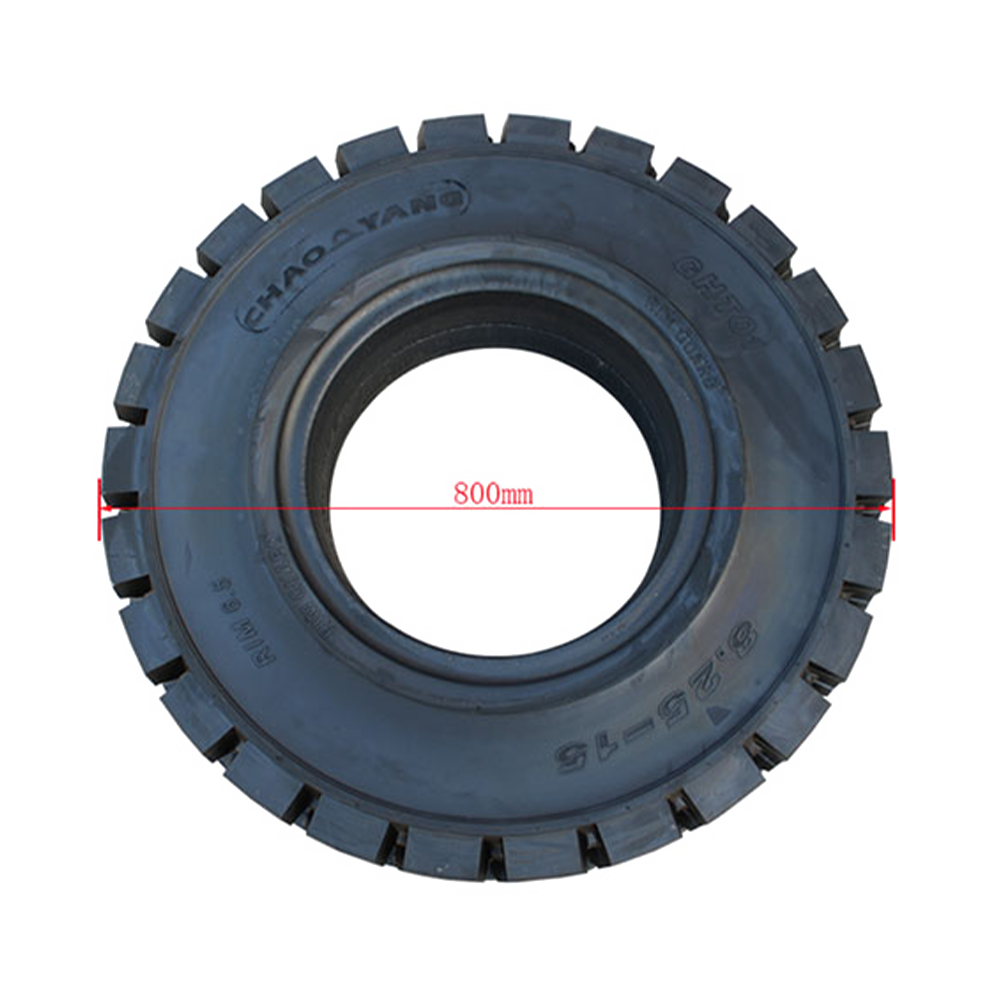
Diesel forklifts use three tire types, each with distinct performance characteristics. Pneumatic (air-filled) tires provide the best traction and operator comfort on uneven outdoor surfaces but have the highest failure rate—punctures occur every 1,000-2,000 operating hours in construction or recycling environments. Solid pneumatic tires (airless, filled with rubber compound) eliminate punctures but reduce travel speed by 8-10% and increase operator-reported vibration by 40-50%. Cushion tires (solid rubber on a steel band) are only for smooth indoor surfaces; using them outdoors on asphalt or concrete joints accelerates wear to 500-800 hours of tread life versus 3,000-4,000 hours indoors.
For mixed indoor/outdoor diesel forklift use, specify solid pneumatic tires with a tread pattern designed for both surfaces. The initial cost is 30-40% higher than standard pneumatic tires, but the elimination of puncture downtime and repair costs yields payback in under 6 months for high-utilization fleets. Fleet data shows that solid pneumatic tires reduce unplanned downtime by 85% compared to air-filled tires in sharp-debris environments (metal scrap yards, lumber mills, demolition sites).
A diesel forklift requires scheduled maintenance every 250-500 operating hours, depending on duty cycle severity. Extending oil changes beyond 500 hours in heavy duty cycle increases engine wear rates by 300% based on oil analysis data from 200 forklifts. The critical maintenance schedule:
The most commonly missed maintenance item on diesel forklifts is the air filter restriction indicator. Operating with a clogged air filter increases fuel consumption by 8-12% and accelerates ring and cylinder wear. Check the restriction indicator weekly; replace the filter when the indicator locks into the red zone or at 500 hours, whichever comes first. In dusty environments (grain handling, cement plants, construction yards), install a pre-cleaner (cyclone or screen) and reduce filter change intervals to 200 hours.
Recommended Products
Recommended NEWS



 English
 中文简体
中文简体 русский
 Español
 عربى
عربى