2026-09-01
Content
A warehouse supervisor once asked a room of new forklift operators to state the golden rule of forklift operations. One said "wear a seat belt." Another said "honk at intersections." A third said "follow the speed limit." All were good practices, but none was the golden rule. The golden rule is more specific and more fundamental than any general safety tip: when a forklift is traveling with a load, the load must be carried as low as possible and the mast must be tilted back. Every other rule of forklift safety builds on this principle. This guide explains what the golden rule means, why forklift physics makes it essential, how to apply it through every stage of a shift, and how equipment selection and operator training reinforce it.
The golden rule of forklift operations states that a forklift should travel only with its load carried low, typically 4 to 6 inches (10 to 15 centimeters) above the ground, and with the mast tilted backward to hold the load firmly against the carriage. Three elements make up the rule:
The rule applies not only to loaded travel but also to empty forklifts. An empty truck with raised forks is just as vulnerable to tipover on a ramp or uneven surface, and the raised forks can strike overhead sprinklers, racks, door frames, or utility lines. Many operators who would never drive loaded with a raised mast will do exactly that with an empty truck, unaware that the center of gravity shifts upward in both cases.
A common misconception is that the golden rule only matters when the load is heavy. In fact, the height of the load affects stability more than the weight alone. Even a relatively light pallet carried at mast height can tip a truck if the operator turns sharply or brakes on a slope. The golden rule is about the position of the load, not just its mass, which is why it applies on every move regardless of what the pallet contains.
The golden rule exists because of the way counterbalanced forklifts are engineered. A counterbalanced forklift supports its load on forks at the front end and balances that load with the weight of the truck, including a heavy counterweight at the rear. The key concept in forklift stability is the stability triangle, an imaginary triangle formed by three points: the center of the front drive axle and the two pivot points of the rear steering axle. As long as the combined center of gravity of the truck plus its load stays inside this triangle, the forklift remains upright. When the combined center of gravity moves outside the triangle, the truck tips over.
Load height is the most direct factor an operator controls that affects this geometry. When the forks are low, the combined center of gravity sits low and roughly in the center of the triangle. As the forks rise, the center of gravity moves upward and, depending on the load position, forward. The higher the load, the closer the combined center of gravity moves to the boundary of the stability triangle, and the smaller the safety margin. Any additional disturbance such as a sudden stop, a tight turn, a pothole, or a dock plate edge can push the center of gravity outside the triangle.
This is why forklift manufacturers publish load capacity charts. The rated capacity of a truck applies only when the load is handled at a specified load center and fork height. When the load center shifts forward, or when the fork height increases, the safe capacity drops. The golden rule is essentially the operator-side equivalent of those capacity charts: keep the load low so the margin stays large.
Operators also need to understand the effect of load center distance. A standard pallet places its load center at 24 inches (600 mm) from the face of the forks, and that is the distance most capacity charts assume. If the pallet is wider or the load extends beyond the forks, the effective load center moves outward, reducing the safe lifting capacity. Carrying such a load at height multiplies the risk. The golden rule responds to this: keep the load low, and even an awkward load center remains manageable because the vertical component of the center of gravity stays closer to the ground.
The golden rule is not a single action but a sequence of actions repeated on every pallet move. A consistent load cycle looks like this:
Operators should also practice the maneuver standards: never turn and tilt at the same time, never brake and turn simultaneously with a loaded mast, and never raise a load while the truck is moving. Raising while moving is one of the most common ways operators fall outside the golden rule without realizing it.
Loading and unloading trailers adds a separate layer of complexity. The dock edge, the trailer floor, and the dock plate all present height transitions. When entering a trailer, the operator must approach the dock leveler slowly, keep the load low, and only raise it once the truck is entirely inside the trailer. When exiting, the load must be lowered before crossing the dock plate, because the plate can flex under the combined weight of truck and load. A forklift bouncing across a dock plate with a raised mast is a classic tipover scenario.
In cold storage facilities, the golden rule becomes harder to follow because operators wear heavy gloves and work in environments where floors can be slippery. A good practice is to slow the travel speed automatically in cold rooms and to keep loads at the minimum height at all times. The operator should also check that the mast and tilt functions respond promptly in low temperatures, since hydraulic fluid thickens in the cold. A sluggish tilt response is a safety issue, not just a performance issue.
Ramps and inclines demand a sharper version of the golden rule. On any slope, the load must always be on the uphill side of the truck. This rule keeps the load from sliding off the forks and keeps the combined center of gravity as far as possible from the tipping edge of the stability triangle.
Even a shallow ramp changes the geometry of the stability triangle. The angle of the slope shifts the combined center of gravity toward the downhill edge, and the higher the load, the more significant that shift becomes. On a 5-degree ramp, a load carried at 6 feet above the ground produces a far smaller safety margin than the same load carried at 6 inches. The combination of an incline and a raised load is one of the most dangerous situations in forklift operation.
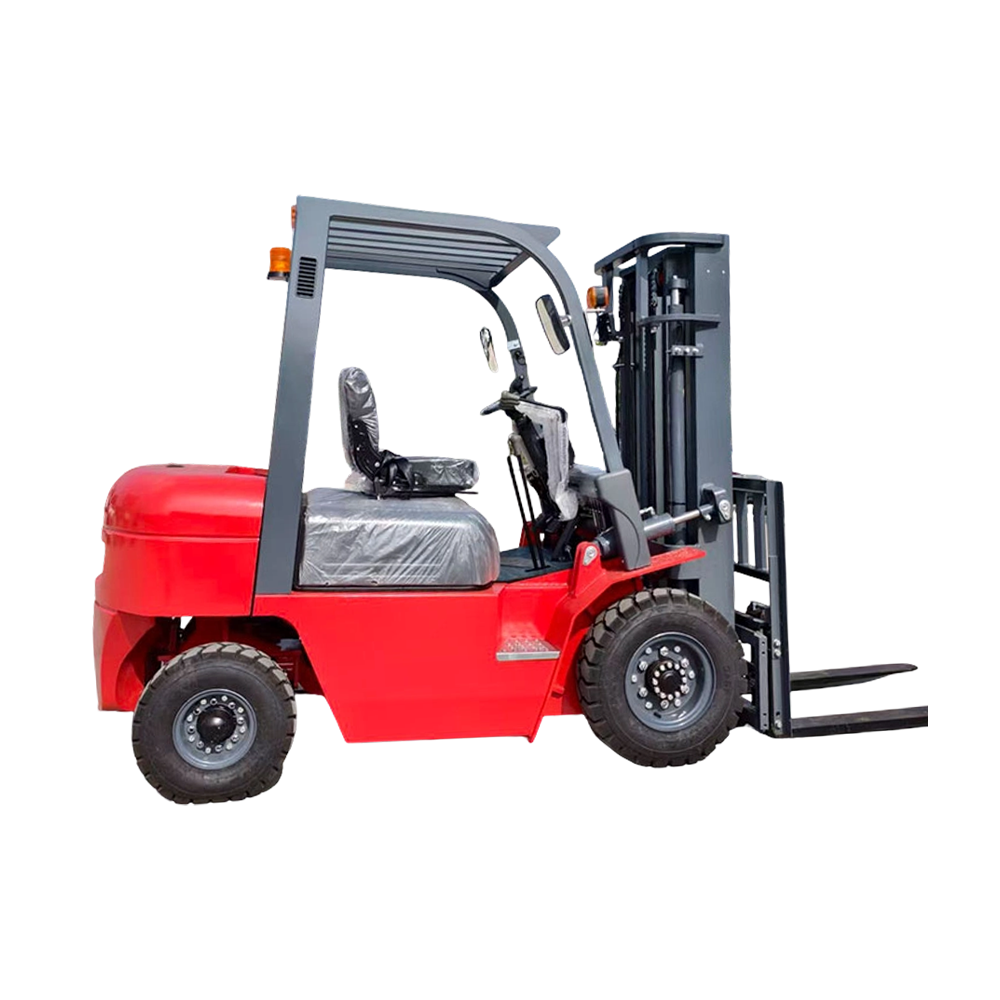
In facilities where ramps, outdoor grades, or rough surfaces are routine, the choice of forklift matters as much as the operator's technique. Trucks with pneumatic tires, higher ground clearance, and stronger drivetrains handle slopes more predictably. For outdoor yards, construction staging areas, and port operations, a 4-wheel diesel forklift with a reinforced mast provides the traction and stability needed to apply the uphill rule consistently, even on gravel or uneven ground.
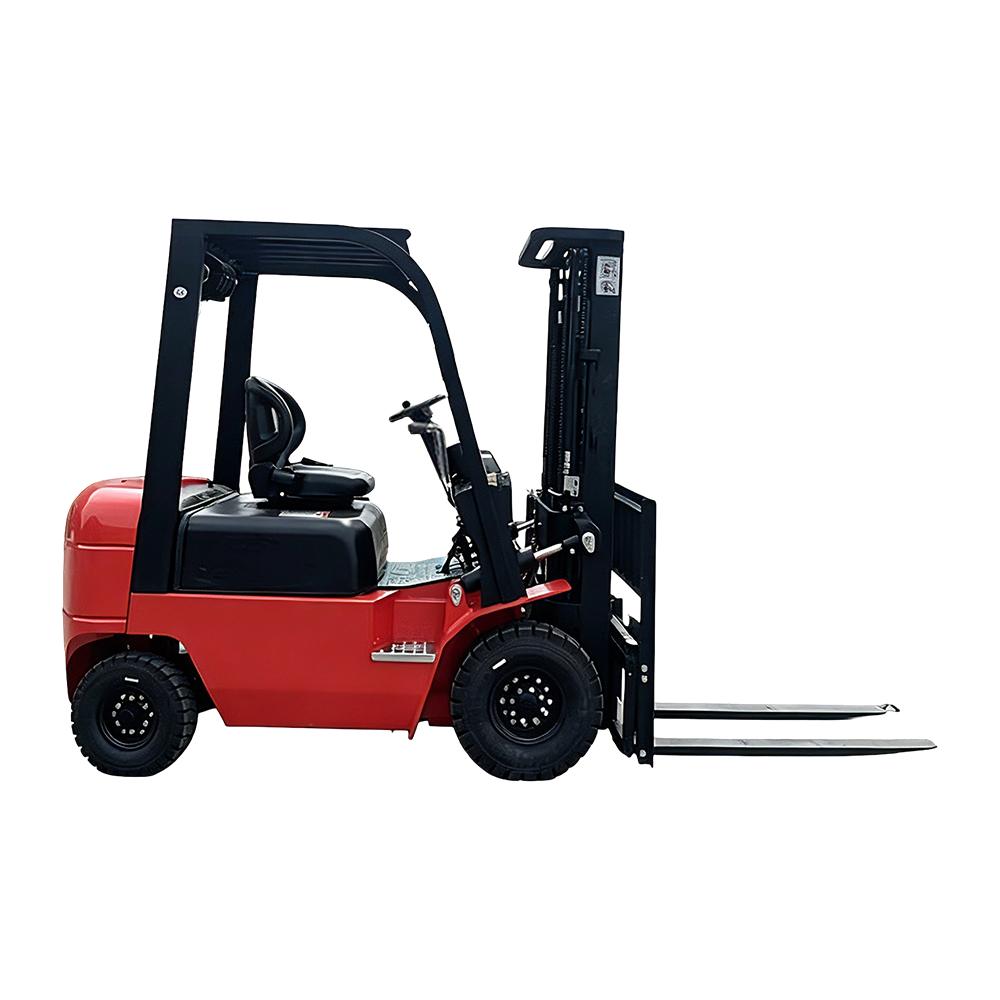 Custom Internal combustion forklift 4-wheel diesel forklift Suppliers, OEM/ODM FShanghai HanDavos International Trading Co., Ltd. is China Internal combustion forklift 4-wheel diesel forklift Suppliers and OEM Factory...View Product →
Operators should also be trained to test the traction of a ramp before attempting a full crossing with a load, especially in wet or icy conditions. If the drive wheels slip, the truck can lose directional control and the load can shift. Low fork height gives the operator more time to react and recover because the center of gravity is closer to the ground.
The golden rule applies to every counterbalanced forklift and warehouse truck, but the machine itself changes how easy the rule is to follow. Matching equipment to the application reduces the temptation to raise loads high while traveling, carry loads within the rated envelope, and keep the operator comfortable through a full shift.
| Forklift Type | Best Application | Typical Capacity | Notes for Golden Rule Compliance |
|---|---|---|---|
| Diesel forklift | Outdoor yards, construction, ports, recycling centers | 2.5 to 5 tons | Pneumatic tires absorb shock; strong lift and tilt speeds suit heavy loads. |
| LPG forklift | Mixed indoor-outdoor facilities, heavy manufacturing | 2 to 5 tons | Smoother than diesel indoors; still needs the same low-load travel rule. |
| Lithium battery forklift | Indoor warehouses, cold storage, food and beverage | 1.5 to 3.5 tons | No emissions; consistent power gives precise tilt and lift control. |
| Lead-acid battery forklift | Indoor warehouses with regular shifts | 1.5 to 2.5 tons | Lower upfront cost; requires battery charging and maintenance discipline. |
| Electric reach truck | Narrow aisles, high racking, distribution centers | 1.2 to 2.5 tons | High lift heights require operators to lower loads fully before traveling. |
| Electric pallet truck | Short horizontal moves on loading docks and trailers | 1.5 to 3 tons | Load stays at floor level; the rule still applies to accelerating and braking. |
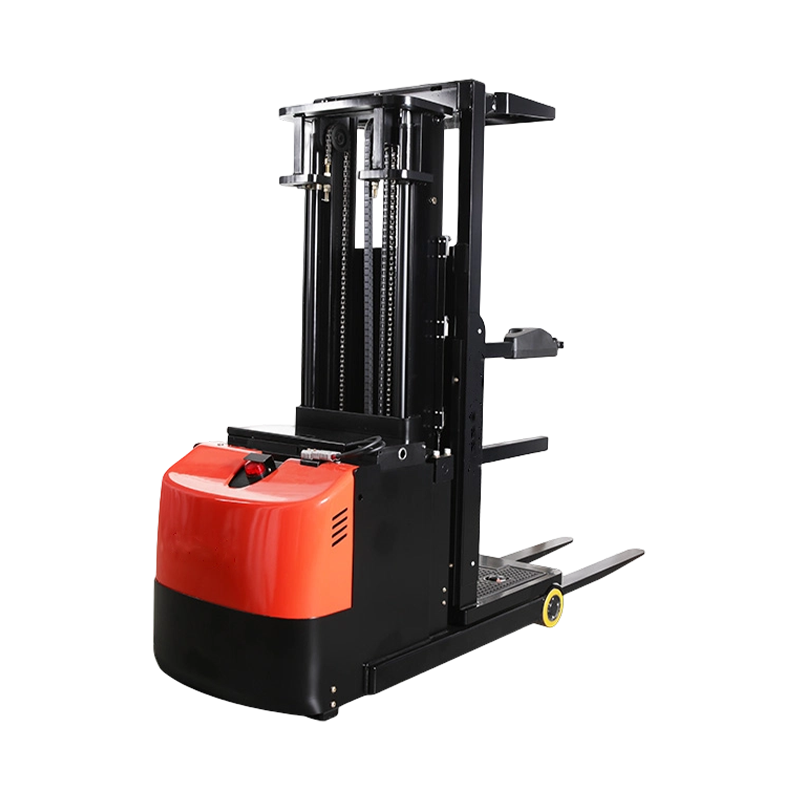
| Electric stacker | Tight-space stacking and low-level order picking | 1.5 to 2 tons | Compact design; operators must still tilt and lower before traveling. |
For warehouse operations, electric forklifts are often a better match for the golden rule because their power delivery is smoother and more precise than internal combustion models at low speeds. In cold storage environments, where floors can be icy and visibility limited by freezer doors, a 1.5 to 2 ton cold-storage lithium battery forklift keeps the operator in control of lift and tilt functions even when temperatures drop well below freezing, and its compact footprint helps operators stay on the travel lines rather than cutting corners.
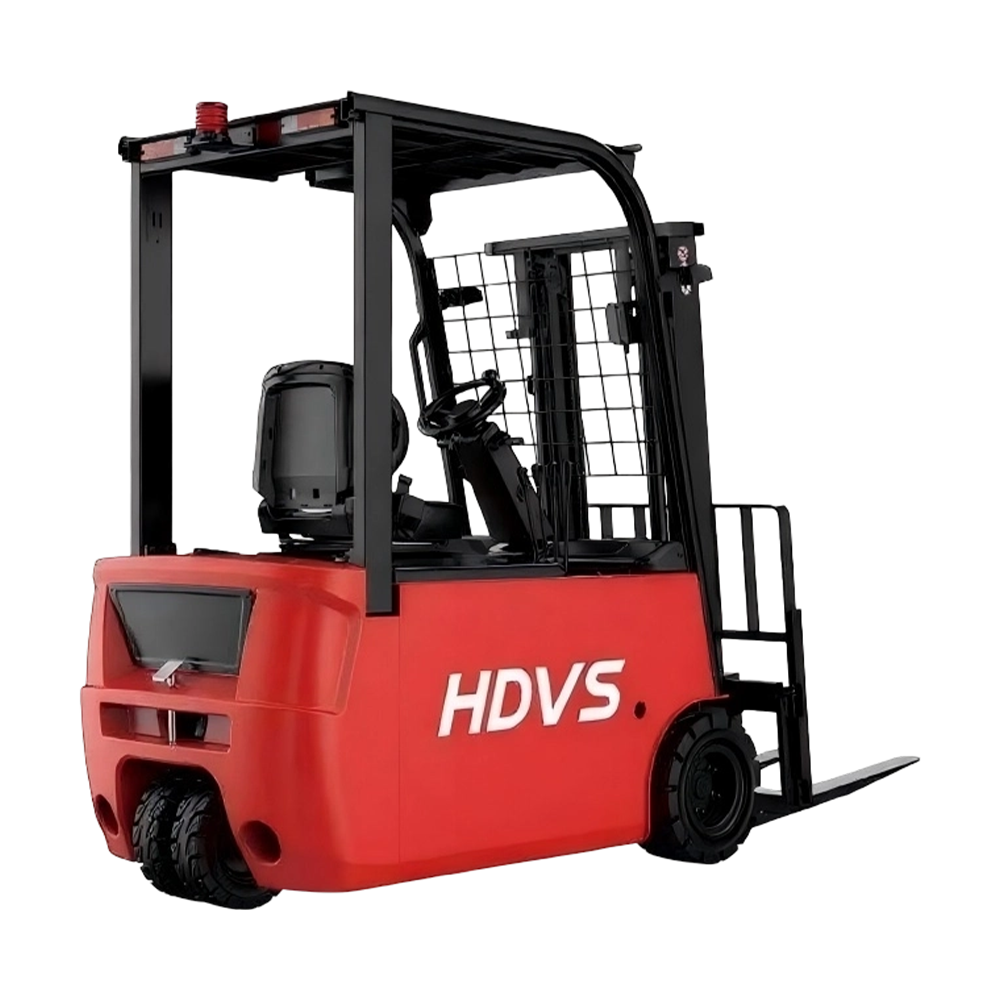 Custom 1.5/1.8/2 Ton Cold storage lithium battery Electric Forklift Suppliers, OShanghai HanDavos International Trading Co., Ltd. is China 1.5/1.8/2 Ton Cold storage lithium battery Electric Forklift Suppliers and OEM...View Product →
For facilities with high-density racking and narrow aisles, the reach truck is the standard choice. The 1.2 ton stand-up electric reach truck is built for tight aisles, with a clear operator view of the forks and load during stacking. Good forward visibility makes it easier for operators to keep loads low during travel and to position loads accurately without creeping in and out multiple times. The stand-up design also encourages the operator to face the direction of travel, which supports safe reversing with a loaded mast. For a deeper look at electric truck technology and its operating characteristics, read this comprehensive guide to electric forklift working principles.
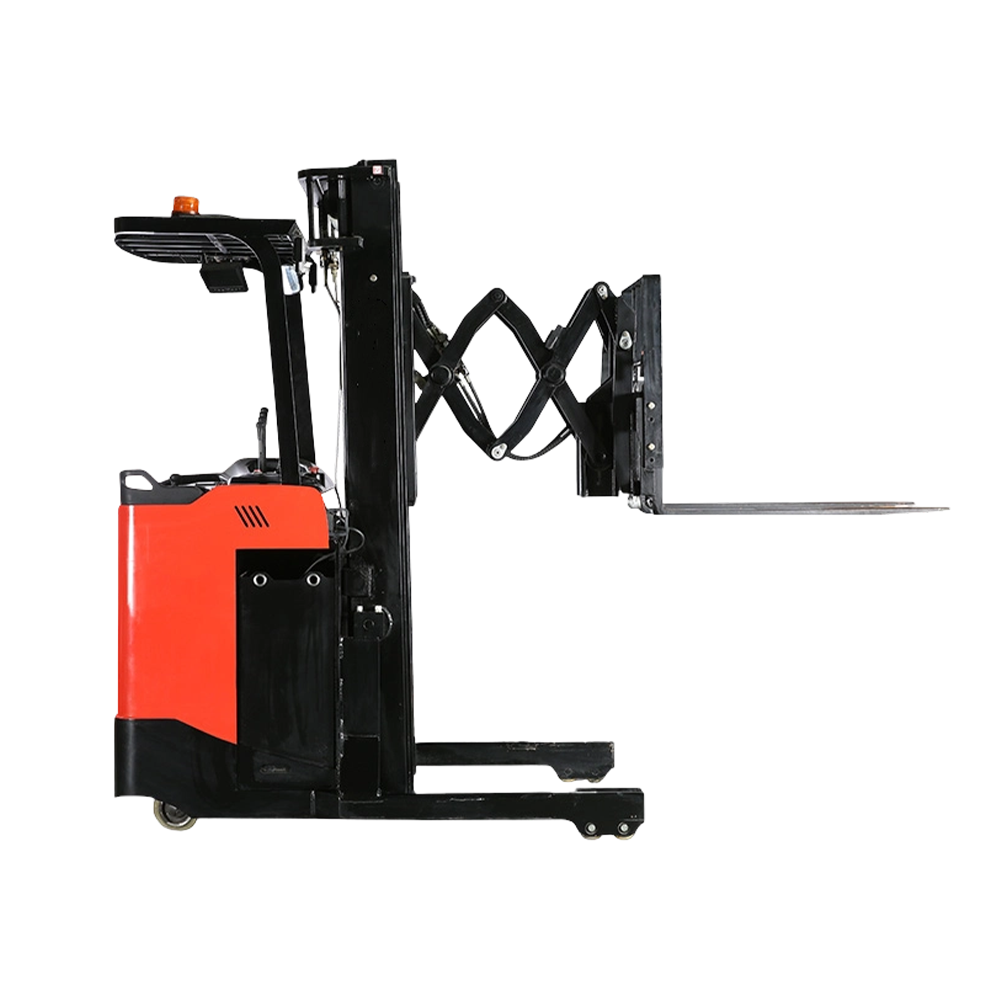 Custom Battery Operated Portable 1.2 Ton Stand Up Electric Reach Truck SuppliersShanghai HanDavos International Trading Co., Ltd. is China Battery Operated Portable 1.2 Ton Stand Up Electric Reach Truck Suppliers and ...View Product →
Fleet decisions also affect the golden rule indirectly. A truck that is too small for the job forces the operator to push the capacity envelope, which usually means carrying loads at awkward angles and heights. A truck that is too large for the aisles forces the operator to maneuver aggressively and make tight turns that destabilize the load. The right capacity, mast height, and tire type give the operator the margin to follow the rule calmly. When selecting new equipment, the operator's daily application should drive the specification, not the other way around.
The golden rule is a habit, and habits are formed through training. Formal operator training should cover not just the rule itself but the reasons behind it. When an operator understands the stability triangle and can predict what happens when the center of gravity leaves the triangle, the rule becomes intuitive rather than a checklist item.
Training should include classroom theory, hands-on practice, and an evaluation specific to the site. The following topics need to be part of any operator development program:
A pre-shift inspection is the first line of defense for the golden rule. A forklift with a weak tilt cylinder, worn mast rollers, or insufficient lift chain tension cannot hold the mast in the correct tilted-back position. If the mast drifts forward with a raised load, the operator will have a hard time keeping the load stable. The inspection needs to cover the tilt mechanism specifically, because the tilt function is what keeps the load seated against the carriage.
Operators should also check the condition of the forks. Worn fork heels, cracks, or deformation affect the way the load sits on the forks and can cause it to shift during travel. A simple visual check of the fork blade thickness at the heel, along with verification that the fork positioning locks are working, should be part of every walk-around. The same check applies to the load backrest: if the backrest is missing or damaged, small items can slide backward toward the operator during travel, which is both a falling-object hazard and a distraction from keeping the load low and stable.
Even with training, violations happen. Understanding the most common violations makes it easier for supervisors and operators to spot them early.
The consequences of these violations range from cosmetic damage to fatal accidents. A tipover can crush an operator who does not wear a seat belt or who attempts to jump from the truck. A dropped load can injure a pedestrian or damage goods worth thousands of dollars. Even a minor load shift can damage racking, product, and the truck itself. The golden rule exists because these outcomes are preventable with a single disciplined behavior.
Supervisors play an important role in catching violations early. A brief observation of each operator during the first few moves of a shift can reveal whether the load cycle is being performed correctly. Feedback should be immediate and specific: not a general "be more careful," but a direct correction such as "lower the load before you cross the aisle" or "tilt the mast back before you start moving." When corrective feedback becomes part of the daily routine, the golden rule becomes a shared standard rather than a poster slogan.
The physical layout of the facility has a direct effect on how easily operators can follow the golden rule. Clear aisles, visible floor markings, and separate pedestrian walkways reduce the need for sudden braking and last-second maneuvers. When operators do not feel rushed, they are far more likely to keep loads low and travel smoothly.
Practical facility measures that support the golden rule include:
Trailer loading areas deserve special attention. The area between the dock and the trailer is where many golden rule violations occur, because operators often raise loads to trailer-bed height while still partly on the dock. The correct sequence is to enter the trailer with the load at travel height, then raise it only after the truck is fully inside. Exiting requires the reverse: lower the load before crossing the dock edge. Facilities that install dock lights, wheel chocks, and interlock systems make it easier for operators to follow this sequence consistently.
Facilities that manage large flows of goods, from incoming raw material to outgoing finished product, benefit from a systemized approach to layout, equipment routing, and traffic rules. Experienced material handling suppliers can provide guidance on warehousing and logistics solutions that reduce congestion and give operators the space they need to follow safe operating rules. The more predictable the workplace, the easier it is to keep every loaded move within the golden rule.
Lighting is another factor that is often overlooked. Poorly lit aisles make it harder for operators to judge clearance and floor conditions, which leads to sudden braking and last-second corrections. Well-placed lighting at intersections, dock areas, and racking ends reduces those surprises and gives the operator the visual information needed to keep the load low and steady.
The golden rule is that a forklift should travel with its load carried as low as possible, normally 4 to 6 inches above the floor, and with the mast tilted back to hold the load against the carriage. It applies to all counterbalanced forklifts and to every loaded move in the shift.
Because it is the single highest-impact rule for preventing tipovers, dropped loads, and related injuries. It is simple to state, easy to teach, and directly connected to the physics of forklift stability. No other operating practice does more to protect the operator and the people nearby.
Yes. The physics of counterbalanced trucks is the same whether the power source is diesel, LPG, lead-acid battery, or lithium battery. The rule applies to reach trucks and order pickers as well, with the additional requirement that the forks be fully lowered before the truck moves.
On an incline, the golden rule extends to the uphill rule: the load must always be on the uphill side of the truck. Travel up a ramp forward with the load uphill; travel down a ramp in reverse with the load still uphill. With no load, point the forks downhill.
When a forklift is parked and unattended, the forks should be fully lowered to the floor, the mast tilted slightly forward or to neutral, the parking brake applied, the transmission in neutral, and the key removed. A parked forklift with raised forks is a hazard to passersby and overhead equipment.
Refresher training should be conducted at least every three years, but more frequently if an operator has been observed in a near-miss, has had an accident, is assigned to a different type of equipment, or the workplace conditions change significantly.
No. Raising a load while the forklift is moving changes the center of gravity mid-maneuver, and even low speed cannot prevent a tipover if a wheel hits an obstacle at the same moment. The load should always be lowered to travel height before the truck starts moving.
The most dangerous combination is a raised load, a side slope or ramp, and a turning maneuver. Each condition independently reduces the stability margin. Together they can push the center of gravity outside the stability triangle in a moment. A forklift should be traveling on flat ground with the load low before any turn is initiated.
The golden rule of forklift operations is not a decoration for a safety poster. It is a measurable behavior: the load is low, the mast is tilted back, and the truck is moving smoothly. Supervision reinforces it by watching for violations, coaching operators when they drift, and making sure the equipment and the facility support safe operation.
Fleet managers and procurement teams play an equal role. Selecting a forklift with the right capacity, tires, mast height, and visibility for the application gives operators a machine that behaves predictably. New trucks should come from a supplier that documents specifications clearly and provides access to spare parts and service whenever the equipment needs attention. Replacing older trucks before they develop chronic hydraulic or steering problems, and keeping spare parts availability high, reduces the likelihood that an operator will use a poorly maintained truck that cannot hold its tilt angle or drifts under load.
When the golden rule becomes automatic, every other forklift safety goal becomes easier. Fewer tipovers, fewer dropped loads, fewer pedestrian near-misses, quieter aisles, and more productive shifts. That is what the rule is ultimately about: making the daily work of moving goods as safe and smooth as it can be, in every warehouse, yard, and loading dock where a forklift is operated.
Recommended Products
Recommended NEWS