2026-09-08
Content
The delivery clerk waves from the office door, about thirty feet away. You are sitting on a forklift with a loaded pallet just above the floor. You shift to neutral, leave the engine running, set the parking brake, and climb down to sign a delivery receipt. When you walk back, the forks are still holding the load and the engine is still ticking over. In that short walk, the forklift has become an unattended powered industrial truck in the eyes of OSHA.
The short answer to the question “Can you leave a forklift running unattended?” is no. Once the operator moves more than 25 feet away, or loses sight of the machine, the forklift is classified as unattended. At that point, OSHA expects the load-engaging means to be fully lowered, the controls neutralized, the power shut off, and the brakes set. Parking on an incline adds one more requirement: chock the wheels. The fact that the engine is still running does not by itself create the violation, but it makes the situation far more dangerous and harder to defend during an inspection.
This article walks through the exact definition of an unattended forklift, the OSHA requirements that apply, the step-by-step shutdown procedure, common safety risks, and the equipment features that help you stay compliant. The guidance is written for warehouse managers, safety coordinators, maintenance teams, and lift truck operators who want to prevent costly citations and, more importantly, prevent serious injuries.
OSHA does not use a simple on-or-off switch to classify a forklift as attended or unattended. The generally accepted interpretation is based on distance and visibility. If the operator is more than 25 feet from the forklift, the unit is unattended. The same applies if the operator cannot see the forklift, even at a distance shorter than 25 feet.
Why 25 feet? Because 25 feet gives an operator enough time to notice a sudden movement, a falling load, a fire, or an approaching pedestrian and react. When you walk more than a few steps away and turn your back, you lose that reaction window. For example, if you leave the lift truck idling in an aisle and walk behind a racking row to check a label, the forklift is out of sight and therefore unattended, even if you are only ten feet away.
It is important to note that “attended” does not mean the operator must stay in the seat. The operator can stand next to the truck, stay within 25 feet, and keep the truck in view. In that condition, the engine may remain idling without a direct OSHA citation under the unattended rule. However, many companies choose stricter policies because idling still creates risks such as exhaust, noise, and unintended movement. A strong safety program treats the 25-foot line as the maximum allowed distance, not the recommended daily practice.
The distinction matters because an unattended forklift triggers mandatory shutdown actions in 29 CFR 1910.178(m)(5)(i). These actions are not optional and do not depend on how long you plan to be away. Whether you walk away for thirty seconds or thirty minutes, the same standard applies.
| Condition | Classification |
|---|---|
| Operator within 25 feet and line of sight maintained | Attended |
| Operator more than 25 feet away | Unattended |
| Operator cannot see the forklift | Unattended |
| Operator is on the truck but not observing surroundings | Attended but unsafe practice |
The shutdown rule is often treated as paperwork burden, but the risks are real and measurable. An idling forklift is a machine that is ready to move. It has stored energy in its drivetrain, hydraulic pressure in its circuits, and, in the case of internal combustion models, a combustion process that produces heat and exhaust. When nobody is in the seat, those energy sources are not being supervised.
If the parking brake is weak or the truck is on a slight slope, vibration from the engine can allow the drivetrain to creep. A forklift that rolls can crush a pedestrian or push over racking.
When the forks are left raised, even a stable pallet can slip, be bumped by another truck, or lose hydraulic pressure. The falling load can injure someone who has no idea the machine is active.
Diesel and LPG forklifts emit carbon monoxide and particulate matter. In a warehouse, loading dock, or cold room, idling can quickly raise CO levels beyond safe limits.
A hot muffler or exhaust manifold can ignite oil, cardboard, pallet wrap, or leaking fuel. If a fuel line develops a leak while the engine is running unattended, the fire is already established before an operator returns.
Idling also adds direct costs. An internal combustion forklift burns fuel while idle. An electric forklift with a lithium battery may not burn fuel, but unnecessary running in a cold room uses battery charge that is better saved for the shift. In a facility with dozens of forklifts, the accumulated waste is visible at the fuel pump and the charging station.
For these reasons, every operator should be trained to treat an idle lift truck as an active hazard, not as a convenient place to store a pallet or a comfortable spot to wait.
The relevant federal regulations for forklift use in the United States are found under the Occupational Safety and Health Administration rules, primarily 29 CFR 1910.178 for general industry and 29 CFR 1917.43 for marine terminals. Both address what an operator must do before leaving a powered industrial truck unattended.
| Standard | Application | Unattended parking requirement |
|---|---|---|
| 29 CFR 1910.178(m)(5)(i) | General industry | Lower load-engaging means, neutralize controls, shut off power, set brakes |
| 29 CFR 1917.43 | Marine terminals | Similar shutdown requirement before leaving the truck |
| ANSI/ITSDF B56.1 | Voluntary industry standard | Set parking brake, lower forks, neutralize controls before operator dismounts |
These rules do not distinguish between a ten-second dismount and a ten-minute absence. They apply any time the truck is left unattended. If an operator is cited, OSHA can issue a serious violation and fine the employer. The citation is usually based on the condition of the truck at the time of inspection: raised forks, controls not neutralized, power not shut off, brakes not set, or wheels not blocked on a slope.
An important detail: 1910.178(m)(5)(i) does not explicitly require the operator to remove the key. However, OSHA interpretation and accepted safety practice treat the key as part of the power shut-off and anti-restart security measure. If a forklift is left unattended with the key accessible, an unauthorized person can start it, which creates a separate hazard. The best practice is to remove the key whenever you leave the truck, especially in shared facilities.
The exact shutdown sequence may differ slightly between a diesel, LPG, lead-acid, or lithium battery model, but every forklift follows the same logic. The machine should be put in a safe resting state before the operator leaves the seat.
Parking on a ramp or slope deserves special attention. When an unattended forklift is parked on an incline, the wheel chocks are not optional. The chocks should be placed on the downhill side of the front and rear wheels. If the parking brake fails, the chocks prevent the truck from rolling.
A common question is whether the forklift should face uphill or downhill when parked. Since the forks must be lowered, parking facing uphill gives the fork tips a chance to contact the ground and act as an additional brake if the truck slides downhill. This is a useful habit on steep ramps, but it does not replace wheel chocks. Always set the brakes first and chock the wheels second.
Every forklift configuration follows the same shutdown rule, but the risks around idling are not identical.
Diesel forklifts are common on construction sites, farms, ports, and other outdoor applications. Their main risks when left idling are exhaust, heat, fuel leaks, and noise. A diesel engine can run for a long time without draining the battery, so an unattended machine may sit idling for hours if nobody notices. That creates a carbon monoxide risk in semi-enclosed areas such as truck canopies, open doorways, or covered loading bays. In outdoor yards, the more visible cost is fuel waste and the risk that a passing vehicle or worker comes into contact with the running machine.
LPG forklifts are popular in warehouses because they produce less visible smoke than diesel. However, LPG is stored under pressure. A small leak in the fuel line or regulator can produce an invisible cloud of propane that settles near the floor. When the engine is running, the ignition source is already present. If the operator leaves the machine running and walks away, a leak that develops over time creates a delayed fire risk. Operators should also know how to close the cylinder valve if the machine has to be left for maintenance or a shift change.
Electric forklifts eliminate tailpipe emissions, which makes them a much better choice for closed warehouses and cold rooms. That does not mean they should be left on. A lead-acid truck left with the key on can slowly drain the battery through the controller and lights. A lithium battery truck has a battery management system that normally prevents deep discharge, but the truck still consumes auxiliary power while the display is on. The operating cost and the risk of an unexpected equipment shutdown are both reasons to switch the truck off.
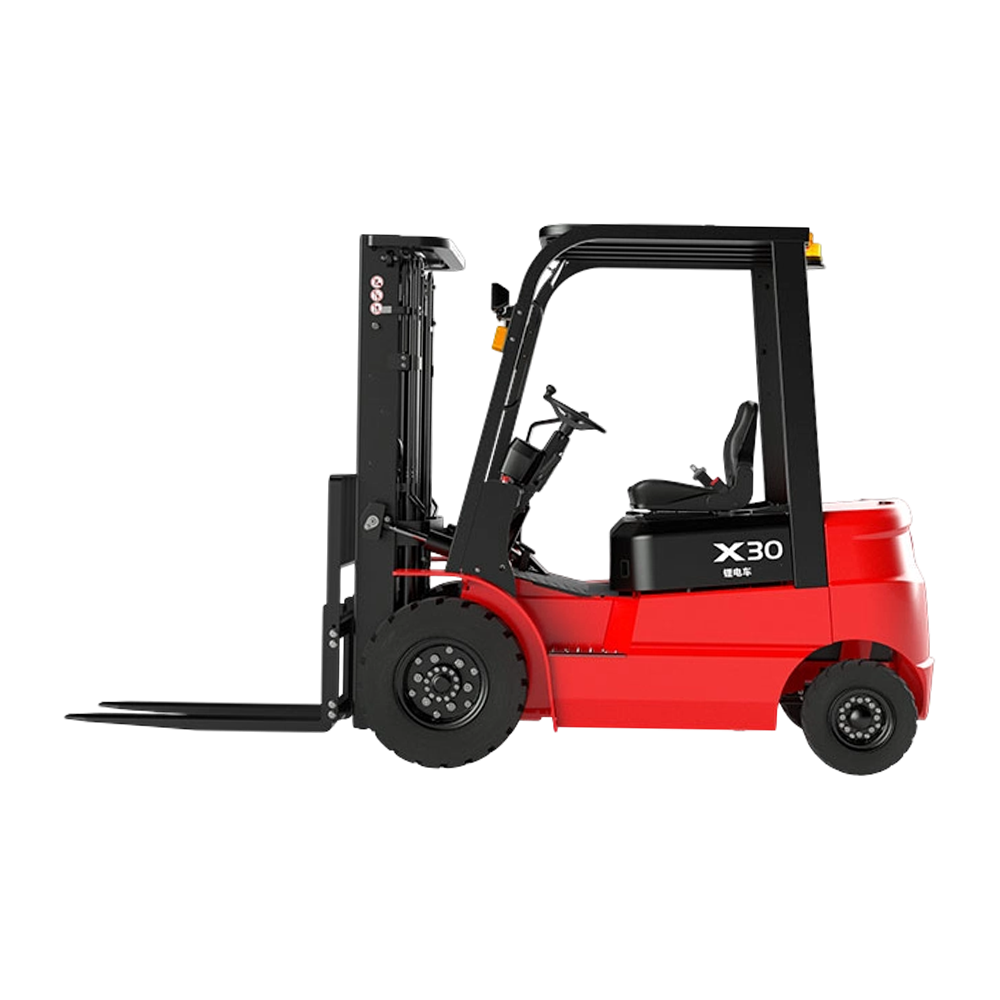
From an operational point of view, lithium battery electric forklifts have reduced the burden of shutdown. Because they recharge quickly and do not require battery swapping, operators do not need to keep them running to wait for warm-up. A lithium truck can be restarted and driven at full power immediately, so there is no practical penalty for turning it off. If you are comparing low-emission options, a comprehensive guide to electric forklifts can help you evaluate battery, charging, and total operating costs before you standardize your fleet.
In sub-zero freezers and refrigerated warehouses, operators often leave internal combustion forklifts idling while they step away for a short break. The reason is simple: a diesel or LPG engine keeps the hydraulic oil warm, which makes the mast respond faster when they return. A cold forklift feels sluggish, and a warm engine avoids that delay.
But in a freezer, the exhaust gas from an idling internal combustion forklift is far more dangerous than in an open yard. Carbon monoxide can concentrate quickly in a sealed building, even with dock doors closed. Some operators have been overcome by CO while working in cold storage areas with forklifts left running. The safer approach is to choose a forklift that performs reliably at low temperature, such as a cold storage lithium battery forklift. These trucks are engineered with cold-rated batteries and low-temperature lubricants, so they start and respond without the need for continuous idling.
The financial impact of an unattended forklift can be divided into three layers: the direct accident cost, the OSHA penalty, and the operational disruption. Direct accident costs include medical expenses, equipment repair, racking replacement, damaged inventory, and potential legal fees. OSHA penalties are separate. Under current federal rates, a serious violation carries a fine of more than sixteen thousand dollars per violation. A willful or repeat violation can reach a hundred and sixty-five thousand dollars or more. Since an unattended forklift may involve multiple violations at once, raised forks, running engine, no parking brake, the total citation can quickly multiply.
The administrative burden is also significant. An OSHA citation comes with an abatement process, and the company must document corrective actions. That can include retraining operators, revising the forklift safety program, and scheduling follow-up audits. For a small or mid-size operation, the paperwork often costs more than the fine.
Compliance becomes easier when the facility is designed around safe parking. A clear policy, visible markings, and quick access to equipment all reduce the chance of an unattended forklift incident.
If your facility moves large volumes of goods through tight aisles, lane discipline and storage layout matter as much as the shutdown rule. A well-planned warehousing and logistics system reduces the chance that a parked forklift blocks traffic or gets struck by another truck.
Modern forklifts and attachments reduce the chance of human error by adding layers of automatic protection. These features do not replace the operator’s responsibility, but they make daily operation safer and give a safety manager more confidence on the floor.
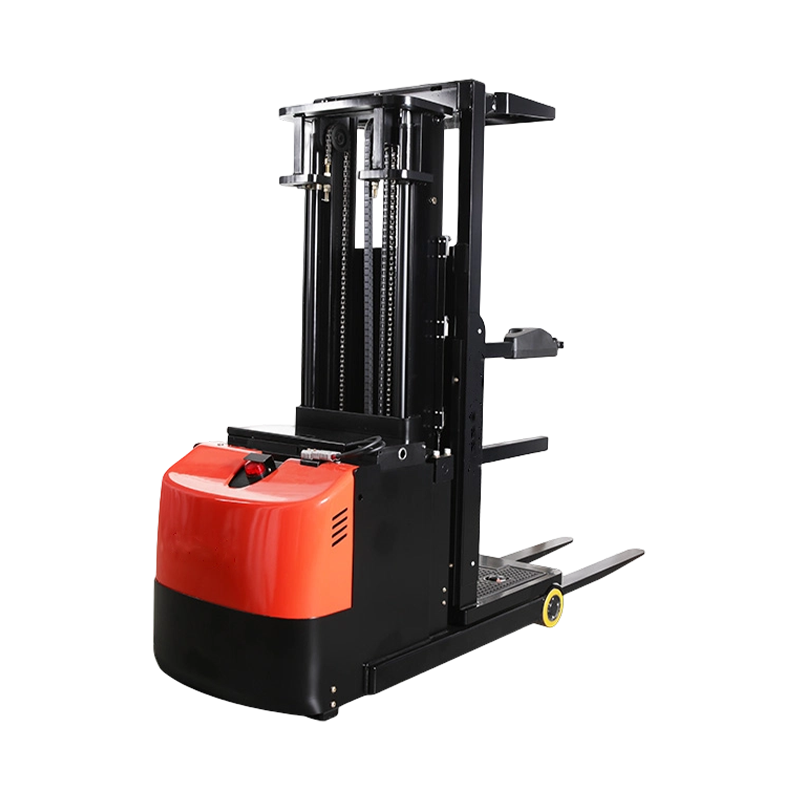
If your operation runs in a cold storage environment, a cold storage lithium forklift is designed to deliver consistent performance in low-temperature facilities. It starts reliably in freezing conditions, which removes the incentive to keep an internal combustion engine idling just to keep the hydraulics warm.
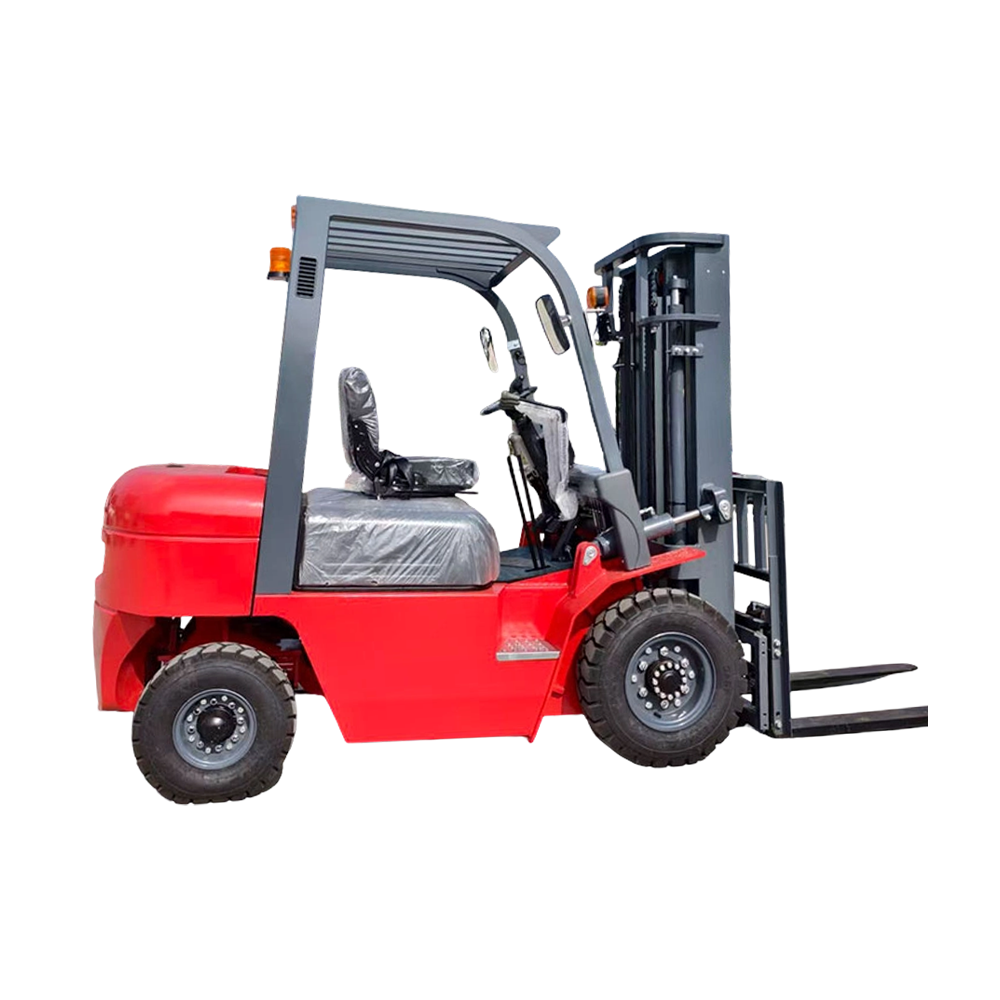
For rough terrain or construction sites, an off-road all-terrain diesel forklift provides better traction, stronger axles, and larger tires, which helps the operator keep the truck stable on uneven ground. The machine still has to be shut down before you leave it, but the reduced slip risk lowers the chance of an incident before you even step away.
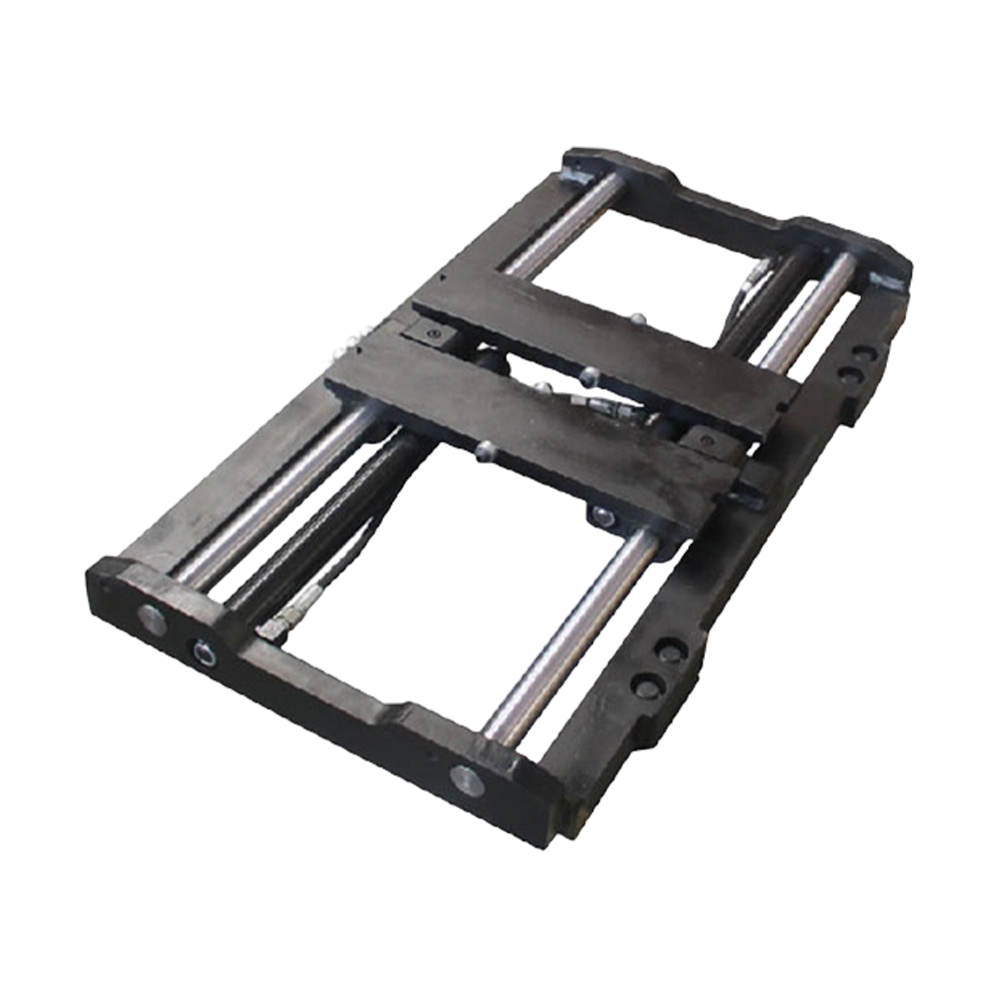
For load handling, a side-shift fork positioner is a practical attachment that lets the operator center the load without repositioning the whole truck. That means less time moving a wide load through a tight aisle and fewer opportunities to obstruct a pedestrian walkway or hit a rack frame.
If you are within 25 feet and you keep the forklift in your line of sight, OSHA does not classify it as unattended under the 25-foot test. However, staying close is not a free pass to let the forks stay raised or to block an aisle. If an inspector sees a running forklift with raised forks and no one in the seat, the condition can still be documented as a hazard. The simplest habit is to always lower the forks, set the brake, and shut off the power before you leave the seat.
25 feet is about 7.6 meters, or roughly eight to ten walking steps. In practice, it is the distance from the dock leveler to the office counter in many facilities. If you cannot reach the emergency stop before the truck rolls to a wall, you are too far away.
OSHA penalties are issued to the employer, not the operator. A serious violation currently starts at more than $16,000 per violation on the federal schedule. A willful or repeated violation can exceed $165,000. A single unattended lift truck can produce multiple violations because the forks can be raised, the controls can be live, and the power can be on.
Yes. Electric forklifts also have to be switched off and the key removed when they are unattended. If the brakes are not set, a lithium battery truck can still roll on a slope. Turning off the power also saves battery energy and prevents the truck from moving out from a charging station or wash bay.
No. A running internal combustion forklift in a freezing warehouse can create carbon monoxide. Even if the door is open, wind patterns may concentrate the exhaust. A cold storage lithium battery forklift is a better option because it can operate in cold temperatures without producing exhaust and without the need to idle for warm-up.
Yes, as a best practice. OSHA does not always explicitly require key removal in the unattended provision, but leaving the key in an unattended truck makes it possible for an unauthorized person to start it. That creates a serious risk of injury. Removing the key is a simple habit that also prevents theft and misuse.
A forklift is a powerful tool, but its power is only safe when someone is controlling it. The rule is straightforward: lower the forks, set the brake, neutralize the controls, shut off the power, and remove the key before you walk away. On a slope, add wheel chocks. In a cold storage or warehouse environment, choose equipment that does not need to idle to perform well.
If you are developing a new safety program or replacing old equipment, take time to compare the safety features of your fleet. Cold storage lithium forklifts, rough-terrain diesel models, and load-control attachments such as side-shift fork positioners are practical tools that reduce risk every shift. As a material handling supplier with over two decades of experience, Handavos has helped warehouse, construction, and logistics teams align their equipment with safety requirements. The best way to prevent an unattended forklift incident is to build the habit, train the team, and choose equipment that makes the correct behavior the easy behavior.
Recommended Products
Recommended NEWS