2026-08-18
Content
At a busy fulfillment hub in southern China, a supervisor once put a simple question to his night-shift crew: "If a forklift has to stop in an emergency, what distance does it take?" The seasoned drivers gave confident answers: two meters, five meters, maybe one pallet length. The correct answer depended on speed, load, floor surface, and brake condition. But that evening, the crew learned something more important than a number. Under the same load, the same floor, and the same tires, a fully charged electric pallet truck stopped in 1.9 meters at walking speed, while a counterbalance truck with worn brake pads and a 1.5-ton load needed more than four meters.
Forklift incidents rarely begin at the moment of impact. They begin earlier, when an operator starts a shift tired, skips a morning inspection, takes a corner too fast, or assumes a pedestrian has already seen the truck. That is why the answer to the question "what are the 5 safety rules for a forklift?" is not just a list to hang on a wall. It is the operating discipline that decides whether a normal working day stays normal. The five rules below form the foundation of virtually every serious forklift safety program. They are also, in our experience of supplying forklifts to warehouses, factories, retail distribution centers, and port operators over the past two decades, the rules that most clearly separate safe operations from reactive ones.
Forklift accidents are rarely a single event. When investigators break down an incident, they usually find a chain: an unqualified operator, a missed inspection, an excessive traveling speed, an overloaded mast, or a pedestrian walking into the wrong aisle. Remove any link in that chain, and the incident never happens. The five rules in this guide are designed to break that chain at the points where accidents are most likely to begin.
Safety rules also have an economic dimension. A forklift collision can damage inventory, racking, and the truck itself, and in the worst cases it can injure people. Beyond the direct costs, an operation that lives with frequent near-misses carries a hidden cost: operators become accustomed to risky situations, and supervisors begin to accept them as normal. The five rules reset that baseline. They give the crew a shared language, a clear standard, and a way to correct behavior before small errors compound into serious emergencies.
Values are illustrative. They reflect common patterns seen in published forklift safety summaries and are intended as a training reference, not a statistical citation for any specific facility.
Look closely at the patterns in the chart. Each one connects directly to at least one of the five rules. Pedestrian impacts are addressed by speed control and awareness. Tip-overs are addressed by speed and load stability. Falling loads are addressed by inspection and correct load handling. Mounting and dismounting injuries are addressed by training and equipment condition. That is why these five rules, and not another collection of checklists, are the right starting point for a safer workplace.
Before going deeper, here are the five rules in one place. Each rule is intentionally broad enough to cover the situations where accidents actually occur, yet specific enough to be measured and enforced.
No one operates a forklift without documented training, site authorization, and proof of competence for the specific truck type.
A five-minute walk-around that covers brakes, steering, hydraulics, tires, forks, and safety devices prevents failures under load.
Slow at intersections, keep the load low, travel in the right direction, and never let convenience dictate how a truck is moved.
Know the nameplate, understand the load center, and recognize what attachments do to the stability of the machine.
Use the seat belt, high-visibility clothing, and every communication tool available so that the operator and nearby workers never become invisible to each other.
| Safety Rule | Primary Incidents Prevented | Area of Responsibility |
|---|---|---|
| 1. Training and authorization | Operator errors, misuse of controls, overconfidence | Management, supervisor, operator |
| 2. Pre-shift inspection | Mechanical failures, brake loss, hydraulic leaks | Operator, maintenance team |
| 3. Safe speed and travel | Collisions, tip-overs, load drops while moving | Operator, traffic management |
| 4. Load capacity and handling | Falling loads, overloading, mast and fork failures | Operator, warehouse supervisor |
| 5. PPE and pedestrian awareness | Crush injuries, impact injuries, near-miss escalation | Operator, safety officer, all workers |
Forklift operation is a skill, not a side task. In most industrial regions, forklift drivers are required to complete a formal training program that covers classroom instruction, hands-on practice, and a written and practical evaluation before they can operate a powered industrial truck unsupervised. The human factors behind that requirement are well documented. An untrained operator may understand the levers and pedals, but may not understand the physics of load stability, the meaning of a capacity nameplate, or the correct response when the rear end of an empty forklift begins to swing during a turn.
Authorization should be explicit, not implied. A simple way to manage this is an operator authorization card that lists the truck types the individual is allowed to drive. The card should be checked by the shift supervisor before a key is handed over. When we visit a site that has frequent near-misses, we often find a gap between the number of people who appear qualified and the number of names on the authorization list. That gap is usually filled by temporary workers, maintenance personnel, or supervisors who have not driven a truck in months.
Training must also be refreshed. The common benchmark used in many regulatory systems is a three-year certification cycle, with earlier refresher training if an operator is observed making unsafe moves, is involved in an incident or near-miss, is assigned to a new type of forklift, or returns to driving after a long absence. Forklift incident reviews consistently identify a missing or expired operator authorization as a contributing factor, and that is entirely preventable.
Practical enforcement measures that work on the floor include:
Trainees are the only exception, and they must be supervised by a qualified operator at all times. A trainee should never be counted as part of the regular staffing plan, because an authorized operator is legally and practically responsible for the machine and for everyone around it.
A forklift that worked fine at the end of the previous shift can be a completely different machine by the next morning. A hydraulic hose may have expanded from heat and started weeping. A fork may have developed a hairline crack after being struck by a pallet. Brake fluid may have dropped to a level where the brakes feel normal but no longer hold under load. None of these faults announce themselves before the operator is in a lifting situation.
The pre-shift inspection is the operator's first and most reliable layer of protection. It takes about five minutes. It should be performed in the same sequence every day so that nothing gets skipped. The checklist below covers the minimum items for counterbalance trucks and warehouse forklifts.
| Check Point | What to Look For | Action if a Fault Is Found |
|---|---|---|
| Brakes and parking brake | Slow response, unusual noise, or drift on an incline | Do not operate; report and tag |
| Steering | Free play, stiff movement, or uneven pull | Do not operate; tag the truck |
| Horn, lights, reversing alarm | No sound, low beam, broken lens | Repair before the shift starts |
| Forks and retaining pins | Cracks, bends, wear, or missing pins | Replace forks or pins before use |
| Mast, chains, and hoses | Kinks, rust, uneven chain tension, visible leaks | Report immediately |
| Tires and wheels | Cuts, lumps, low pressure, loose lug nuts | Inflate or replace before operation |
| Hydraulic system | Visible leaks, damaged fittings, weak lift-and-tilt response | Isolate and repair |
| Battery, cables, and connector | Corrosion, loose terminals, damaged plug | Clean or replace |
| Seat belt and latch | Torn webbing, faulty latching | Replace before operating |
| Overhead guard and load backrest | Bent, cracked, or missing parts | Remove from service immediately |
| Charger and charging cable | Frayed cable, damaged plug, poor display visibility | Do not charge; contact maintenance |
For battery-powered machines, the daily charging routine deserves extra attention. The charging area should be dry, ventilated, and protected from sparks. A charger that clearly shows the battery state removes most of the guesswork around a morning charge. Operators who want a visible confirmation of charge status and a safer connection sequence can use the LED indicator forklift battery charger, which shows whether the battery is charging, fully charged, or still too warm to reconnect the truck.
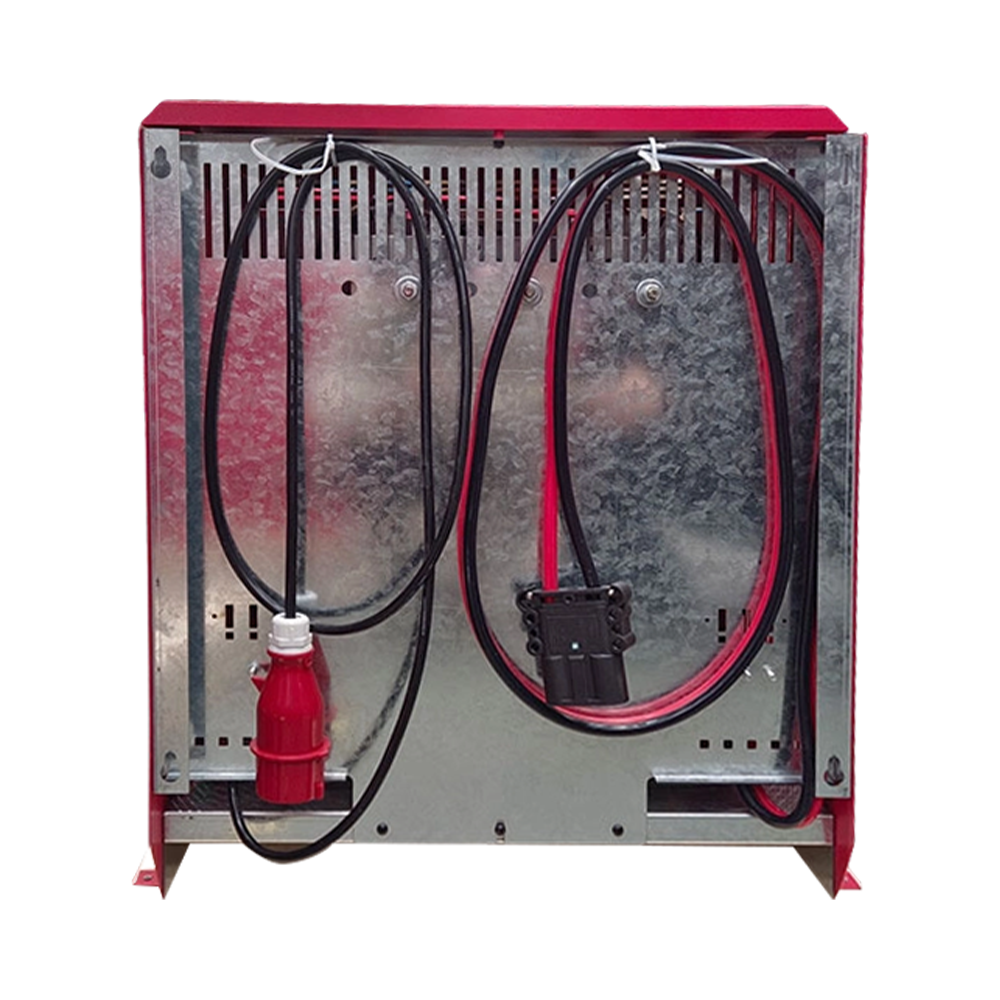 Custom LED Indicator Light Forklift Battery Charger Suppliers, OEM/ODM Factory -Shanghai HanDavos International Trading Co., Ltd. is China LED Indicator Light Forklift Battery Charger Suppliers and OEM Factory, details:View Product →
The rule does not stop at the walk-around. If a fault appears during the shift, the operator must stop, tag the machine, and report it. The "minor leak" that is left for tomorrow often becomes the cause of a hydraulic failure under load later in the day. Inspection records should be kept, reviewed by supervisors, and used to identify trucks that repeatedly need repairs, because a pattern of repeat faults is a signal that the truck should be retired or comprehensively serviced.
The most frequent instruction in any forklift training course is also the one most easily ignored in real work: slow down. Speed does more than shorten reaction time. It changes the balance of the forklift in a way that cannot be reversed by a quick steering correction. A truck that feels stable at six kilometers per hour can become dangerously unstable at twelve, particularly when it is turning with an elevated load.
Most facilities set an indoor speed limit of around eight kilometers per hour in open areas and three to five kilometers per hour inside aisles. The exact number matters less than consistency. When the speed limit is posted, painted on the floor, and enforced by supervisors, operators quickly internalize it. When it is only a number in a manual, it is forgotten by the third shift.
The travel rules that experienced operators follow without thinking are worth repeating:
Tip-over response is a separate skill that belongs in this rule because it depends on controlled behavior under pressure. If a forklift starts to tip, the operator must stay seated, hold on, lean away from the point of impact, and never attempt to jump out. Jumping exposes the body to being crushed between the overhead guard and the ground. The safest place during a tip-over is inside the protective envelope of the truck, with the seat belt fastened.
These procedures are not about taking the enjoyment out of driving. They are about the fact that a forklift is most stable when it is moving slowly with a low load. Every additional kilometer per hour consumes the margin that separates a controlled maneuver from a tip-over or a collision.
A forklift is rated for a maximum load at a specific load center. The rating is printed on the nameplate fixed to the truck, usually shown as a capacity like 2.5 tons at 500 millimeters load center or 3 tons at 24 inches load center. That number is not a suggestion. Exceeding it, or shifting the load center outward, can tip the truck forward or sideways even when the load still looks reasonable to the eye.
The stability of a forklift is often explained using the stability triangle. The two front wheels form the base of the triangle, and the pivot point of the rear axle forms the apex. The combined center of gravity of the truck and its load must stay inside that triangle. Raising the load, tilting the mast forward, accelerating, braking, or turning all shift that center of gravity. That is why a loaded truck can tip forward when the mast is raised to full height, and why an empty truck can tip sideways during a sharp turn. The load center is the horizontal distance from the face of the forks to the center of gravity of the load. A longer load center, such as an oversized pallet, reduces the effective capacity even if the total weight is unchanged.
Load handling rules that prevent the most serious injuries include:
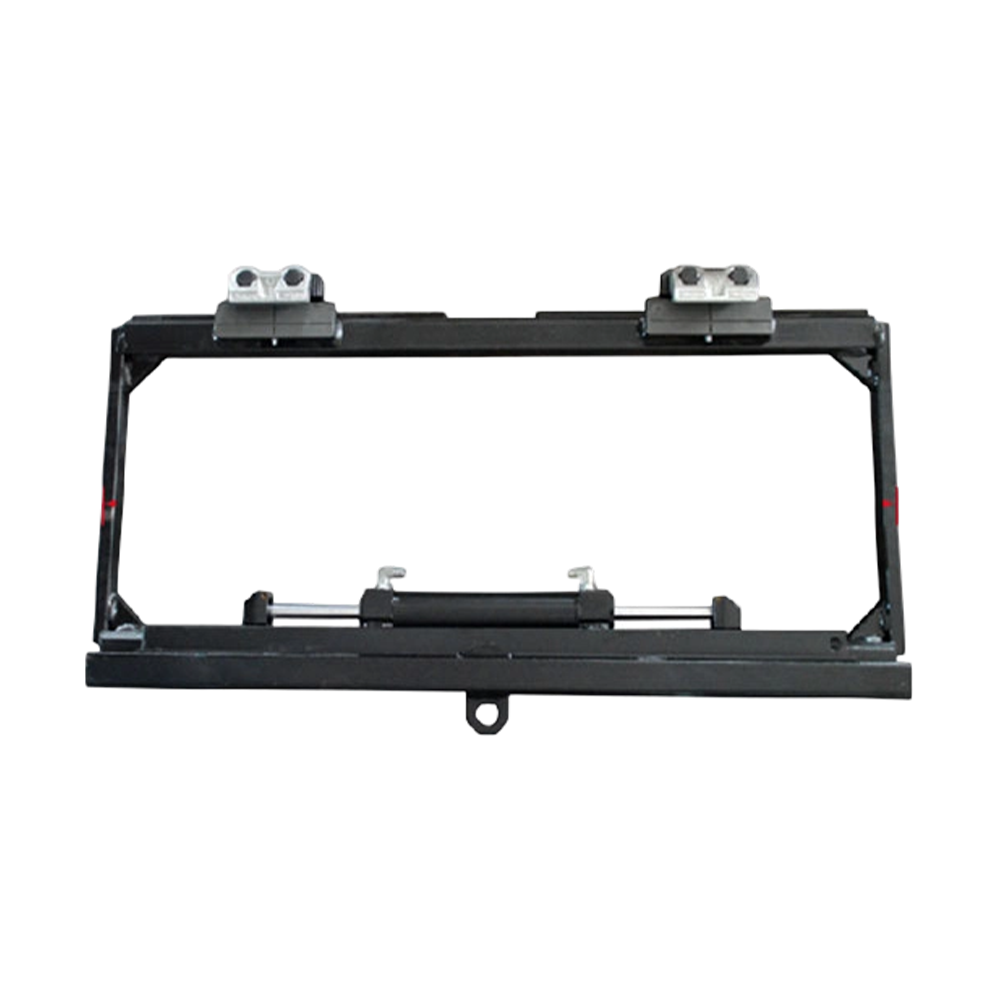
Attachments change the capacity equation. A side shifter or fork positioner adds weight ahead of the load center and increases the effective load center distance, which reduces the rated capacity of the truck. Every attachment carries its own capacity plate, and the operator should know the combined capacity before lifting. In an operation that handles several pallet sizes, the FP3TEB1100 side-shift fork positioner allows the operator to change fork spacing and shift the load sideways without leaving the seat. That single attachment removes a large amount of manual load adjustment, and with it the crushed fingers, pinched hands, and awkward reaches that come from nudging pallets into position by hand.
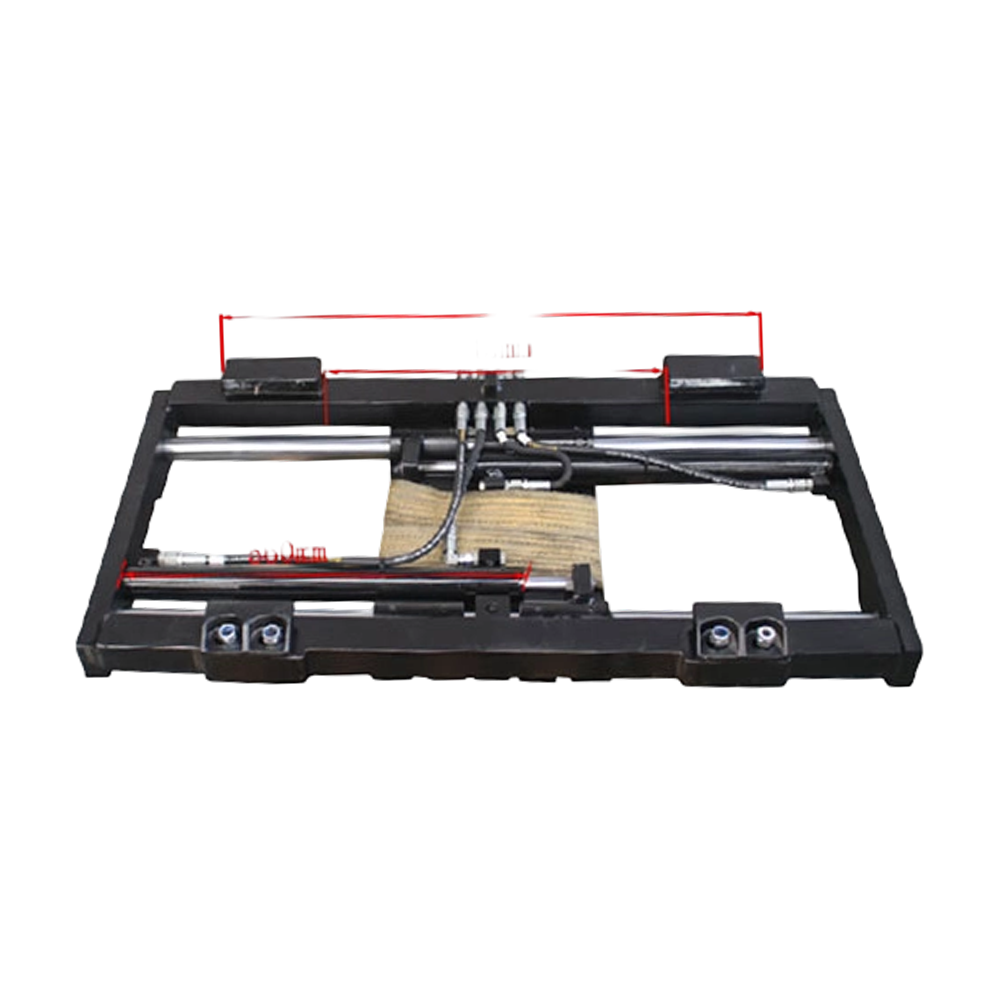 Custom Forklift Attachment FP-3TE-B1100 Side Shift Fork Positioner Suppliers, OEShanghai HanDavos International Trading Co., Ltd. is China Forklift Attachment FP-3TE-B1100 Side Shift Fork Positioner Suppliers and OEM ...View Product →
Finally, never lift a load you cannot control. If the pallet is damaged, the load is loose, the stack is leaning, or the floor is uneven, stop and ask for help. A few minutes spent checking a load is far less expensive than a load that shifts mid-lift and brings the mast, the chains, and the product down on top of the operator.
The operator inside the truck is not the only person at risk. In warehouse environments, pedestrians are the most exposed group. High-visibility workwear, protective footwear, and helmets reduce the severity of injuries, but prevention comes mainly from behavior: making sure the operator knows where pedestrians are, and pedestrians know where the truck is heading.
The mandatory personal protective equipment for most forklift operations includes:
The seat belt deserves a separate mention. On an industrial forklift, the seat belt keeps the operator inside the protective envelope of the overhead guard. Without it, a tip-over can throw the operator out of the truck and into the path of the falling machine. A seat belt is not an inconvenience; it is the difference between walking away from a tip-over and being crushed by it.
Pedestrian safety is more than equipment. It is a set of disciplined behaviors:
Attachments can reduce pedestrian exposure as well. The forklift side shifter attachment is useful in tight aisles because it lets the operator square the load to the rack with one small lateral movement. That reduces the back-and-forth positioning passes, and every reduced pass means fewer moments when the rear end of the forklift swings into a pedestrian walkway. Used correctly, an attachment that positions the load is also a pedestrian protection tool.
 Custom Forklift Accessories Forklift Side Shifter Suppliers, OEM/ODM Factory - SShanghai HanDavos International Trading Co., Ltd. is China Forklift Accessories Forklift Side Shifter Suppliers and OEM Factory, details:View Product →
A simple habit we recommend to every operator is to make eye contact at any point where a pedestrian could step into the travel path. When the operator and the pedestrian both pause for one second, the risk of an invisible approach is gone.
A rule that is only written and never reinforced is a suggestion. The five rules work only when they are built into the daily rhythm of the warehouse. The supervisor's role is to reinforce, check, and correct, not to assume that everyone will remember everything on a busy day.
Practical routines that keep the five rules alive include:
A well-run site also matches the equipment to the environment. If the current forklifts are constantly overloaded, cannot reach the top rack level, or cannot safely maneuver in the aisle width, no amount of training can compensate. Before adding more rules, it is worth reviewing whether the best warehouse forklift type for your facility matches the layout, the load sizes, and the traffic flow of the building.
In the same way, safety becomes easier when the whole workflow is considered as a system. Many operations combine the right forklift, the right attachments, scheduled maintenance, and operator training under one planned approach. A structured review of the facility's warehouse logistics solutions often reveals that so-called behavioral problems have their roots in layout, equipment fit, or workflow design. When the truck is easy to operate and the paths are logical, operators are far less likely to improvise.
It is not a coincidence that the same five rules appear in different forms in so many safety programs around the world. They work because they address the actual root causes of forklift incidents, not their symptoms. Our team has spent more than twenty years in the material handling industry, and the most consistent pattern in the safest operations is simple: the rules are known, the equipment is trustworthy, and people feel comfortable speaking up before a small error becomes a serious incident.
Some safety programs fail because they try to fix everything at once. A more effective approach is to give each day a single, measurable focus. The five-day plan below turns the five rules into concrete actions that a supervisor can complete with a small amount of time and no disruption to production.
Compare the operator authorization list to the people who actually drive trucks. Remove expired cards, confirm temporary staff are covered, and update the duty roster.
Take one forklift to the parking area and walk the entire crew through the pre-shift inspection, item by item. Repeat the drill once on a battery-powered truck and once on an internal combustion truck.
Check speed limit markings, mirrors at intersections, horns, reversing alarms, and pedestrian barriers. Make a list of what needs repair or replacement and assign a completion date.
Read the nameplate on every truck and every attachment. Update the capacity charts posted near the charging area so operators can confirm the combined rating before lifting.
Set up a mock blind corner with a pallet stack or a barrier. Test each operator's response and measure how many stop, sound the horn, and make eye contact before proceeding.
This plan is not a one-time reset. It works best when it is repeated at regular intervals, especially when new equipment arrives, when aisle layouts change, or after any incident that involves a near-miss with a pedestrian.
The five safety rules are: only trained and authorized operators may drive a forklift; inspect the forklift before every shift; control speed and follow safe travel procedures; respect load capacity and handle loads correctly; and wear PPE while protecting pedestrians. Together, these rules address the most common contributing factors in forklift incidents.
Many regulatory frameworks require refresher evaluation at least every three years, and sooner if the operator is involved in an incident or near-miss, is observed operating unsafely, or is assigned to a different type of forklift. Refresher training should also follow any extended break from operating duties.
No. A car driving license does not qualify anyone to operate a forklift. Forklift operation requires documented, site-specific training, a practical skills evaluation, and authorization from the employer for the specific truck class.
The operator should stop, tag the forklift as out of service, notify the supervisor or maintenance team, and prevent anyone else from using the machine until the fault is corrected. Operating a defective forklift, even for a single pallet move, violates the basic intent of the inspection rule.
An attachment adds weight ahead of the load center and increases the effective load center distance. This changes the stability of the truck, so the rated capacity must be reduced according to the attachment's capacity plate. Operators should check both the truck nameplate and the attachment label before lifting.
No. The operator is responsible for being aware of pedestrians, slowing down, sounding the horn when visibility is limited, and confirming eye contact before entering a pedestrian route. Facility management is responsible for providing separate walkways, mirrors, lighting, clear signage, and a layout that keeps pedestrians away from forklift travel paths whenever possible.
No. Carrying passengers on the forks, on the mast, or on the counterweight is never allowed. A forklift is designed for one person, the operator, and carrying a second person changes the balance of the machine and exposes that person to severe crush and fall injuries.
Ask yourself at the end of today's shift: which of the five rules is the weakest in this operation? Is someone driving who should not be authorized? Is a truck being used with a known fault? Is the load capacity being treated as a suggestion? Is anyone walking where a forklift was not expected? Find the weakest rule, make it the focus of tomorrow's start-of-shift talk, and repeat the same question next week. The five rules do not fail when they are written down. They fail when no one checks them on the floor.
Recommended Products
Recommended NEWS